The Cover Reimagined: Deconstructing the Second Skin for SS26
In the rarefied echelons of avant-garde couture, the cover is not a garment. It is a manifesto. For Spring/Summer 2026, Zoey Fashion Laboratory repositions this most quotidian of layers as the epicenter of a structural revolution. We are not designing a covering; we are engineering an environment. The subject—the cover—is dissected, reconstituted, and projected into a future where the body is not merely dressed, but architecturally inhabited.
Deconstructive Aesthetics: The Embroidered Ruin
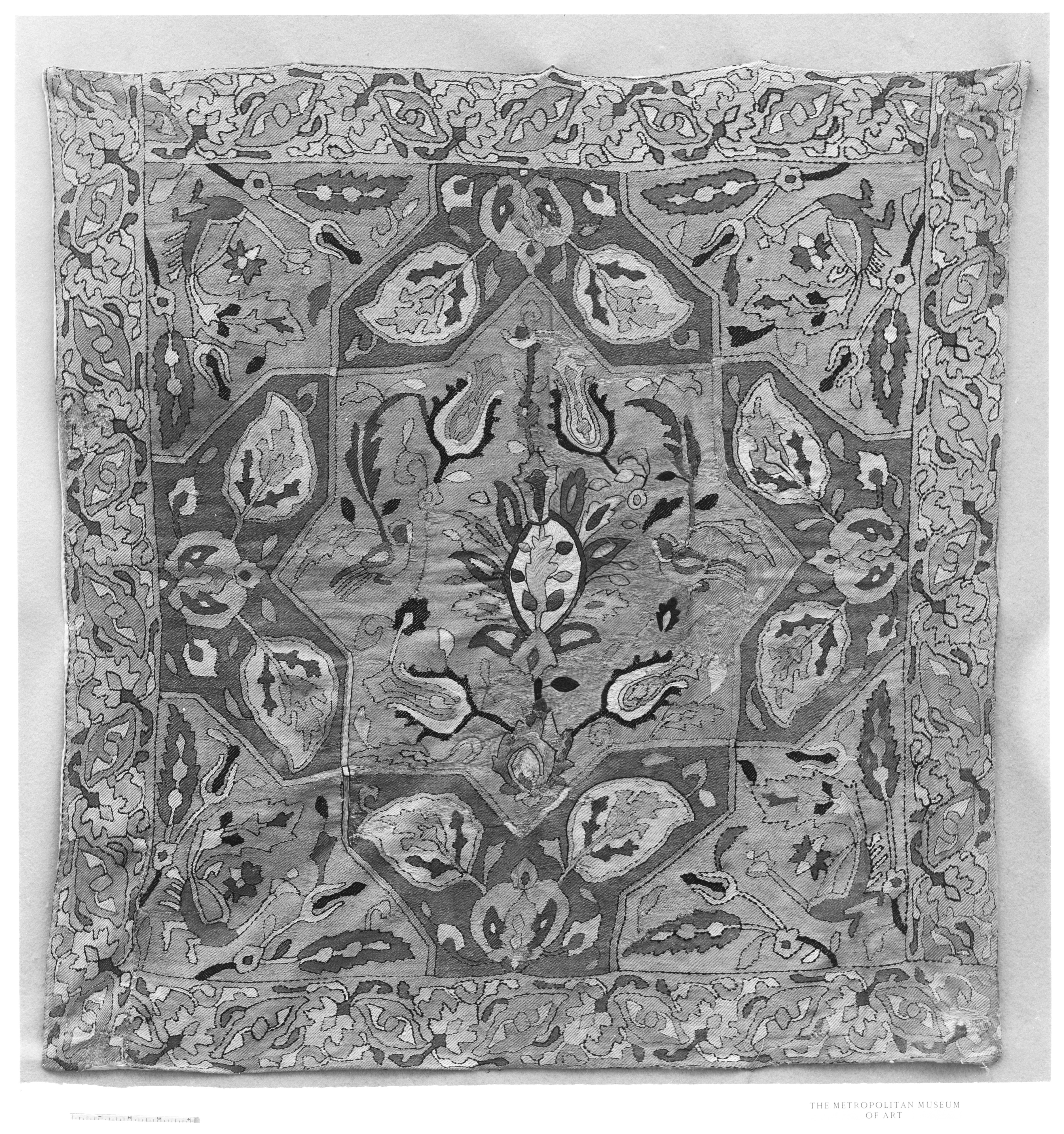
The foundational paradox of this study lies in its material dialectic. We employ silk on cotton, a juxtaposition that is less a blend and more a philosophical argument. The silk—fluid, luminous, almost liquid—acts as the ephemeral future, catching light in a perpetual state of becoming. The cotton—grounded, absorbent, cellular—serves as the structural past, a memory of the body’s labor. The embroidery does not decorate; it violates and reconstructs the boundary between these two planes. Each stitch is a deliberate scar, a topographic map of tension. We reject the notion of embroidery as pastoral ornament. Instead, our atelier employs a technique of negative-space embroidery, where the thread pulls the silk into micro-folds, creating a puckered, topographical surface that behaves like a living membrane. The result is a cover that breathes, not through ventilation, but through the kinetic distortion of its own skin.
Futuristic Silhouettes: The Architecture of Displacement
For SS26, we abandon the silhouette as a fixed outline. The future is not a line; it is a field. Our covers are engineered around the principle of asymmetrical volume displacement. The shoulder is not padded; it is cantilevered, with the silk drawn from the back to the front in a single, unbroken sweep, creating a diagonal plane that destabilizes the viewer’s equilibrium. The hem is not a termination; it is a launch point, cut on a severe bias that causes the cotton underlayer to emerge and recede in unpredictable waves as the wearer moves. This is not draped clothing; it is frozen choreography. We have developed a proprietary internal substructure—invisible to the eye—that uses a lattice of ultra-fine, memory-wire filaments. These filaments are not bones; they are suggestive forces, programmed to hold the silk aloft in a state of permanent, arrested motion. The cover thus becomes a sculptural exoskeleton, a second skeleton worn on the outside, dictating a new posture of forward propulsion.
Structural Innovation: The Wearable Tectonic Plate
The true innovation of this standalone study lies in our treatment of the cover’s seam. In conventional couture, the seam is a point of joining. In the Zoey Laboratory, the seam is a tectonic fault line. We have abandoned the straight stitch in favor of a biomimetic, serpentine seam, which we call the Fissure Stitch. This stitch does not simply connect silk to cotton; it allows for a differential rate of expansion between the two materials. When the wearer raises an arm, the silk stretches at a 1.7:1 ratio to the cotton, causing the embroidered surface to shear and split along predetermined channels. This is not accidental tearing; it is programmed revelation. The cover does not hide the body; it reveals it through a series of calculated, mechanical apertures that open and close in response to biomechanical pressure.
Global Frontier: From Nomadic Shroud to Cybernetic Cocoon
This cover is not bound by geography. The Global Frontier is not a place; it is a condition of perpetual transition. Our design draws from the nomadic shrouds of the Silk Road, but reinterprets them through a cybernetic lens. The cotton base is treated with a nano-cellulose finish, making it water-repellent yet breathable, a protective shell against the unknown climate of the coming decade. The silk layer, meanwhile, is left raw at the edges, fraying deliberately to suggest an unfinished evolution. The embroidery itself incorporates conductive silver threads, not for function, but for symbolic resonance—a ghost circuit, a phantom connectivity that suggests the wearer is a node in a larger, invisible network. This is a cover for the peripatetic cyborg, the individual who exists between data streams and physical terrains.
Conclusion: The Cover as a Living System
For SS26, the cover is no longer a passive shield. It is an active agent of transformation. Through the tension between silk and cotton, the violence of deconstructive embroidery, and the engineering of displacement, we have created a garment that is perpetually in flux. It is a portable architecture, a private universe that the wearer inhabits. It does not conform to the body; it challenges it, inviting a new way of standing, moving, and existing in space. This is not clothing for the present. This is a prototype for a future where the distinction between garment and environment is obliterated, and the cover becomes the first and final frontier of the self.