Deconstructing the Temporal Weft: An Avant-Garde Reading of French Silk-Metal Brocade
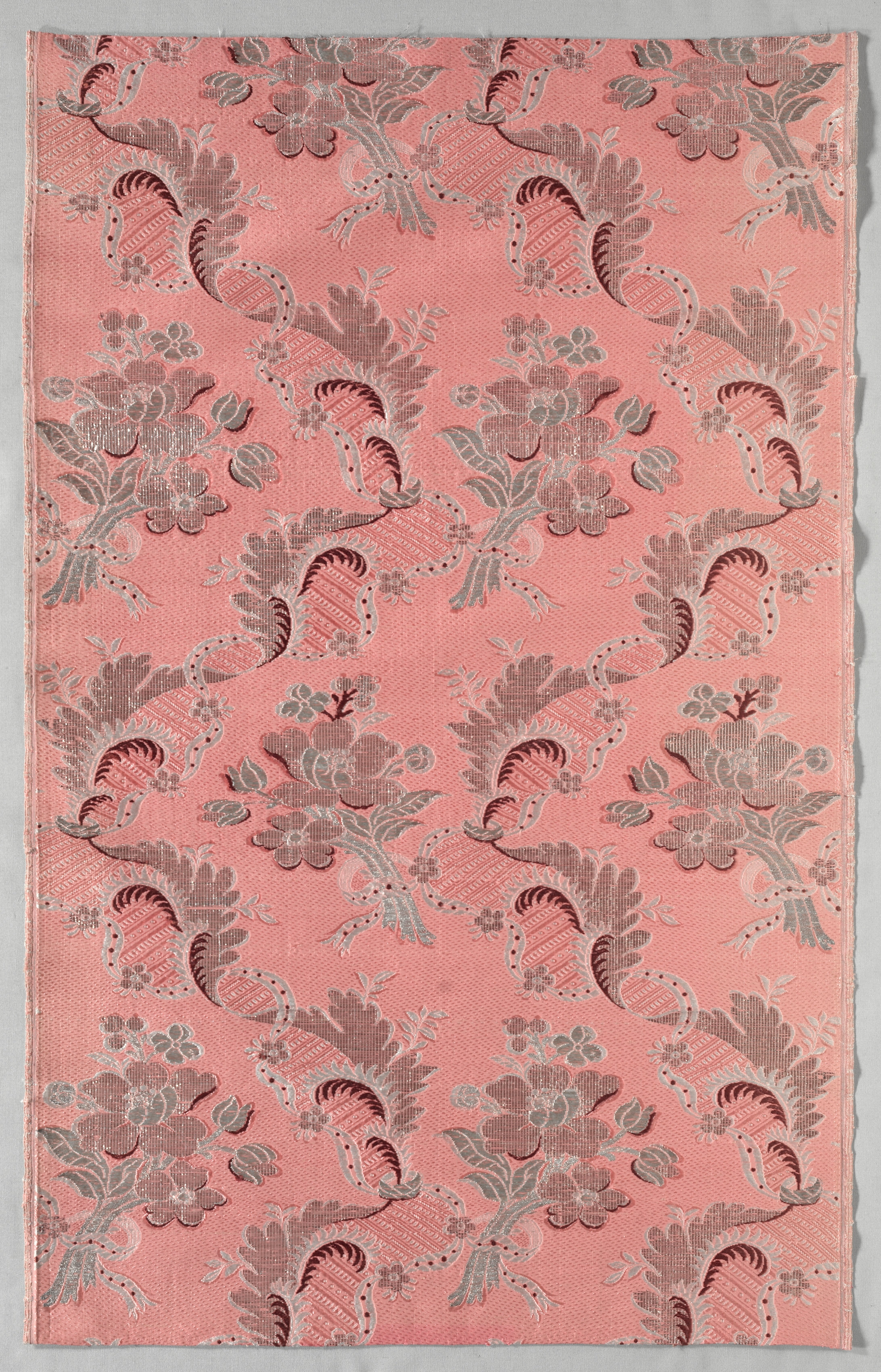
At Zoey Fashion Lab, our mandate extends beyond the mere cataloging of textile artifacts. We engage in a radical process of deconstruction, stripping away the patina of historical reverence to expose the raw, structural DNA of fabric. Today, our subject is a specific length of French brocade, a composite of silk and metal, whose physical dimensions belie a complex, multi-layered narrative. The reference point, “Archive Resonance,” speaks to the lingering echoes of the 16th and 17th centuries—a period when material culture was not merely decorative but a potent language of power, faith, and nascent global consciousness. Our analysis, however, is not an exercise in nostalgia. It is a surgical dissection of how this textile’s length, materiality, and origin function as a proto-avant-garde statement, centuries before the term existed.
I. The Metric of Meaning: Length as a Structural Score
The physical length of this textile is its first and most provocative declaration. In a contemporary context, where fabric is often quantified in sterile, continuous rolls, a historical length of brocade carries a different resonance. This is not a remnant; it is a complete statement, a finite measure of both intention and limitation. The length dictates the garment's potential architecture—whether it was destined for a floor-sweeping ceremonial gown, a rigid ecclesiastical vestment, or a sumptuous wall hanging. For the avant-garde designer, this length is not a constraint but a choreographic score. It dictates the fall of the fabric, the placement of the pattern repeat, and the kinetic energy of the wearer. The precise measurement—be it two meters or six—represents a unit of human labor, a specific number of hours at the loom, and a finite quantity of precious metal drawn into thread. This is the antithesis of fast fashion’s infinite, disposable yardage. It is a deliberate, measured act of creation, forcing the modern eye to consider the physical and temporal weight embedded in every centimeter.
II. Material Dialectics: Silk and Metal in Conflict
The material composition—silk and metal—is not a harmonious blend but a dialectical tension. Silk, a protein fiber derived from the silkworm, is a symbol of organic luxury, fluidity, and the subtle, natural sheen of life. Metal, typically silver or silver-gilt wrapped around a silk core, introduces a rigid, inorganic, and reflective element. This is a textile that armors the body as much as it adorns it. The metal thread does not merely embellish; it fundamentally alters the textile's physical properties. It adds weight, creating a gravitational pull that makes the fabric fall in sculptural, almost architectural folds. It introduces a metallic clatter with movement, a sonic dimension often lost in silent museum displays. The avant-garde reading here is one of juxtaposition: the soft against the hard, the organic against the mineral, the warm against the cold. This is not a fabric for passive observation; it is a material that demands interaction, reflecting light and the viewer’s gaze with an aggressive, dazzling intensity. It is, in essence, an early form of wearable technology, manipulating the environment through its reflective and structural capabilities.
III. The French Paradox: Craft as Proto-Transgression
The French origin of this textile is crucial. By the 17th century, France, under the mercantilist policies of Jean-Baptiste Colbert, had established itself as the undisputed arbiter of European luxury. The silk looms of Lyon were not mere workshops; they were state-sponsored instruments of soft power. This brocade, therefore, is a product of extreme centralization, regulation, and technical mastery. Yet, within this rigid system of controlled output, the weaver achieved a level of complexity that borders on the transgressive. The density of the pattern, the intricate interplay of warp and weft, the sheer audacity of using precious metal in such abundance—these are acts of technical rebellion against the limits of the medium. The avant-garde spirit here is not one of overt iconoclasm, but of hyper-competence. It pushes the grammar of the loom to its breaking point, creating a surface so rich and complex that it threatens to overwhelm the very forms it is meant to decorate. This is the French paradox: a system built on order and hierarchy that, at its zenith, produces objects of such radical excess that they destabilize the very aesthetic norms they were intended to uphold.
IV. Archive Resonance: The Ghost in the Machine
The reference to "Archive Resonance" and the 16th-17th centuries is not about historical accuracy, but about temporal disruption. This textile is a time-traveler, carrying with it the residual energies of its original context. It speaks of the Counter-Reformation's demand for sensory opulence, of the global trade routes that brought raw silk from Persia and China, and of the silver flowing from the New World that was hammered into these threads. For the contemporary avant-garde, this resonance is a powerful tool. To use this fabric today is to invoke this entire complex history. It is to drape a model in the spoils of colonial expansion, the fervor of religious spectacle, and the pinnacle of pre-industrial craftsmanship. The avant-garde gesture is to acknowledge this weight, not to ignore it. It is to cut this precious, historically-loaded fabric into a radically modern silhouette, creating a violent and beautiful collision between past and present. The fabric becomes a ghost, haunting the present with its material memory, forcing a dialogue about value, labor, and the very definition of luxury in a world of synthetic imitations.
V. Conclusion: A Fabric for the Future
In the hands of Zoey Fashion Lab, this length of French silk and metal brocade is not a relic to be preserved. It is a catalyst for future creation. Its length provides a structural limitation that breeds creativity. Its material dialectic offers a study in contrast and tension. Its origin speaks to the power structures inherent in production. And its archival resonance provides a depth of meaning that no modern textile can replicate. This is the ultimate avant-garde material: one that is simultaneously a finished masterpiece of historical craft and an open-ended proposition for radical reinterpretation. It challenges us to see beyond the surface, to understand that true innovation is not the creation of something from nothing, but the fearless deconstruction and re-contextualization of what has come before. This fabric is not a piece of the past; it is a blueprint for the future, a shimmering, metallic challenge to the very notion of time and style.