Deconstructing the New DNA Strand: The Milanese War Hat as Avant-Garde Blueprint
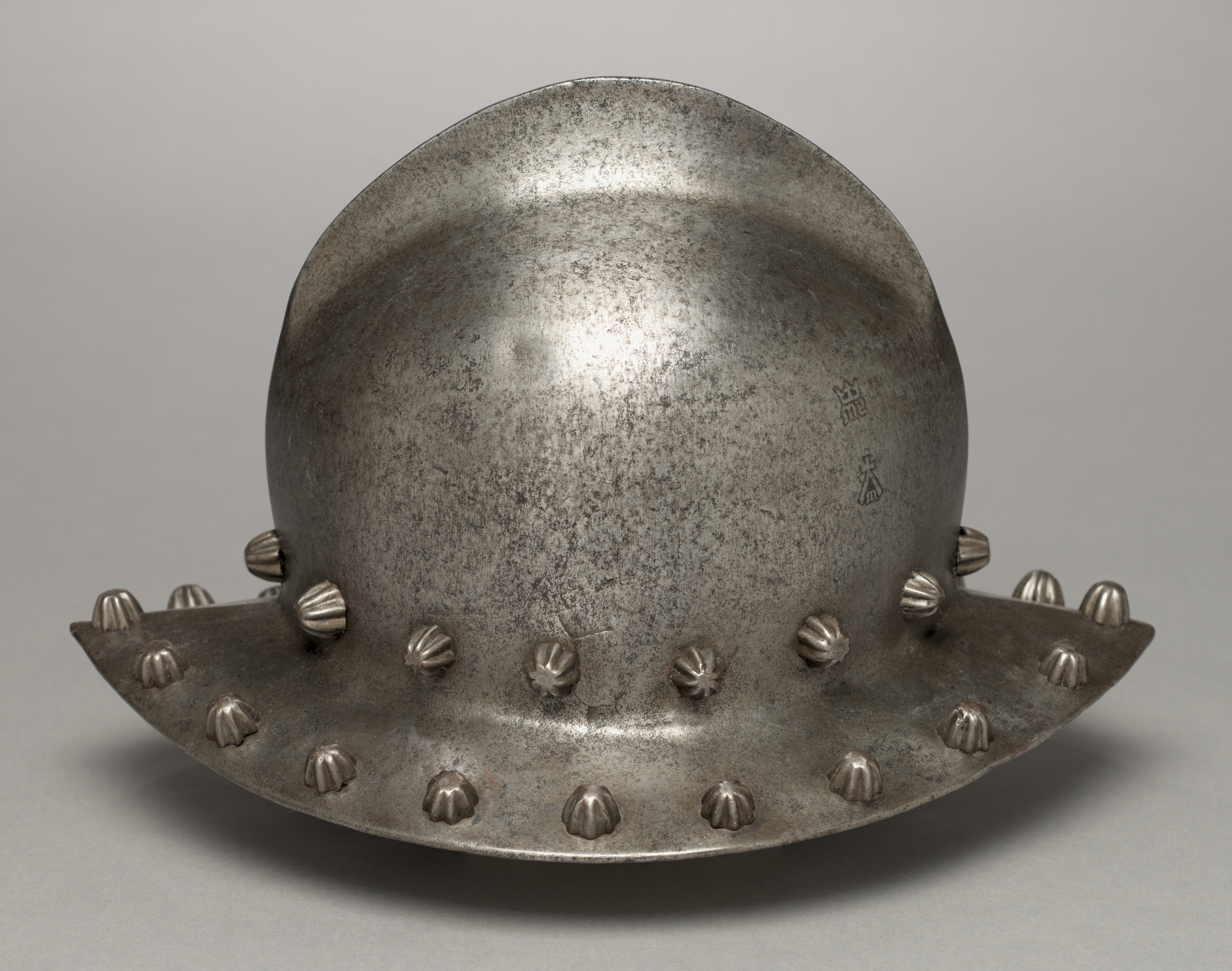
At Zoey Fashion Lab, our mandate is not merely to study historical garments but to extract their latent structural intelligence and re-sequence it into contemporary, avant-garde expression. The subject of this analysis—the War Hat, or Kettle Hat, specifically the 15th-century Milanese steel iteration—presents a fascinating paradox. It is a utilitarian object of brutal necessity, yet its geometric purity and material integrity offer a rich, untapped genetic code for modern fashion. Referenced here as the "New DNA Strand," this artifact is not a nostalgic relic but a proto-architectural blueprint. Our deconstruction focuses on three core loci: the hemispherical crown, the sweeping brim, and the metallurgical logic that binds them, translating these into principles of volume, line, and structural draping for the avant-garde atelier.
I. The Hemispherical Crown: A Study in Compressed Volume and Negative Space
The crown of the Milanese kettle hat is its primary volumetric statement. Unlike the pointed bascinets or the ridged sallets of the same period, the kettle hat’s crown is a smooth, almost perfect hemisphere. This is not a passive dome; it is a study in compressed potential energy. For the avant-garde designer, this translates directly into headwear and shoulder architecture. The hemisphere suggests a silhouette that is simultaneously protective and sculptural—a shell that defines the space around the wearer's head without constricting the visual field.
In our lab, we reinterpret this crown not as a literal metal cap, but as a negative-space frame. The challenge is to evoke the sensation of being "hooded" by a solid, yet weightless, volume. We achieve this through layered, stiffened organza or heat-molded technical knits that form a geodesic-like lattice. The crown's interior, often padded with linen and wool in the original for comfort, becomes a conceptual pocket—a place for hidden technology, smart textiles, or simply a psychological sanctuary. The avant-garde garment, therefore, borrows the crown's enclosing function to create a personal aura, a mobile architecture that isolates the wearer from the chaotic environment, much as the steel did for the soldier, but now as a statement of intellectual and sensory curation.
II. The Sweeping Brim: From Ballistic Defense to Dynamic Line
The defining feature of the kettle hat is its wide, downward-angled brim. Historically, this was a brilliant piece of ergonomic engineering. It deflected arrows, rain, and sunlight while allowing peripheral vision. For the fashion deconstructionist, the brim is a lesson in dynamic line and directional flow. It is not a static flange; it is a curve that captures motion, channeling energy from the crown outward and downward. This is the "New DNA" that most directly informs our avant-garde silhouettes.
We translate this brim into exaggerated shoulder yokes, asymmetric capelets, and even sculptural sleeve heads. The key is the angle of deflection. Instead of a horizontal shoulder pad, we propose a continuous, curved plane that sweeps from the nape of the neck to the upper arm, creating a protective, almost aerodynamic profile. The material logic shifts from rigid steel to laminated leather, resin-coated canvas, or laser-cut felt, which can hold a sharp, cantilevered edge. This brim-inspired line also informs our hem treatments. A coat's hem, for instance, can be cut with a subtle, continuous flare on one side, mimicking the hat’s protective overhang while creating a sense of forward momentum in the wearer's gait. The brim teaches us that a protective element can also be the most expressive, dynamic vector in a composition.
III. Metallurgical Logic: The Grammar of Rigidity and Flexibility
The technical construction of the Milanese war hat is where the deepest "DNA" resides. Milanese armorers were the virtuosos of their age, producing steel that was both hardened for defense and tempered for flexibility. The hat was often forged from a single piece of metal, or two pieces skillfully riveted and polished to a mirror finish. This is a lesson in seamless integration and material honesty. The avant-garde garment must not hide its construction; it must celebrate the logic of its own making.
Our lab applies this by exploring hybrid materiality. We pair rigid, structural elements (like 3D-printed polymer joints or carbon-fiber boning) with fluid, tensile fabrics (like silk jersey or liquid satin). The "rivets" of the original become visible, decorative, yet functional closures—oversized magnetic snaps, exposed cable ties, or intricate hand-stitched Kevlar thread. The polished steel surface inspires our treatment of texture: we seek high-gloss, almost liquid metallic finishes on technical fabrics, or conversely, a matte, gunmetal patina achieved through garment dyeing and enzyme washing. The metallurgical principle of differential hardening—where the brim is harder than the crown—translates into our pattern cutting. We use a stiffer interlining for the "brim" areas of a garment (shoulders, collar) and a softer, more drapeable interlining for the "crown" (body, sleeves), creating a garment that moves with the body but holds its architectural shape at key stress points.
IV. The Avant-Garde Synthesis: From Armor to Aura
Ultimately, the Milanese war hat is not about violence; it is about preparedness, presence, and the assertion of self within a hostile environment. The avant-garde fashion designer is, in a sense, a modern armorer, crafting protective shells for the psyche. The "New DNA Strand" we extract is a sequence of design principles: volumetric compression, directional deflection, and material honesty.
In our forthcoming collection, this manifests as a series of "urban exoskeletons." A high-collar coat with a brim-like visor that can be flipped up or down. A jacket with a sculpted, single-piece back panel that mimics the hammered steel's curve. Headpieces that are not hats but wearable sculptures, constructed from interlocking, polished aluminum segments that echo the original's riveted construction. The color palette is stark: oxidized iron greys, burnished copper, and the deep black of forged steel. The styling is confrontational yet elegant, suggesting a warrior-poet navigating the contemporary metropolis.
In conclusion, the War Hat is far more than a historical curiosity. It is a masterclass in solving the eternal problems of design: how to protect, how to define space, and how to project authority. By deconstructing its form and reconstructing its logic, Zoey Fashion Lab transforms a piece of medieval hardware into a sophisticated, avant-garde software for the future of fashion. The steel is gone, but its structural DNA now codes for a new kind of wearable art—one that is as relevant to the challenges of today as the original was to the battlefields of Milan.