The Veil Deconstructed: An Avant-Garde Blueprint for SS26
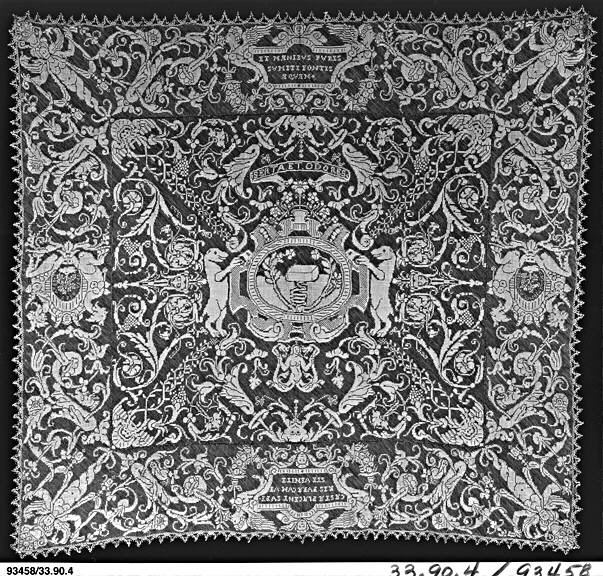
The veil, in its most archaic and culturally embedded iteration, is a gesture of concealment, a boundary between the self and the world. For the SS26 season, Zoey Fashion Laboratory repositions this ancient textile act not as a barrier, but as a portal of architectural potential. We are dismantling the veil's semantic weight—its associations with modesty, mystery, and mourning—to rebuild it as a structural instrument of the future. The subject is no longer about hiding; it is about revealing through subtraction, about carving negative space in the air around the body. This analysis dissects our latest standalone study: a veil constructed from embroidered net, raw linen, and metal-wrapped thread, originating from a global frontier that collapses geography into a singular, futuristic gesture.
Materiality as a Structural Grammar
The choice of materials is not aesthetic happenstance; it is a rigorous, almost forensic, selection process. Embroidered net serves as the primary membrane—a substrate that is simultaneously present and absent. Its open weave allows for the transmission of light, yet its dense embroidery acts as a counterpoint, creating zones of opacity that function like architectural shading devices. The net is not a passive backdrop; it is a tensile skin that can be pleated, gathered, or stretched into rigid planes when combined with the other components.
Raw linen, in its untreated, undyed state, introduces a tactile gravity that anchors the ethereal net. This is not the soft, draped linen of classical couture. Instead, we treat it as a biodegradable composite, stiffened through a proprietary resin-free process that allows it to hold sharp, angular folds. The linen becomes the "bone" of the garment, providing structural integrity where the net offers only fluidity. The contrast is deliberate: the organic, slightly irregular texture of the linen against the machine-like precision of the net creates a dialectical tension that is the core of the design philosophy.
The third element, metal-wrapped thread, is the true agent of transformation. Woven into the net and used as a couching thread over the linen, it functions less like embellishment and more like reinforcement rebar in concrete. It allows the fabric to be "set" into sculptural curves that would collapse under their own weight in a traditional textile. This thread is not decorative; it is a load-bearing filament. When the veil is worn, the metal thread catches light in unpredictable ways, creating a shimmering, almost digital moiré effect that disrupts the eye's ability to settle on a single silhouette.
Futuristic Silhouettes: The Veil as Exoskeleton
For SS26, we abandon the notion of the veil as a draped accessory. Instead, we propose it as a wearable exoskeleton that redefines the human form's relationship to space. The primary silhouette is not a body-hugging garment, but a negative-space architecture. Imagine a hood that does not rest on the head, but floats several centimeters above it, held aloft by a hidden lattice of metal-wrapped thread and stiffened linen. This creates a "halo" of negative space, a void that is as much a part of the design as the fabric itself.
The second silhouette innovation is the asymmetrical volumetric shroud. Here, the veil is attached at one shoulder and cascades diagonally across the torso, but instead of falling limply, it is engineered to flare out at the hip like a rigid fin. This is achieved by inserting vertical "spines" of metal-wrapped thread into the linen seams, which act as cantilevers. The result is a silhouette that is part insect carapace, part futuristic spacecraft, and entirely removed from the soft, romantic draping of historical veils.
A third, more radical proposal involves the detachable face-covering module. This is not a simple panel of fabric. It is a complex, three-dimensional structure that projects forward from the nose and cheekbones, resembling a futuristic beak or a sensor array. Constructed from multiple layers of embroidered net stretched over a linen frame, it creates a prismatic vision field that distorts and fragments the wearer's view of the outside world. This is a deliberate commentary on the mediated nature of perception in the digital age—the veil as a personal, protective interface.
Structural Innovation: Beyond the Seam
The technical breakthroughs in this study lie in our approach to zero-waste construction and adaptive rigidity. Traditional couture relies on cutting and sewing to achieve shape. Our method begins with the material itself. We use a laser-perforation technique on the raw linen, creating a precise grid of micro-holes. This allows the fabric to be "creased" along predetermined lines without cutting, enabling the garment to fold into complex geometric forms that are both permanent and collapsible.
Furthermore, the metal-wrapped thread is not merely sewn in; it is electroformed onto the net in a post-production process. This creates a molecular bond between the thread and the base fabric, resulting in a composite material that is incredibly lightweight yet has the tensile strength of a thin metal sheet. This allows for self-supporting collars that rise up to the ears, and floating panels that hover over the hips without any visible attachment points.
Finally, we have developed a modular fastening system based on magnetic micro-clasps embedded within the embroidery. These allow the wearer to reconfigure the veil's silhouette in real time—from a full-face covering to a shoulder cape to a waist-cinching belt—transforming a single garment into a chameleonic wardrobe. This is not just a garment; it is a system, a tool for morphing identity.
Global Frontier: A Synthesis of Non-Places
The "Global Frontier" origin is not a marketing label. It reflects a design process that synthesizes techniques from disparate cultures without appropriating their specific iconography. The embroidery patterns are abstract, algorithmic—derived from satellite imagery of desert terrains and ocean currents—rather than traditional floral or geometric motifs. The linen is sourced from a cooperative in Normandy, the net from a technical textile mill in Japan, and the metal thread from a recycled electronics facility in Germany. This is a supply-chain as aesthetic statement, a declaration that the future of couture is not in preserving heritage, but in synthesizing global material intelligence into a new, placeless form.
In conclusion, the veil for SS26 is a manifesto. It declares that concealment can be a form of empowerment, that structure can exist without rigidity, and that the most ancient of garments can be the most radical. It is an object not for passive viewing, but for active inhabitation—a portable architecture for the body of tomorrow.