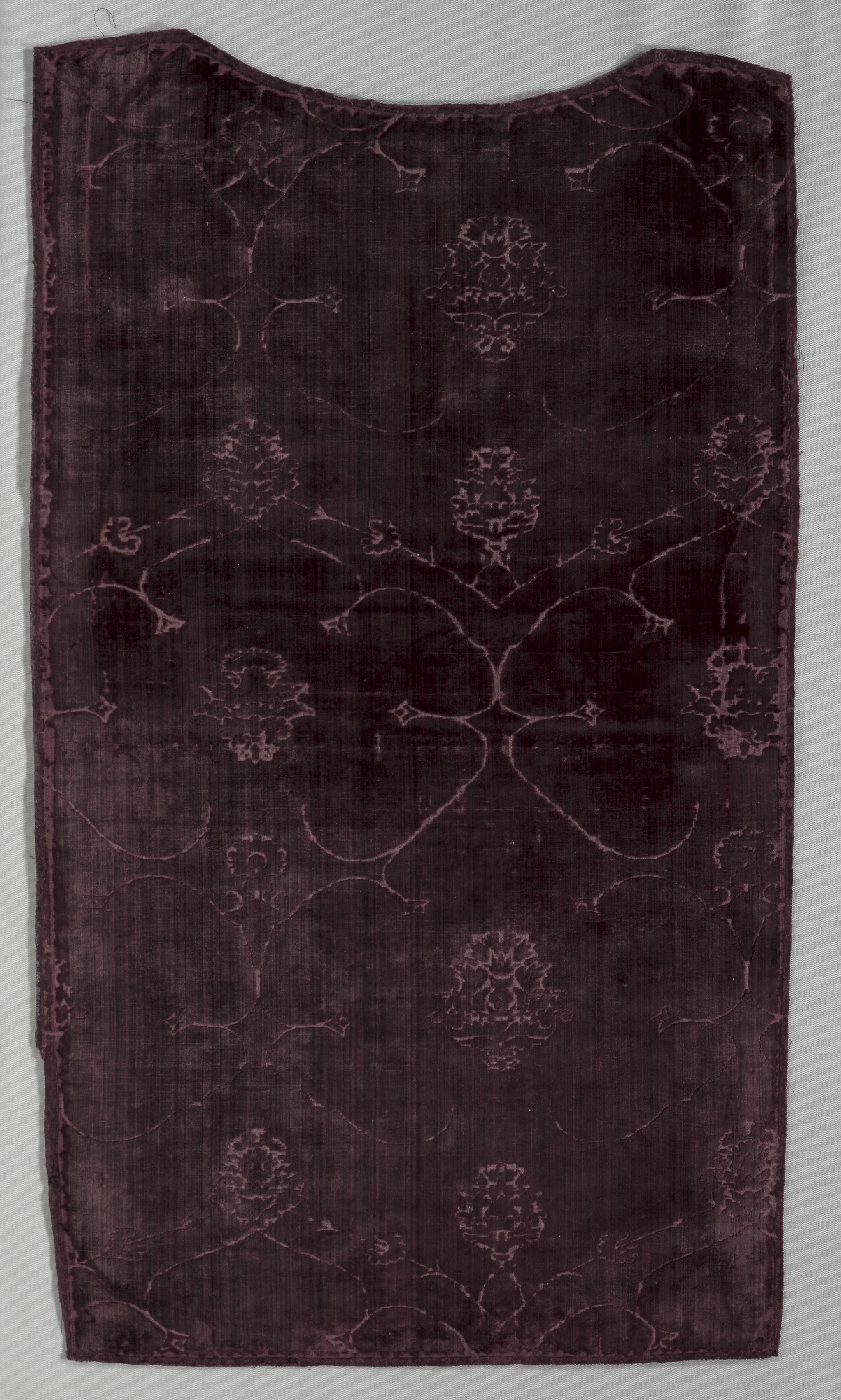
Deconstructing the New DNA Strand: Velvet with Pomegranate Pattern
At Zoey Fashion Lab, our mandate is not merely to observe fabric but to interrogate its very molecular structure—its weave, its history, and its potential for radical reinvention. Today’s subject arrives from Italy carrying a weight of tradition that we intend to shatter. The Velvet with Pomegranate Pattern, constructed from pure silk thread and executed in a cut and voided velvet weave, is a masterclass in historical luxury. Yet, our analysis repositions this textile not as a relic, but as a New DNA Strand—a genetic code for an avant-garde future. This deconstruction will examine the fabric’s technical architecture, its cultural genome, and the precise mutations required to translate its opulence into a disruptive, forward-facing aesthetic.
Technical Architecture: The Cut and Voided Weave
The technical foundation of this velvet is a study in controlled contrast. The cut velvet technique involves the use of a pile warp that is looped over a metal rod and then sliced, creating a dense, plush surface that catches light with a deep, almost liquid absorption. This is the fabric’s voice—rich, tactile, and commanding. However, the true innovation lies in the voided aspect. In a voided velvet, the pile is selectively woven away, leaving the ground weave exposed. This creates a deliberate, sculptural topography of raised silk against a flat, matte silk base.
The interaction between these two surfaces is the fabric’s primary narrative. The cut pile offers a three-dimensional depth, while the voided areas provide negative space, allowing the pattern to breathe. The pomegranate pattern itself is rendered with a botanical precision that borders on the biological. The fruit, often split open to reveal its seeds, is a symbol of fertility, abundance, and resurrection. In this Italian iteration, the motif is not merely printed but woven—the seeds and leaves are defined by the very architecture of the thread. The use of pure silk thread elevates this from a simple textile to a bio-polymer structure. Silk’s natural protein composition gives the fabric a unique resilience and a lustrous sheen that synthetic fibers cannot replicate. It is a material that breathes, drapes, and moves with a kinetic energy unique to its organic origin.
Cultural Genome: From Renaissance to Revolution
To understand this fabric’s potential for avant-garde application, we must first decode its cultural genome. Originating from Italy, this velvet is a direct descendant of the great weaving traditions of Florence, Venice, and Genoa. During the Renaissance, such fabrics were not mere clothing; they were portable wealth, worn by nobility and clergy to signify power, piety, and patronage. The pomegranate pattern, in particular, was a favorite of the Medici family, symbolizing their political and cultural dominance. It was a fabric designed for the static, ceremonial display of the court.
This historical weight is both a strength and a constraint. In its original context, the velvet’s heaviness and formality dictated a rigid silhouette—the gown, the cape, the altar cloth. The New DNA Strand designation is our challenge to this legacy. We are not discarding the history; we are splicing it with a modern, disruptive code. The avant-garde ethos demands we question the fabric’s inherent assumptions: Why must luxury be synonymous with bulk? Why must tradition dictate drape? Our deconstruction reveals that the velvet’s true power lies not in its historical usage, but in its material memory—the ability to hold a shape, to absorb and reflect light, and to create a surface that is simultaneously soft and structural.
Mutation Protocol: The Avant-Garde Application
For the Zoey Fashion Lab, the transformation of this velvet into an avant-garde statement requires a series of deliberate design mutations. The first is silhouette subversion. Instead of the traditional flowing gown, we propose a sharp, architectural cut—a deconstructed blazer with asymmetric seams that exploit the voided areas to create a visual illusion of fragmented armor. The cut pile becomes a textured carapace, while the voided silk acts as a skeletal joint, allowing for unexpected articulation. This is not a dress; it is a wearable sculpture that challenges the viewer’s perception of softness versus structure.
The second mutation involves scale and repetition. The pomegranate pattern is traditionally rendered in a symmetrical, all-over repeat. We propose a radical magnification and distortion. By isolating a single, oversized pomegranate motif and placing it off-center—perhaps spanning the entire back of a cropped jacket—we transform the pattern from a decorative element into a primary graphic. The voided areas become negative space that traces the human form, creating a dialogue between the fabric’s pattern and the wearer’s anatomy. This is a direct challenge to the fabric’s original purpose of covering and concealing.
Third, we introduce textural juxtaposition. The velvet’s plushness is its defining feature, but to push it into the avant-garde, we must pair it with opposing materials. Imagine the velvet paneled against a high-tech, matte neoprene or a translucent, recycled PVC. The contrast between the organic silk and the synthetic, industrial material creates a tension that is both uncomfortable and compelling. The velvet is no longer the sole protagonist but a co-star in a dialogue about the future of luxury—a luxury that is conscious of its materiality and its environmental impact.
Technical Execution and Wearability
From a technical standpoint, the silk velvet is surprisingly adaptable to modern construction. Its natural elasticity allows for precise darting and tailoring, provided we use a sharp needle and a silk-specific thread to prevent snagging. The voided areas, being flat, are ideal for laser-cutting and perforation, allowing for ventilation and a new level of design intricacy. We can also treat the silk with a nano-coating to make it water-resistant without compromising its breathability—a critical step for moving this fabric from the ceremonial hall to the urban landscape.
The final garment is not for the faint-hearted. It is a statement of intent. It is for the individual who understands that fashion is a form of communication. Wearing this velvet is not about comfort; it is about presence. The garment will move with a heavy, deliberate grace, the cut pile catching the light in a way that demands attention. The pomegranate pattern, now abstracted and magnified, becomes a symbol of the wearer’s own fertility of thought and creative abundance.
Conclusion: A Living Specimen
The Velvet with Pomegranate Pattern from Italy is not a finished product; it is a living specimen. Its DNA is encoded with centuries of tradition, but our role at Zoey Fashion Lab is to act as the genetic engineer. We have deconstructed its weave, analyzed its historical significance, and proposed a mutation protocol that respects its origins while propelling it into a future of radical expression. This is not about rejecting the past but about re-sequencing it. The result is a fabric that is at once ancient and futuristic, luxurious and disruptive, heavy and light. It is the New DNA Strand—a blueprint for a fashion that is intelligent, provocative, and unapologetically avant-garde.