Deconstructing the Archival Impulse: An Avant-Garde Reading of Algerian Furnishing Textiles
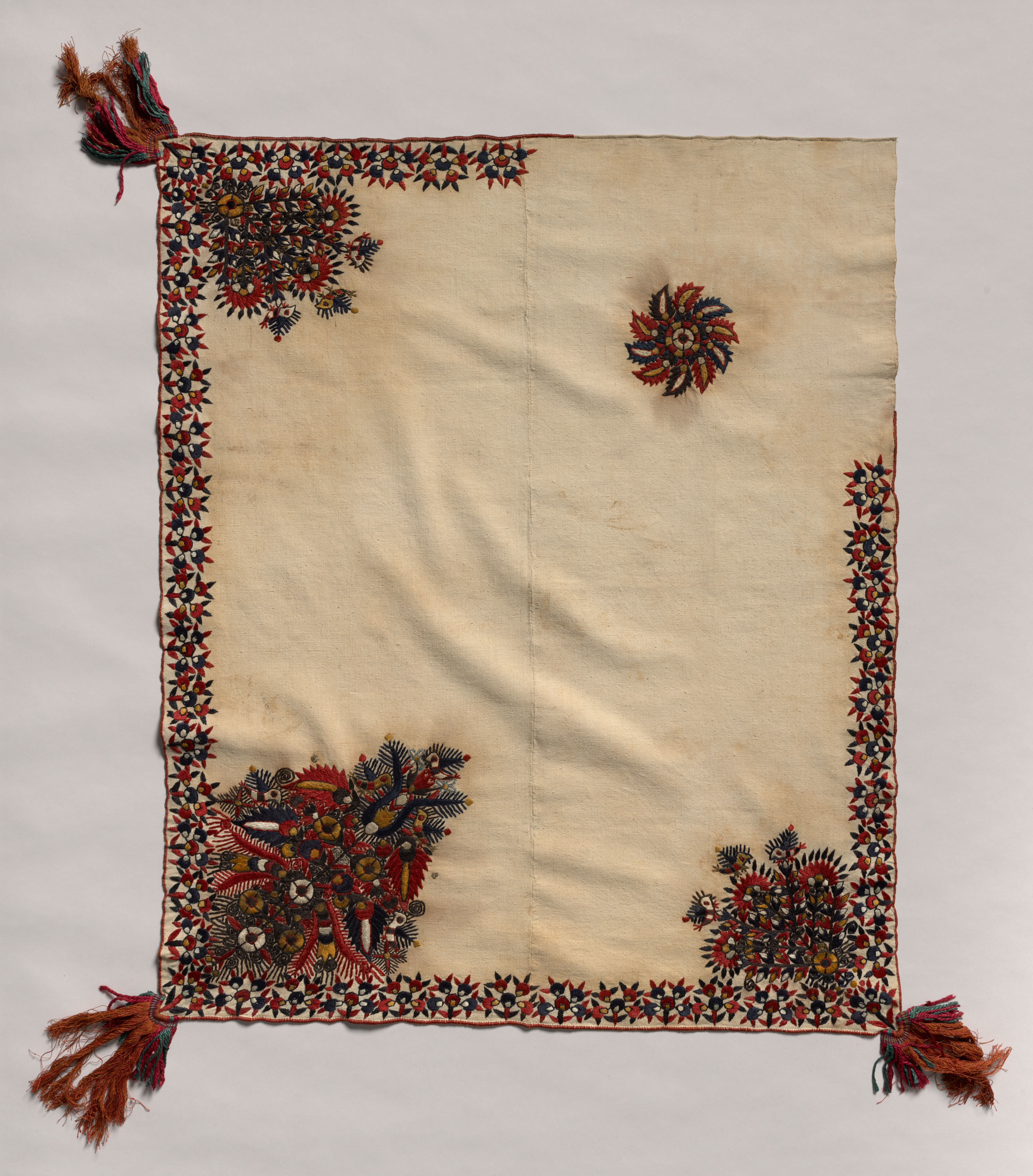
At Zoey Fashion Lab, our mandate extends beyond the surface of fabric. We engage in a rigorous process of deconstruction, not merely of seams and silhouettes, but of the cultural, technical, and philosophical DNA embedded within the textile itself. The subject of this analysis—a furnishing textile originating from Algeria, crafted by an anonymous embroiderer using linen, silk, and dye—presents a formidable challenge to contemporary design paradigms. When viewed through the lens of the provided archival reference, which speaks to the 16th and 17th centuries as a crucible of cultural collision and aesthetic synthesis, this piece transcends its domestic function. It becomes a proto-avant-garde artifact, a static object that vibrates with the kinetic energy of historical disruption.
Our analysis will dissect this textile across three primary axes: the Material Dialectic (linen and silk), the Chromatic Subversion (dye application), and the Structural Anomaly (embroidery as a form of rebellion). In doing so, we will reposition this Algerian artifact not as a relic of heritage, but as a blueprint for future-facing, avant-garde fashion systems.
I. The Material Dialectic: Linen's Rigor and Silk's Opulence
The foundational choice of materials in this furnishing textile is far from arbitrary. It is a deliberate dialogue between opposing forces, a conversation that mirrors the geopolitical tensions of its era of origin. The warp and weft are dominated by linen, a fiber of remarkable tensile strength and geometric purity. Linen is the fiber of the land, of agrarian discipline. Its natural slubs and irregularities are not flaws but a record of its organic genesis. In the context of 16th-17th century North Africa, linen represented a localized, robust, and utilitarian base—the canvas upon which a narrative was to be inscribed.
Contrast this with the silk employed in the embroidery itself. Silk is the fiber of the Orient, of caravansaries and transcontinental trade routes. Its introduction into the linen ground is a literal thread of globalization. The silk does not dominate the linen; rather, it rests upon it, creating a distinct textural hierarchy. This juxtaposition is the first act of avant-garde subversion: the deliberate placement of a precious, fluid material atop a humble, rigid one. In contemporary fashion terms, this is a direct precursor to the deconstructivist practices of the late 20th century, where designers like Rei Kawakubo or Yohji Yamamoto challenged the primacy of the garment's structure by introducing incongruous materials. Here, the silk embroidery functions as a disruptive agent, breaking the monotony of the linen field and creating a tension between the support and the surface. The tactile dissonance—the cool, dry touch of linen against the warm, slick feel of silk—is a sensory experience that anticipates the multi-sensory demands of modern avant-garde wearability.
II. Chromatic Subversion: The Dye as a Historical Marker
The dye used in this piece is not merely a colorant; it is a chemical archive of trade, conquest, and botanical knowledge. The reference to the 16th and 17th centuries is crucial here, as this period marked the apex of the Mediterranean dye trade. The specific hues—likely derived from madder root for reds, indigo for blues, and various mordants to fix them—are a testament to a sophisticated understanding of chemistry that predates modern synthetic dyeing by centuries.
However, the avant-garde reading lies not in the colors themselves, but in their application and interaction with the ground. The dye does not uniformly saturate the linen in a modernist, color-field manner. Instead, it is localized, concentrated within the embroidered motifs. This creates a phenomenon we term "chromatic isolation." The color is not a property of the whole, but a privilege of the detail. This is a radical departure from the Western tradition of furnishing textiles, where the pattern often covers the entire ground. Here, the negative space of the undyed linen is as significant as the dyed silk. This use of negative space is a hallmark of avant-garde aesthetics, where absence is as potent as presence. The dye, therefore, functions as a signifier of value and intention, applied with surgical precision to elevate specific areas of the design, creating a visual rhythm that is both staccato and lyrical. It is a pre-modern exercise in selective emphasis, a technique that modern avant-garde fashion employs to draw the eye to a specific architectural seam or a radical cut.
III. The Structural Anomaly: Embroidery as Rebellion
The technical execution of the embroidery is where this textile truly achieves its avant-garde status. Traditional Algerian embroidery, often associated with specific regional styles, is typically characterized by geometric regularity and symmetrical patterns. However, this piece, as described, exhibits a structural anomaly. The embroidery—while executed with the high skill of an Algerian embroiderer—appears to deviate from strict symmetry. The stitches, likely a combination of chain stitch, satin stitch, and couching, do not merely outline a pattern; they distort the ground fabric.
This is the critical point of deconstruction. The tension created by the silk thread pulling against the linen weave causes a subtle puckering and undulation in the fabric. The textile is no longer a flat plane; it is a topographical relief map of tension and release. This is a deliberate or intuitive manipulation of the material's physical limits. In the 16th century, this might have been seen as a minor imperfection. From our contemporary vantage point, we recognize it as a proto-sculptural gesture. The embroiderer, through the sheer density of the stitching, has transformed a two-dimensional surface into a three-dimensional object. This is the essence of tactile architecture.
This technique prefigures the modern avant-garde obsession with fabric manipulation—pleating, smocking, and structural draping. The Algerian embroiderer was, in effect, performing a form of soft sculpture centuries before the term was coined. The embroidery is not an illustration on the fabric; it is a force that acts upon the fabric, bending it to the will of the design. This is a paradigm shift. It moves the textile from the realm of the decorative to the realm of the structural, a move that is foundational to the philosophy of Zoey Fashion Lab.
Conclusion: A Blueprint for the Future
This Algerian furnishing textile, when stripped of its domestic context and viewed through the archival resonance of cultural collision, is a profound work of proto-avant-garde art. It is a testament to the fact that innovation is not a linear progression but a cyclical return to forgotten principles. The material dialectic of linen and silk, the chromatic subversion of selective dyeing, and the structural anomaly of tension-inducing embroidery all converge to create an object that is both historically grounded and radically futuristic.
For Zoey Fashion Lab, this analysis informs our design philosophy: we do not seek to replicate the past, but to extract its latent subversive energies. This textile teaches us that true avant-garde expression lies not in novelty for its own sake, but in the recontextualization of ancient techniques to challenge contemporary norms. The Algerian embroiderer, working with linen and silk, has provided us with a masterclass in material rebellion. We will carry this lesson forward, translating the tension of those threads into the cutting-edge silhouettes of tomorrow. The archive is not a tomb; it is a launchpad.