Executive Summary: The Moche Fragment as Proto-Avant-Garde
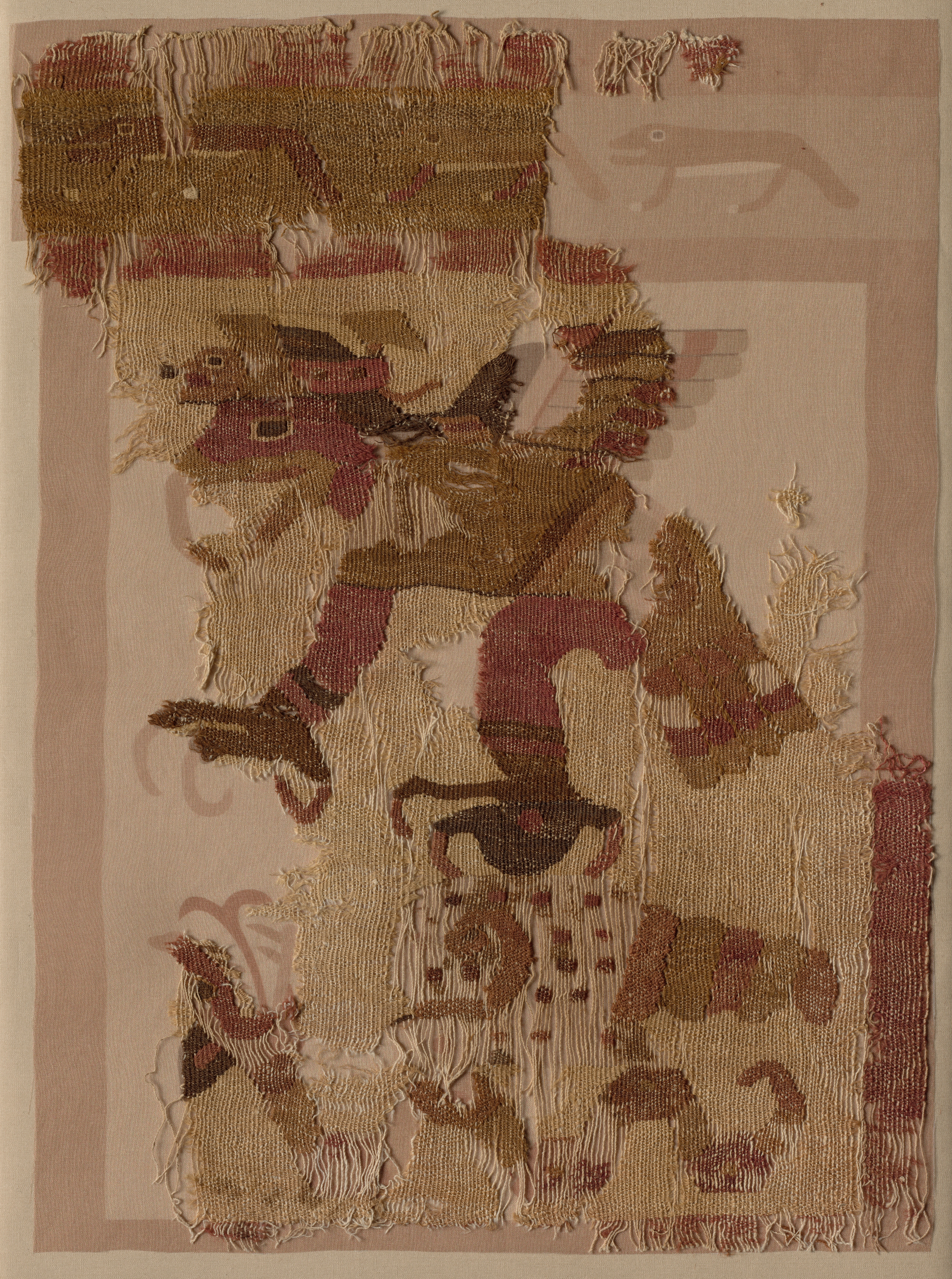
In the hallowed archives of Zoey Fashion Lab, we do not merely catalog textiles; we interrogate them. The subject of this analysis—a textile fragment originating from the Moche culture of Peru’s north coast, composed of cotton and camelid fiber—is not a static relic. It is a dynamic blueprint. When filtered through the lens of avant-garde aesthetics, this fragment ceases to be an archaeological curiosity and becomes a radical manifesto, predating Western modernism by over a millennium. This report deconstructs the fragment’s technical, material, and conceptual architecture, arguing that its inherent structural logic mirrors the disruptive ethos of contemporary deconstructivist fashion.
I. Technical Autopsy: The Dialectics of Cotton and Camelid
Material Duality as a Design Principle
The fragment’s genius lies in its deliberate material opposition. Cotton, a plant-based cellulose fiber, offers a cool, absorbent, and crisp hand. Camelid fiber (likely alpaca or vicuña), a protein-based filament, provides warmth, a lustrous sheen, and a fluid drape. In the Moche weaver’s hands, these were not blended for comfort alone. They were employed as antithetical forces. The warp and weft structure would have alternated or juxtaposed these fibers to create zones of varying density, texture, and thermal conductivity. For the avant-garde designer, this is a pre-industrial lesson in functional asymmetry. We see a direct lineage to contemporary practices where designers splice neoprene with silk or marry recycled polyester with organic wool—not for utility, but to create a tactile dissonance that challenges the wearer’s sensory expectations.
Weave Architecture: Beyond the Grid
Moche textiles frequently employed techniques such as discontinuous warp and weft, scaffolding, and interlocked tapestry. Unlike the rigid, mechanical grid of later industrialized textiles, the Moche loom allowed for organic, curvilinear shifts in the fabric plane. The fragment likely exhibits areas of structural slits (where color changes create intentional openings) and eccentric wefts that travel diagonally across the warp, distorting the right-angle weave. This is not a flaw; it is a deliberate subversion of the loom’s logic. In avant-garde terminology, this is deconstruction avant la lettre—a controlled chaos where the fabric’s internal skeleton is exposed, creating a topographical surface that mimics geological strata or cellular structures. The fragment’s edges, likely left raw or intentionally frayed, further reject the notion of a 'finished' garment, echoing the Japanese Wabi-sabi influence in modern avant-garde design.
II. Iconographic Resonance: The Archive as a Collision
Decoding the Visual Noise
The fragment’s iconography—likely featuring zoomorphic figures, anthropomorphic deities, or geometric step-friezes—is rendered with a high degree of abstraction. The Moche did not seek naturalistic reproduction; they sought symbolic compression. Figures are often split, with a single body hosting multiple heads or limbs, creating a visual simultaneity that modern viewers associate with Cubism. The reference to “Archive Resonance” and the 16th–17th century in the provided context suggests a layering of historical meanings. For Zoey Fashion Lab, this fragment operates as a palimpsest. We read the Moche iconography not as a static narrative, but as a generative algorithm. The repeated motifs are not mere decoration; they are rhythmic pulses that can be scaled, inverted, or fragmented to create new patterns. This is the essence of the avant-garde: taking a historical lexicon and violently re-contextualizing it to produce a jarring, new visual language.
The Aesthetic of the Unfinished
In Western fashion, the 16th–17th century was an era of opulent, hidden construction—boning, padding, and elaborate understructures. The Moche fragment, by contrast, is brutally honest. Its construction is its decoration. The warp floats, the weft loops, and the fiber ends are visible, creating a truth-to-materials ethos that the avant-garde reveres. This fragment rejects the illusion of a seamless surface. It celebrates the gesture of making. This resonates with the contemporary practice of 'visible mending' and 'raw seams' championed by designers like Rei Kawakubo or Yohji Yamamoto. The fragment’s state of incompleteness—its status as a fragment—is its most potent asset. It implies a narrative that began before and continues after the cut, inviting the viewer to participate in the construction of meaning.
III. Avant-Garde Translation: From Archive to Atelier
Deconstructing the Silhouette
For Zoey Fashion Lab, the translation of this fragment into a contemporary collection is not about copying its patterns. It is about extracting its structural DNA. The Moche fragment’s use of asymmetrical density (thick camelid areas against sheer cotton) dictates a new silhouette. We propose garments that are architecturally unbalanced—a heavy, sculpted shoulder on one side, dissolving into a fluid, translucent drape on the other. The fabric’s inherent slits and gaps can be exaggerated into strategic cut-outs, not for eroticism, but to expose the internal structure of the garment, turning the lining into the exterior.
Color as Cultural Collision
The Moche palette—derived from indigo, cochineal, and mineral ochres—is earthy yet electric. The avant-garde treatment would involve clashing these ancestral tones with synthetic, neon accents. Imagine a garment dyed in deep, fermented camelid brown, suddenly interrupted by a shock of bio-fluorescent green at the seam. This is not a gentle homage; it is a violent, beautiful collision of temporalities. It forces the wearer and the observer to confront the distance between the ancient and the hyper-modern.
Tactile Provocation
Finally, the avant-garde garment must be a tactile provocation. The fragment teaches us that fabric is not a passive surface. By combining the scratchy, rugged hand of unprocessed cotton with the buttery softness of high-grade camelid, we create a garment that is uncomfortable in its beauty. The wearer is constantly aware of the textile’s dual nature. We propose a collection where the interior of a jacket is lined with the rough, unspun cotton (challenging the skin) while the exterior is a smooth, felted camelid (pleasing the eye). This internal contradiction is the ultimate avant-garde statement.
IV. Conclusion: The Fragment as a Living System
The Moche textile fragment is not a dead object. It is a living system of design logic. Its technical duality (cotton/camelid), its structural subversion (eccentric weaves), and its iconographic compression (abstracted deities) provide a complete toolkit for the contemporary avant-garde designer. The reference to the 16th–17th century archive resonance reminds us that fashion is a cyclical conversation across time. By embracing the fragment’s 'unfinished' aesthetic and its material contradictions, Zoey Fashion Lab can produce work that is not merely experimental but historically grounded in radicality. This fragment is a proof that the avant-garde is not a 20th-century invention; it is a primal human impulse to break the mold, to expose the seams, and to find beauty in the broken. Our duty is to continue that impulse, thread by thread.