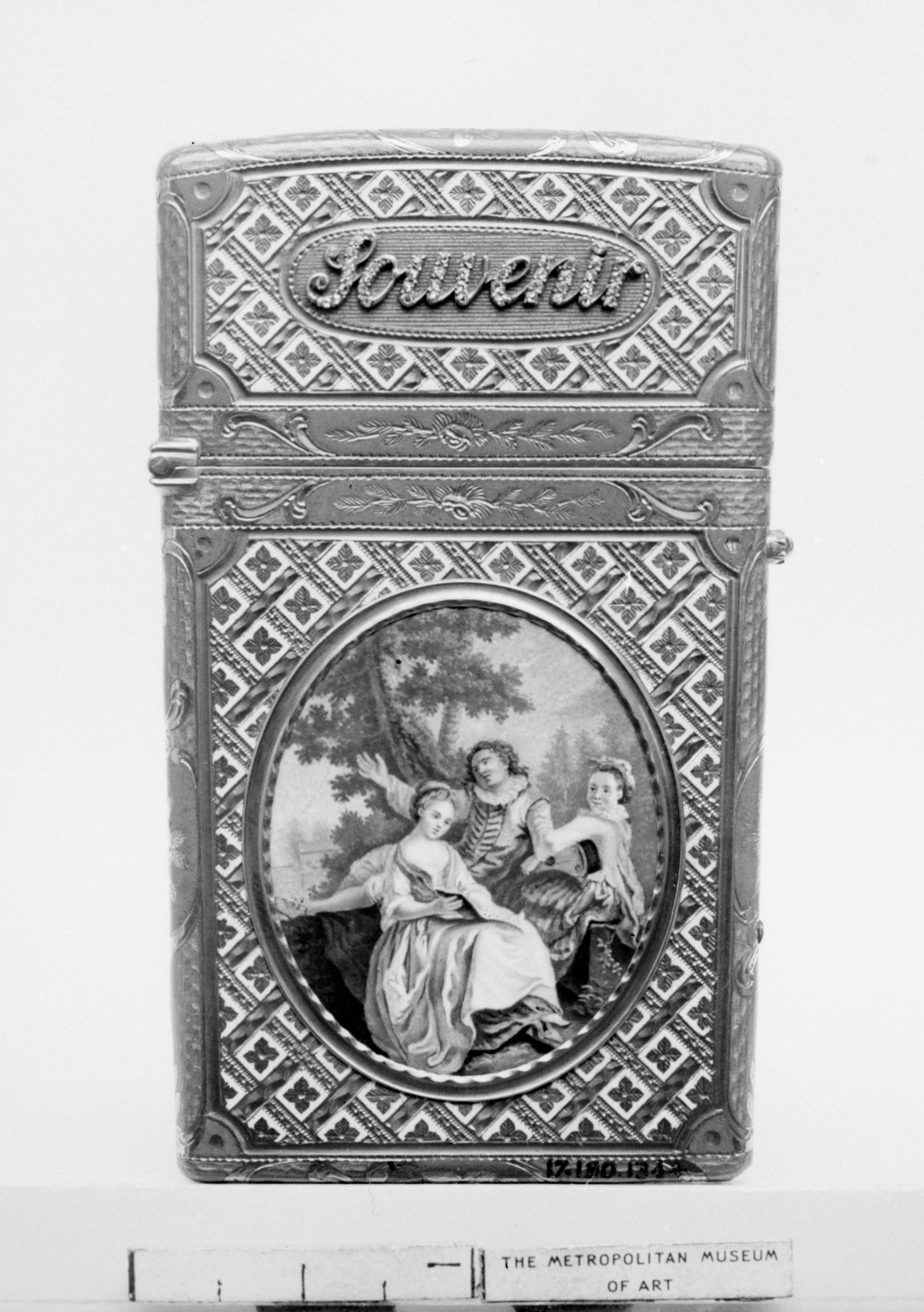
The Souvenir Reconfigured: An Avant-Garde Autopsy of Memory as Material
The souvenir, in its conventional lexicon, is a relic of the past—a static artifact of nostalgia, frozen in amber and sentiment. For Zoey Fashion Laboratory’s SS26 exploration, this definition is not merely obsolete; it is an affront. We do not collect memories; we engineer them. The subject of this definitive study is the souvenir, but not as a memento. Rather, it is a temporal projectile, hurled from the Global Frontier into a future where the past is a raw material to be deconstructed, alloyed, and re-forged into structural armor for the psyche. Our medium is not cloth alone, but a provocative alchemy of gold, enamel, diamonds, and ivory—materials traditionally reserved for heirlooms and opulence, now weaponized for a new form of wearable archaeology.
Deconstructing the Archive: From Ornament to Architecture
The foundational premise of this collection is the violent re-contextualization of the souvenir’s physicality. We reject the notion of the garment as a canvas. Instead, we propose the garment as a load-bearing structure, a micro-architecture that carries the weight of memory not as decoration, but as integral support. The traditional souvenir—a delicate gold locket, a porcelain enameled trinket—is here exploded to macro-scale. Our silhouettes for SS26 are not draped; they are assembled. We speak of shoulder pads not as padding, but as cantilevered ledges of resin-infused ivory, carved to mimic the geological strata of a forgotten coastline. The waist is not cinched; it is compressed within a rigid exoskeleton of gold filigree, laser-welded into a lattice that suggests both a cage and a spine.
The Eroded Silhouette: A Study in Negative Space
Futurism in our laboratory does not mean sleek, sterile minimalism. It means the archaeology of the future. We excavate the silhouette, leaving behind the negative space where the original object once sat. Consider our signature piece: the Ivory Reliquary Corset. It does not hug the torso. It floats, suspended on a framework of blackened steel and gold, creating a deliberate 4-centimeter void between the material and the skin. This void is the "souvenir" of the body—an absence made tangible. The ivory panels are not polished; they are left raw, scored with horizontal striations that mimic the wear of time, then inlaid with diamond dust in the fissures. This is not luxury; it is geological time rendered wearable. The enamel, typically glossy and pristine, is applied in cracked, crazed patterns, fired to a point of controlled fracture, suggesting a map of emotional ruptures.
Materiality as Narrative: The Alchemy of Precious Waste
Our material palette is a deliberate provocation against the disposable nature of fast-fashion memory. Gold is not used for its luster, but for its atomic permanence. We treat it as a liquid metal skin, applied in uneven, hammered sheets that catch light like a disturbed water surface. This is not the gold of crowns; it is the gold of salvaged circuitry, melted down and re-cast into structural rivets that hold our garments together. Enamel moves from decoration to protective coating, a vitreous shell over fragile structural bones, colored in toxic, industrial hues—bilious green, warning orange, and a deep, arterial red—reminiscent of hazard signage, not pastoral landscapes.
Ivory and the Ethics of the Future-Fossil
We must address the elephant in the atelier: ivory. In our practice, we utilize bio-fabricated ivory, grown in laboratory conditions from engineered collagen, mimicking the exact cellular density of the extinct tusks of the 19th century. This is not a substitute; it is a superior successor. It allows us to carve with a precision impossible in natural material, creating components that are lighter, stronger, and capable of being thermoformed into impossible curves. The ivory becomes a future-fossil, a material that speaks to extinction and rebirth simultaneously. It is carved into structural knee-panels that articulate like robotic joints, and into spinal ridges that run down the back of a jacket, suggesting a vertebrate armor from a species that has evolved beyond sentimentality.
Structural Innovation: The Kinetic Memory System
The true innovation of this study lies in our Kinetic Memory System (KMS). This is a proprietary jointing mechanism, hidden within the seams, that allows the garment to reconfigure itself based on the wearer’s movement. Constructed from micro-engineered gold-alloy bearings and enamel-coated ratchets, the KMS enables a sleeve to shorten and flare into a cape-like wing, or a collar to rise into a protective shield. The diamonds are not merely pavé; they are functional counterweights, set into the hems of our garments to provide momentum and balance during this transformation. The wearer does not put on a dress; they enter a machine for processing memory.
The Global Frontier: A Cartography of Displacement
Originating from the Global Frontier, this collection is not tied to a single geography. It is a nomadic architecture, designed for a body that is perpetually in transit, both physically and psychologically. The silhouettes are modular, allowing for the addition or removal of enameled panels—each panel a "souvenir" of a different climate, a different negotiation of space. A gold clasp from the Sahara, an ivory buckle from the Arctic, a diamond-studded seam from the Pacific Rim—all converge into a single, coherent, and aggressive form. This is the uniform for the citizen of the nowhere-everywhere, a person who carries their history not in a bag, but on their skeletal frame.
Conclusion: The Souvenir as a Weapon of Selfhood
In this SS26 study, Zoey Fashion Laboratory declares the souvenir obsolete as a passive object. It is now a dynamic interface between the self and the world. The gold is the scar tissue, the enamel is the new skin, the diamonds are the focal points of pressure, and the ivory is the regenerated bone. We are not designing clothes; we are prosthetics for the ego, exoskeletons for the soul. The future of couture is not in draping fabric over a body; it is in constructing a new anatomy of memory. This is not a farewell to the past; it is its brutal, beautiful, and necessary re-engineering.