Deconstructing the Blade: The Small Sword as a New DNA Strand
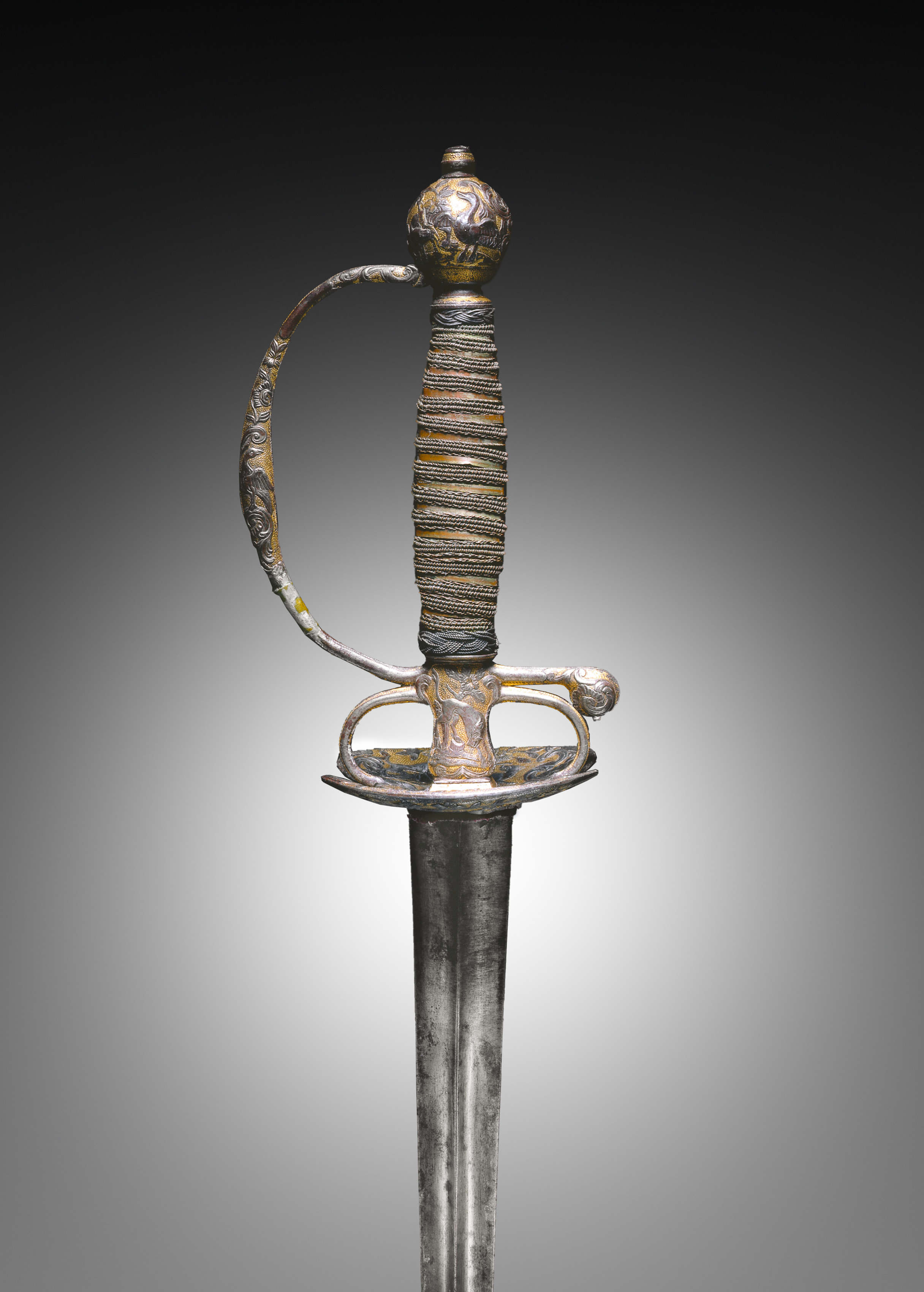
At Zoey Fashion Lab, our mandate transcends the mere cataloging of historical artifacts. We engage in a process of fabric deconstruction, extracting the genetic code of form, material, and function to re-sequence it into avant-garde design language. This analysis focuses on a singular object of profound complexity: the French Small Sword from Paris, circa the late 17th to 18th century. Composed of steel, gilt, russeted copper, and wood, this weapon is not merely a tool of dueling or courtly defense; it is a New DNA Strand—a biological and architectural blueprint waiting to be expressed in textile, silhouette, and structural innovation.
I. Material Genomics: The Metallurgy of Power and Fragility
The Small Sword’s material palette is a study in deliberate contradiction, a paradox that resonates deeply with avant-garde fashion’s obsession with tension. The steel blade, triangular in cross-section, is engineered for rigidity and piercing precision. It is a line of pure, unyielding force. In fashion terms, this translates to the structural boning of a couture corset or the sharp, architectural lapel of a deconstructed blazer. The steel is not flexible; it is a statement of absolute intent. However, its surface treatment—the russeting—introduces a chromatic mutation. Russeting, a chemical process that darkens the steel to a deep, smoky bronze, is an act of obscuring. It transforms the cold, reflective aggression of polished metal into a matte, almost organic texture. This is the equivalent of distressed leather or burned velvet—a surface that whispers of age, friction, and hidden violence beneath a quiet exterior.
Contrast this with the gilt copper of the hilt. The copper, plated in gold, is a parasite of light. It catches and refracts, creating a focal point of opulence. The gilt is not structural; it is purely ornamental, a layer of seduction over the utilitarian grip. In our design DNA, this is the metallic thread woven into a matte base, or the iridescent panel that interrupts a monochromatic flow. The wood of the core, often hidden beneath the wire wrapping, represents the internal skeleton—the unseen but essential support system. This is the invisible seam, the internal corsetry, or the 3D-printed lattice that gives a garment its shape without revealing its mechanics.
II. The Morphology of the Hilt: A Study in Asymmetrical Balance
The hilt of the Small Sword is not symmetrical. It features a quillon block, a pas d’âne (donkey’s foot) loops for the index finger, and a pommel that often deviates from a perfect sphere. This asymmetry is the key to its ergonomic genius and its avant-garde appeal. The hilt is designed for the specific biomechanics of the hand, not for abstract aesthetic symmetry. This is a direct challenge to classical fashion’s adherence to bilateral balance.
For Zoey Fashion Lab, this translates into asymmetrical draping, single-shoulder constructions, and offset closures. The pas d’âne, in particular, is a fascinating element—a loop that redirects the index finger’s position, altering the entire kinetic chain of the arm. In garment construction, this is analogous to a redirected seam that changes the drape of a sleeve, or a strategic cutout that repositions the fabric’s tension. The pommel, often faceted or shaped like a teardrop, serves as the counterweight to the blade. It is the weighted hem of a couture gown, the heavy metal zipper pull that grounds a flowing silhouette. The hilt is a masterclass in functional sculpture, where every protrusion serves a purpose, yet collectively they form an object of intricate beauty.
III. The Kinetic Garment: Translating the Lunge into Fabric
The Small Sword is not a static object; its purpose is motion. The lunge, the parry, and the riposte are extensions of the wearer’s body. The sword is a prosthetic limb, an exoskeleton of intent. Our analysis must therefore consider the kinetic energy embedded in the object’s design. The blade’s taper from hilt to point creates a line of acceleration. In fashion, this is the godet that flares from the knee, the train that elongates the stride, or the panel cut on the bias that ripples with movement.
The russeted steel’s matte finish reduces glare, allowing the eye to follow the blade’s trajectory without distraction. This is a lesson in visual quietude—the use of matte, non-reflective fabrics to emphasize silhouette over surface pattern. The gilt, conversely, is a motion accent, a flash of light at the point of grip. This is the strategic placement of sequins or metallic embroidery at the shoulder or hip, drawing the eye to the point of kinetic initiation.
Furthermore, the act of drawing the sword—the unsheathing—is a moment of revelation. The blade emerges from a scabbard, a transition from concealment to exposure. Our avant-garde expression of this is the convertible garment: a cape that becomes a jacket, a skirt that unfurls into a dress. The Small Sword teaches us that the moment of transformation is as critical as the final form.
IV. The Russet and Gilt Paradox: A Chromatic Code
The color palette of the Small Sword is deceptively simple: dark bronze (russet), warm gold (gilt), and the ghostly white of polished steel. This is not a palette of vibrancy but of tonal depth. The russet is the color of earth, of dried blood, of aged leather. The gilt is the color of sun, of ceremony, of divine right. The steel is the color of ice, of logic, of death.
In our fabric development, this translates to a layered monochrome strategy. We propose a base of deep bronze silk organza—translucent, allowing the skin to read as the "steel" beneath. Over this, we layer panels of gold lamé, not as full coverage, but as fragmented armor, echoing the gilt’s placement on the hilt. The overall effect is not "gold dress" but a textural conversation between shadow and light. The russeting process itself can be mimicked through heat-setting or chemical washing of metallic fabrics, creating a distressed, oxidized effect that feels ancient yet futuristic.
V. The Small Sword as a Design Manifesto
Ultimately, the Small Sword is a manifesto against ornamental excess without function. Every curl of the gilt, every facet of the pommel, exists to serve the blade’s purpose. This is the core principle we extract for Zoey Fashion Lab: avant-garde design must be functional sculpture. The garment must not merely adorn the body; it must redefine its capabilities. A jacket with articulated elbows, a dress with a built-in harness, a coat that converts into a tent—these are the modern expressions of the Small Sword’s DNA.
The weapon’s origin in Paris, the epicenter of haute couture, is not coincidental. The French aristocracy understood that power is a performance. The Small Sword was a tool of violence disguised as an accessory of refinement. Our fashion must embrace this duplicity. It must be provocative yet protective, delicate yet durable. The New DNA Strand we have extracted is not about replicating a historical object, but about internalizing its structural logic, material contradictions, and kinetic potential. We are not designing a costume; we are designing an exoskeleton for the modern psyche, a wearable argument that form must follow not just function, but intention. The Small Sword, in its silent steel and gilded copper, has given us the blueprint. Our task is to weave it into the future.