Deconstructing the Sacred: The Tunjos as Avant-Garde Blueprint
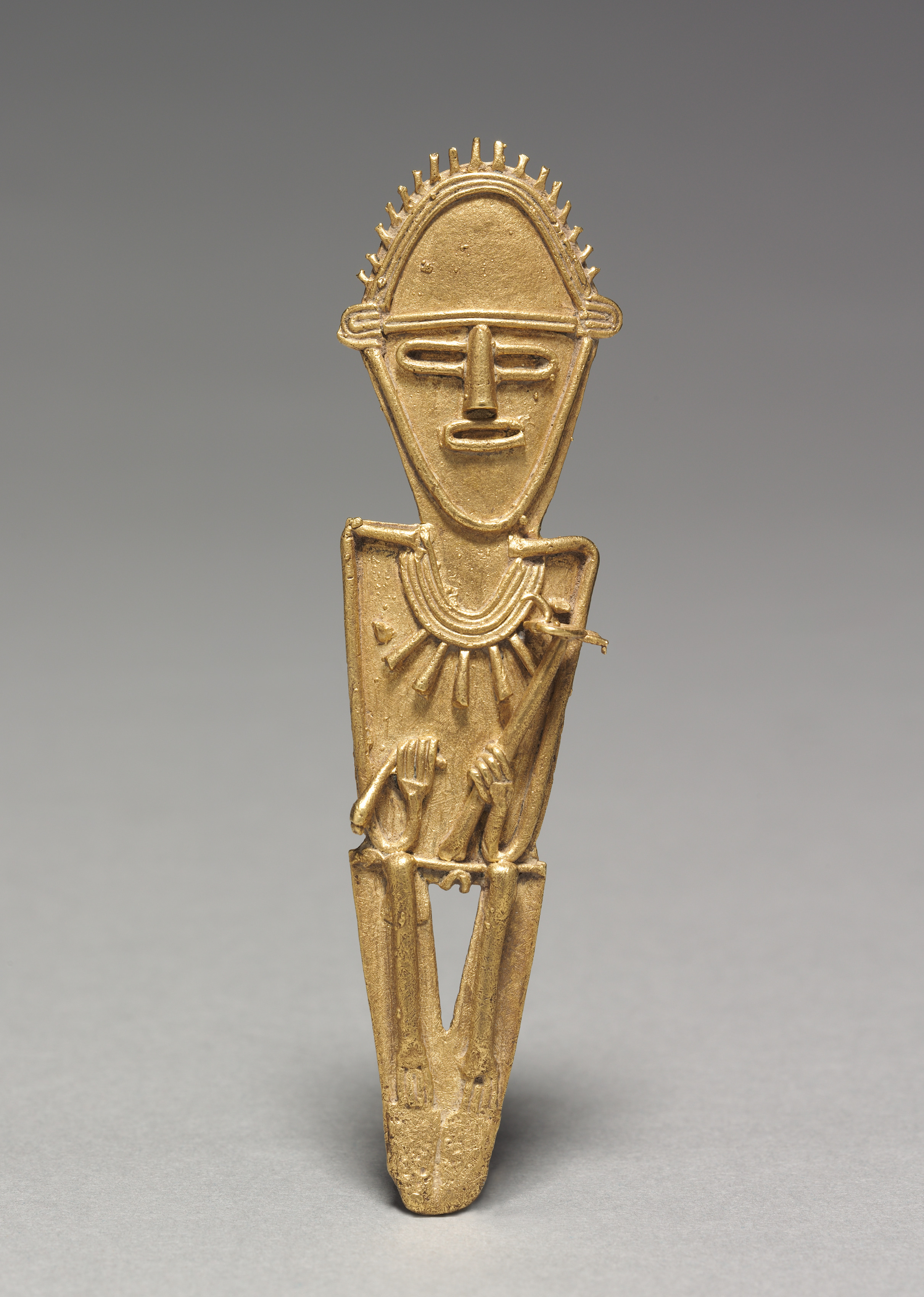
At Zoey Fashion Lab, our mandate transcends the mere analysis of textiles and silhouettes. We excavate the archaeological strata of human expression to unearth the conceptual DNA that informs avant-garde design. Today, our Chief Fabric Deconstructionist turns to a relic of profound spiritual and material significance: the Colombian Muisca Tunjo. This small, cast-gold votive offering, far from being a static artifact, functions as a radical blueprint for a fashion language that privileges ritual, transformation, and the tension between the ephemeral and the eternal.
The Tunjo, typically a flat, stylized human or animal figure, was not crafted for terrestrial display. It was a transactional object, a physical conduit for prayer, cast into the sacred waters of Guatavita or buried within the earth. Its existence is predicated on absence—it is a form designed to be relinquished, a gesture solidified in metal. This foundational paradox—a permanent object made for a transient act—is the first resonance we must harness. In our collections, this translates to a deconstruction of permanence itself: garments that are designed to be altered, disassembled, or deliberately "sacrificed" to the wearer's narrative, rendering the final state a unique, personal votive act.
Metallurgical Poetry: The Grammar of Cast Gold
The technical process of lost-wax casting, the method used to create these figurines, is a masterclass in material transmutation. A wax model, intricate and fragile, is encased in a clay mold. The mold is heated, the wax is "lost," melted away, and molten gold is poured into the resulting void. The final object is a direct negative of a positive that no longer exists. This is not mere craftsmanship; it is a philosophical statement on memory and loss. For the avant-garde, this process mirrors the act of design itself: we begin with a fragile concept (the wax), subject it to the fire of critique and iteration (the kiln), and pour in the permanent, valuable materials of our craft—be it silk, structural wool, or engineered synthetics—to create a form that is defined by what it is not.
Visually, the Tunjo’s gold is rarely polished to a high shine. It retains a granular, earthy texture from the mold, a skin that speaks of its geological and ritual origins. This is not the gleaming gold of royal crowns but a matte, tactile gold—a material that invites touch, not just sight. In our fabric development, we translate this through bonded metal finishes on organic bases, creating surfaces that are simultaneously reflective and porous. We explore crushed velvet with a metallic underlay, or jacquard weaves that incorporate actual metallic threads to mimic the uneven, pitted surface of the ancient cast piece. The goal is to achieve a "worn" luxury, a preciousness that is not ostentatious but intimate and ceremonial.
Archive Resonance: The Dialogue of Opposites
Our analysis is anchored by the fragmentary reference: "一面是光洁银镜上以黄金镶嵌的纷繁棕叶纹,另一面是冰冷石棺板上以浮雕诉说的生命叙事"—"One side is a smooth silver mirror inlaid with intricate gold palm-leaf patterns; the other side is a cold sarcophagus slab upon which a relief narrates the story of life." This poetic duality is the conceptual core of our upcoming collection. The Tunjo sits precisely at this intersection: it is the golden palm leaf—a symbol of victory, peace, and the natural world—fused onto the silver mirror of self-reflection. Simultaneously, it is the relief on the sarcophagus, a narrative carved in cold permanence, telling the story of a life, a plea, a civilization.
This dualism is not a contradiction but a generative tension. For the avant-garde, it mandates a design language of juxtaposition. We propose garments that feature a hyper-polished, mirror-like surface—perhaps a liquid satin or a patent leather—as a canvas. Upon this reflective field, we apply sculptural, embossed appliqués reminiscent of the Tunjo’s form: flat, schematic figures of gold-toned leather or resin. These appliqués are not decorative; they are narrative reliefs, telling the story of the wearer’s own ritual of dressing. The mirror side invites self-confrontation; the relief side projects the crafted identity to the world. The garment becomes a wearable archive, a personal sarcophagus and a living mirror in one.
Form and Silhouette: The Schematic Body
The Tunjo’s anatomy is deliberately imprecise. Limbs are simplified, torsos are elongated, and features are reduced to geometric cues. This is not a failure of skill but a deliberate abstraction of the human form, a move from the specific to the archetypal. The votive figure is not a portrait of an individual; it is a symbol of humanity offering itself to the divine. This abstraction is profoundly modern. In our silhouettes, we reject the anatomical tailoring of traditional haute couture. Instead, we adopt a schematic approach: jackets with elongated, flat planes that obscure the waist; trousers that hang as vertical, columnar forms; and headpieces that reduce the face to a geometric aperture. The body becomes a support structure for the garment’s conceptual narrative, not the other way around.
This is a radical departure from body-conscious design. It echoes the architectural avant-garde of the 1980s and the deconstructivist movement of the 1990s, but with a distinctly spiritual, South American resonance. The wearer is not a model displaying clothes but a votive figure, a living offering who inhabits a garment that is both a shelter and a statement. The flatness of the Tunjo is translated into panels of fabric that are fused rather than sewn, creating a seamless, monolithic appearance. Shoulders are sharpened to points, and hemlines are cut with a deliberate, almost brutalist geometry, echoing the schematic edges of the ancient gold.
Material Alchemy: From Earth to Ether
The final pillar of our deconstruction is materiality as a form of alchemy. The Tunjo’s gold was sourced from rivers and mines, a chthonic material brought to the surface and transformed into a vehicle for celestial communication. This journey—from earth to ether—is the essence of luxury. In our fabric lab, we experiment with raw, unrefined textiles: undyed wool, burlap-like linens, and rough-spun silks. We then treat these "earthy" bases with high-tech finishing processes: metallic vapor deposition, laser-etched patterning, and resin-casting that creates a fossilized, relief-like texture.
The result is a fabric that feels ancient and futuristic simultaneously. It has the weight and texture of a relic but possesses the performance and drape of a modern technical textile. We are not creating a costume of the past; we are fusing the past’s material soul with the future’s technical precision. The garment, like the Tunjo, is an object of power. It is meant to be worn for moments of significance—not everyday mundanity, but the rituals of modern life: a significant negotiation, a personal milestone, a public performance. When the wearer dons this garment, they are not just getting dressed; they are casting a votive offering of their own identity into the world, a self-made artifact of gold and narrative, poised between the mirror and the stone.