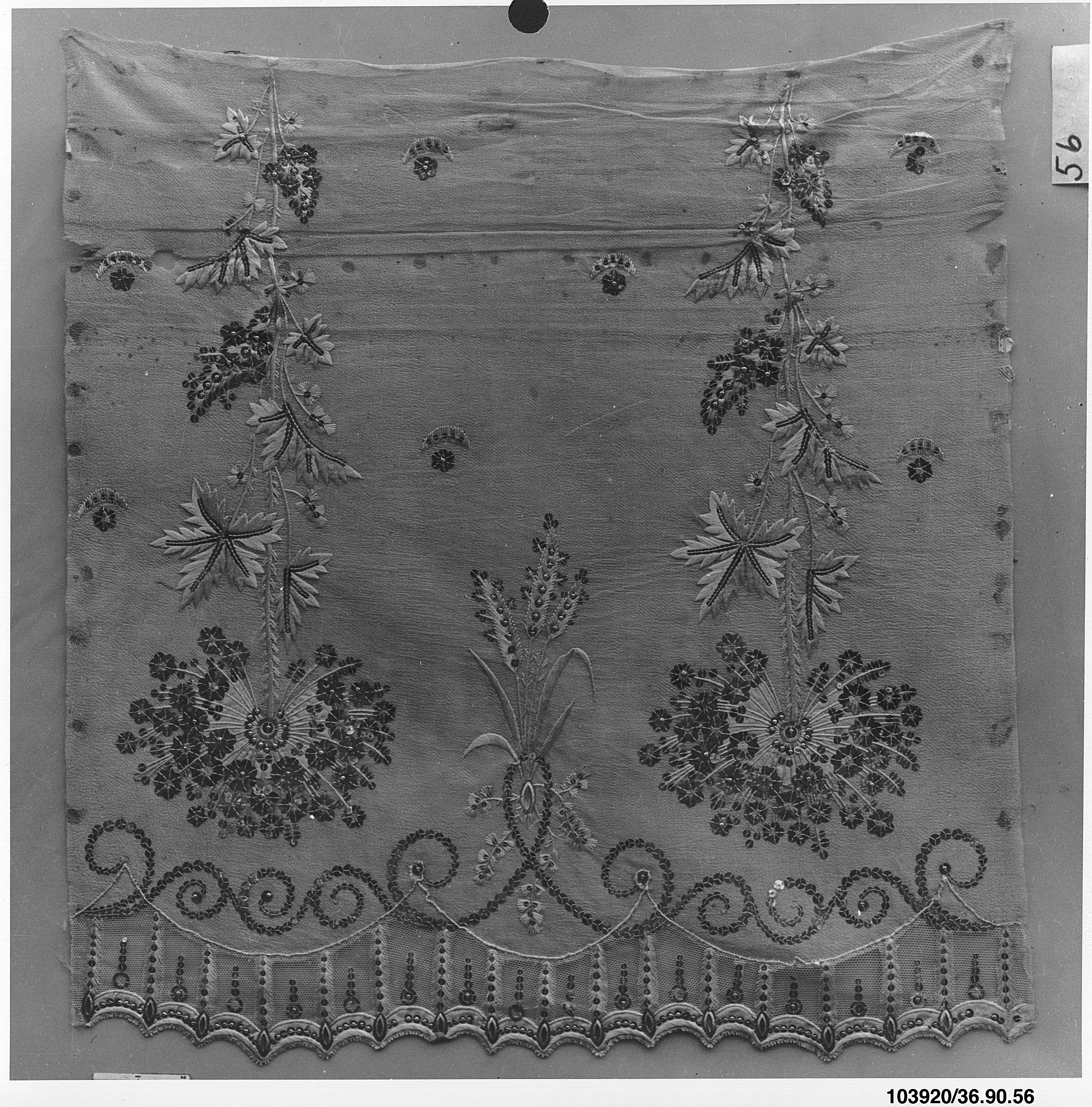
The Border as Architecture: Deconstructing the Dress Frontier for SS26
In the relentless pursuit of the new, the avant-garde designer must look not to the center of the garment—the familiar topography of bust and waist—but to its outermost limits. The dress border is no longer a mere hemline or a finishing seam; it is the primary site of tension, the negotiation between the body and the void it inhabits. For Zoey Fashion Laboratory’s SS26 collection, we have dismantled the conventional understanding of the edge, treating it not as a termination point but as an autonomous architectural threshold. This analysis dissects the structural innovation and futuristic silhouette potential inherent in a singular, radical premise: silk on silk, deployed not for its classical drape, but as a medium for engineered rigidity and kinetic dissonance.
Redefining the Periphery: From Trim to Load-Bearing Element
The historical dress border has been a servant—a ribbon of contrast, a discreet weight to encourage fall, or a decorative afterthought of lace and piping. Our SS26 thesis inverts this hierarchy. The border becomes the load-bearing exoskeleton of the entire garment. By layering multiple weights and weaves of silk—from a diaphanous 5-momme organza to a densely packed 22-momme duchesse—we create a gradient of structural integrity that culminates at the periphery. The border is no longer sewn; it is grown from the fabric itself. Through a process of heat-set pleating and selective resin bonding, the silk at the edge is forced into a state of permanent, sculptural compression. The result is a silhouette that appears to be in a state of controlled collapse, where the hem curves inward like a petal closing at dusk, or flares outward with the aggressive geometry of a cantilevered roof.
This is not a soft, flowing edge. It is a hard edge, softened only by the optical illusion of its material origin. The futuristic silhouette is defined by this paradox: a material historically associated with fluidity and submission is weaponized into a structural material. The border becomes a self-supporting frame, allowing the interior of the dress to float, unencumbered by boning or internal wire. The wearer's movement is no longer the primary force shaping the garment; instead, the garment’s border dictates the trajectory of motion, creating a kinetic sculpture where the body is the motor but the edge is the steering mechanism.
Silk on Silk: The Dialectics of Friction and Transparency
The material constraint of “silk on silk” is not a limitation but a rigorous conceptual framework. It forces a dialogue between translucency and opacity, between friction and glide. In our SS26 border studies, we employ a double-layer construction where an inner shell of matte, sandwashed silk is overlaid by an outer layer of high-gloss, liquid silk. The border is where these two layers diverge, separate, and re-engage. Instead of sewing them together, we use a technique of selective fusion, where the heat and pressure of a laser-calibrated press bonds the two silks in a grid pattern that becomes denser as it approaches the edge. This creates a differential stiffness—the interior remains fluid and supple, while the border becomes increasingly rigid, almost ceramic in its finish.
This approach yields a silhouette of negative space. The border is designed to lift away from the body, creating a gap—a habitable void—between the skin and the silk. This is not the modest separation of a crinoline; it is a deliberate, aggressive statement of architectural volume. The hem, when lifted, reveals a flash of the inner layer, a subtle interplay of light and shadow that reads as a futuristic, pixelated glitch. The border is no longer a line; it is a zone of transition, a liminal space where the garment questions its own materiality. The friction between the two silks, when the wearer walks, produces a distinct, whisper-like rustle—a sonic signature that reinforces the border's presence as an active, generative component of the design.
The Global Frontier: A Nomadic Silhouette for the Post-Geographic Body
The “Global Frontier” origin of this study is critical. It rejects the provincialism of regional tailoring in favor of a cosmopolitan, borderless aesthetic. The SS26 silhouette is designed for a body that is perpetually in transit, both physically and digitally. The dress border, in this context, becomes a portable landmark—a personal architecture that asserts presence in any environment. We are designing for the post-geographic individual, whose identity is not fixed by location but is performed through the clothing they inhabit. The border’s rigidity provides a stable, recognizable form, even as the wearer moves through shifting contexts—from the sterile white cube of a gallery to the chaotic data-stream of a metropolis.
The structural innovation lies in the modularity of the edge. The border is not a single, continuous element but a sequence of interlocking segments, connected by invisible magnetic closures and precision-milled silk hinges. This allows the wearer to reconfigure the silhouette in real-time, transforming a narrow, columnar hem into a wide, asymmetric train, or a sharp, angular peplum. The border is thus a user-interface, a control panel for the garment's overall expression. This is the definitive avant-garde gesture: to place the power of architectural transformation directly into the hands of the wearer, making them a co-author of the design. The dress is no longer a static object but a dynamic system, and its border is the command center.
Conclusion: The Edge as the Future
For SS26, Zoey Fashion Laboratory declares that the future of couture lies not in the fabric’s body but in its breaking point. The dress border, elevated from a passive trim to an active, load-bearing, and reconfigurable architectural element, is the definitive statement of our avant-garde ethos. By exploiting the inherent contradictions of silk—its strength and its fragility, its opacity and its translucence—we have forged a new language of silhouette. The border is where the garment communicates its most radical ideas: autonomy, transformation, and a relentless forward motion. This is not merely a study of a garment’s edge; it is a blueprint for the very definition of wearable sculpture in the coming era. The frontier is not a place; it is an edge, and we are designing its future.