Deconstructing the Divine: The Angel as a Proto-Avant-Garde Artifact
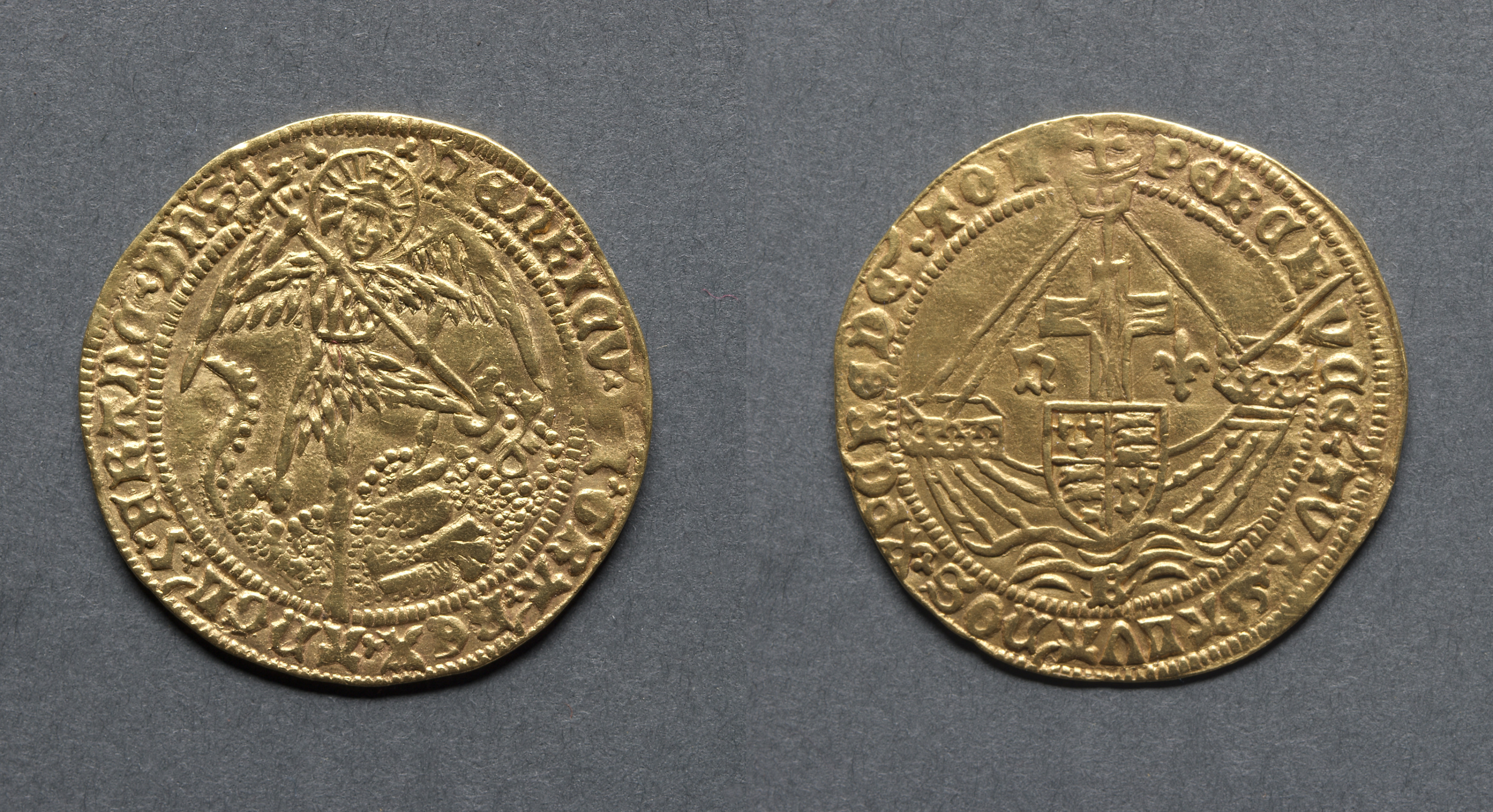
At Zoey Fashion Lab, we do not merely observe historical artifacts; we dissect them, extracting their latent codes to inform a radical sartorial future. The subject of today’s analysis—the gold Angel coin of Henry VI (1422-1461, restored 1470-1471)—is typically relegated to the realm of numismatics and medieval iconography. Yet, beneath its devotional surface lies a blueprint for an avant-garde aesthetic that challenges the very boundaries of material, narrative, and wearability. This coin is not a relic; it is a proto-manifesto.
The obverse presents St. George, the dragon-slayer, a figure of kinetic violence frozen in metallic tension. The reverse offers a starkly different narrative: a ship at sea, bearing the royal shield and cross, a symbol of sovereign navigation and precarious stability. This binary—the explosive, mythic combat versus the stoic, maritime voyage—is not a contradiction but a dialectic. For the avant-garde designer, this duality is the core generative force. It is the tension between the heroic gesture and the structural journey, between the immediate slash and the long-term construction.
The Material Dialectic: Gold as a Subversive Substrate
The technical specification—gold—is where our deconstruction begins. In conventional fashion, gold signifies opulence, tradition, and static wealth. However, the Angel’s gold is not a passive surface. It is a narrative alloy, a medium that has been struck, impressed, and forced into meaning. The coin’s value is not merely intrinsic; it is derived from the compression of violence and navigation into a portable, wearable disk. This is the first lesson for the avant-garde: material is not a given; it is a proposition.
Our archive resonance describes an obverse as "a smooth silver mirror with intricate brown leaf patterns inlaid in gold," and the reverse as "a cold sarcophagus slab with life narratives in relief." This is a crucial distortion. The coin is not a mirror; it is a membrane. The gold has been hammered into a state of tension, holding the image of a saint and a ship simultaneously. For our lab, this suggests a radical departure from flat textiles. We propose metallic compression fabrics that are not merely printed but embossed with dual-narrative topographies. Imagine a garment that, from one angle, reveals the sharp, angular geometry of a dragon’s wing, and from another, the fluid, horizontal lines of a ship’s hull. The gold is not a color; it is a structural stress point.
Furthermore, the coin’s size—a small, handheld object—belies its monumental iconographic weight. This compression is a key avant-garde strategy. We are not interested in large, billowing canvases. Instead, we focus on micro-narratives. A single, oversized gold clasp on a utilitarian jacket becomes the "St. George" of the ensemble—a point of aggressive, protective detail. The "Ship" is the garment’s internal structure, the hidden seams and linings that ensure stability. The gold is the conductor between these two states.
Deconstructing the Obverse: The Geometry of Violence
St. George’s act is one of precise, vertical thrust. The lance, the horse’s rearing posture, and the dragon’s contorted form create a composition of diagonal chaos. In our design language, this translates to asymmetrical darting and sharp, angular shoulder pads. However, we reject the literal interpretation. We do not want a costume of a knight. Instead, we extract the kinetic energy of the strike. This manifests as deconstructed tailoring—a jacket where the sleeve is set at a deliberately off-kilter angle, as if caught mid-lunge. The fabric is not draped; it is cut to suggest a pause in a violent motion.
The "brown leaf patterns" from the archive resonance are not decorative. They are fossilized organic matter. In our avant-garde interpretation, these become laser-cut leather appliqués that mimic the texture of a dragon’s hide, but in a desaturated, almost necrotic palette. We pair this with high-shine, mirror-polished metal hardware to create the "silver mirror" effect. The result is a garment that feels both ancient and alien, a relic from a future that has already experienced its own apocalyptic battle.
Deconstructing the Reverse: The Architecture of Voyage
The reverse side is a study in horizontal stability. The ship is a vessel of containment, a structure designed to withstand the unpredictable nature of the sea. The shield and cross are emblems of fixed identity, of a sovereign claim staked against the void. This is the architectural skeleton of our collection. Where the obverse is about the cut, the reverse is about the construction.
We translate the ship’s hull into corsetry and structured outerwear. The "cold sarcophagus slab" becomes a rigid, sculptural overcoat in a dense, black wool, reminiscent of a funerary monument. But the "life narratives in relief" are the key. We do not leave this slab flat. We embellish it with three-dimensional, sculptural embroidery that tells the story of the voyage—not a literal ship, but abstracted waves, ropes, and rigging. The gold is used sparingly, as gilded thread, to trace the outline of the shield, creating a subtle, almost sacred glow against the matte black. This is not decoration; it is data. It is the logbook of a journey, etched into the very fabric of the garment.
Avant-Garde Synthesis: The Wearable Contradiction
The genius of the Angel coin lies in its simultaneity. It asks the wearer to hold two opposing truths in one hand. The avant-garde garment must do the same. We propose a transformative silhouette that is neither purely martial nor purely nautical. It is a hybrid. A garment that features a severe, sharp-shouldered top (St. George) that flows into a long, weighted, and structured skirt or trouser (the Ship). The waist is cinched not with a belt, but with a rigid, gold-plated obi that resembles a ship’s keel.
The color palette is equally dialectical. We move beyond the obvious gold. We introduce argent (silver) for the mirror-like surfaces, sable (black) for the sarcophagus slab, and tenné (a dark, muddy orange-brown) for the dragon’s leaf-like hide. These are not pretty colors; they are material states. The gold is reserved for the points of highest tension: the tips of the shoulders, the center of the chest (where the shield would be), and the clasp at the neck. This is a form of metallic acupuncture, focusing the viewer’s eye on the garment’s structural and narrative pressure points.
Finally, the restoration of Henry VI (1470-1471) adds a layer of temporal dissonance. The coin is not a pure original; it is a re-strike, a re-assertion of power after a period of exile. Our garments must embody this palimpsest quality. We achieve this through visible mending and re-construction. Seams are left raw. Linings are intentionally mismatched. A garment might have a pristine, gold-embroidered front, while the back is made of a rougher, unbleached canvas, as if it has been hastily reassembled. This is not a flaw; it is a statement of resilience. It acknowledges that all identity, like this coin, is a construction, a story told over a void, a ship navigating a dragon’s sea.
In conclusion, the Angel of Henry VI is not a piece of money. It is a compressed narrative engine. For Zoey Fashion Lab, it provides the theoretical framework for a collection that is aggressive yet structural, mythic yet modern. It teaches us that true avant-garde design is not about novelty, but about excavating the radical potential that has always existed within historical forms. We do not copy the knight; we become the dragon, the ship, and the gold itself—a complex, contradictory, and utterly wearable artifact for the future.