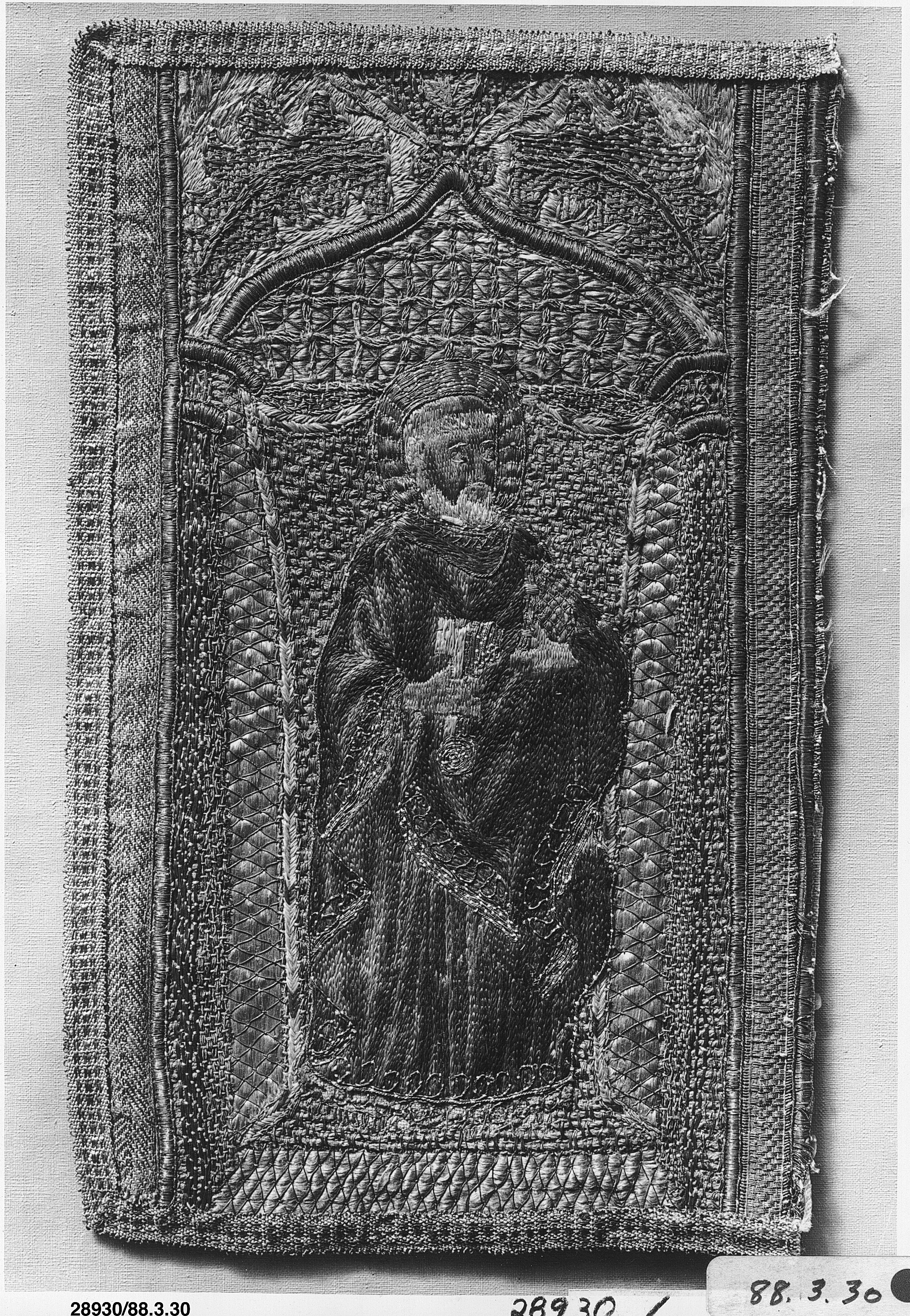
Deconstructing the Pontiff: Saint Peter as a Blueprint for Post-Human Ceremony
The ecclesiastical wardrobe of the Vatican, with its layered vestments, rigid copes, and gilded mitres, has long served as a repository of sartorial power—a system of dress engineered to project transcendence through material weight and symbolic density. For the SS26 frontier, Zoey Fashion Laboratory excavates this legacy not as an act of reverence, nor as one of iconoclasm, but as a rigorous structural analysis. We approach Saint Peter—the fisher of men, the rock upon which an institution was built—as a proto-cyborg figure, a conduit between terrestrial labor and celestial authority. The resulting study, “PONTIFEX: A Study in Load-Bearing Grace,” dismantles the historical vestment to expose its underlying architecture, then rebuilds it as a speculative garment system for a future where ceremony and function are indistinguishable.
Our material palette is deliberately paradoxical. Silk, the quintessential fiber of liturgical luxury, is re-engineered not for its drape but for its tensile memory. We treat it as a structural membrane, a substrate for load distribution. Conversely, metal-wrapped thread—traditionally reserved for ornamental bullion and passementerie—is liberated from its decorative servitude. Here, it functions as an exoskeletal lattice, a conductive pathway that traces the body’s kinetic energy. The thread is not applied to the silk; it is woven into it, creating a hybrid textile that behaves like a flexible circuit board, capable of stiffening on demand or collapsing into fluidity. The garment, therefore, is not a static object but a responsive system, one that acknowledges the wearer’s movement as a form of ritual performance.
Silhouette as Ecclesiastical Infrastructure
The defining innovation of this study is the “Cappa Magna” Silhouette, reimagined for SS26. Historically, the Cappa Magna is a voluminous, floor-length cloak, its train a symbol of juridical and spiritual weight. Our interpretation severs the cloak from its historical volume, instead projecting its mass forward and upward. The result is a silhouette that defies gravity’s traditional constraints on cloth. The shoulders are not padded; they are cantilevered. A series of articulated, metal-thread-reinforced ribs fan out from the cervical spine, creating a wing-like structure that hovers approximately eight centimeters off the shoulder blades. This is not a cape; it is a piece of wearable infrastructure, a canopy that suggests shelter without the claustrophobia of enclosure.
The lower body is anchored by a “Fishing Net” Trousseau, a direct homage to Peter’s apostolic trade. Constructed from a double-layer of silk organza and a lattice of oxidized copper thread, the trousers are engineered with a series of micro-tension points at the knee and ankle. These points allow the garment to transform from a fluid, almost liquid drape when the wearer is at rest, to a rigid, articulated exoskeleton when in motion. The visual effect is that of a net casting and retracting with every stride. This is not a nostalgic reference to the past; it is a futuristic interpretation of biomechanical efficiency, where the garment amplifies the wearer’s own locomotive power, turning a simple walk into a procession of engineered force.
The Metal Thread as Conduit and Constraint
Our second critical intervention lies in the treatment of the “Keys to the Kingdom” motif, a symbol inextricably linked to Peter. In our study, the keys are not decorative metal objects but are rendered as functional, magnetic closures distributed along the garment’s primary seams. These closures are not hidden; they are exposed, exaggerated, and scaled to the point of architectural prominence. A series of elongated, key-shaped magnets runs vertically down the spine, serving as the garment’s central nervous system. When engaged, they create a rigid spinal column that forces the wearer into an upright, hieratic posture. When disengaged, they allow for a fluid, almost boneless collapse. The wearer thus possesses the agency to choose between states of authority and repose, a power dynamic that interrogates the very nature of ecclesiastical office.
This integration of magnetic hardware serves a deeper conceptual purpose. It reframes the idea of “binding”—a concept central to Peter’s role as the one who holds the keys to bind and loose. Our garment literally binds the body with metal, yet the binding is voluntary and adjustable. It is a meditation on the tension between institutional constraint and individual liberation. The metal-wrapped thread, in this context, becomes a metaphor for the thread of history itself—heavy, conductive, and impossible to ignore, yet capable of being rewoven into new configurations.
A New Ceremony for the SS26 Frontier
Standing alone as an avant-garde study, “PONTIFEX” rejects the nostalgia of historical reenactment. Instead, it proposes a new liturgy for the technological age. The garment is designed for a future officiant—not of a church, but of a global frontier—a leader who must navigate data streams as readily as crowds, who must project authority without the crutch of historical precedent. The silk and metal hybrid is engineered to be temperature-regulating and sensor-embedded, allowing the garment to respond to environmental stimuli. The metal thread is not merely structural; it is a conductive fiber that can transmit data, turning the vestment into a wearable interface.
Silhouette is no longer about the body’s shape but about the space the body commands. The cantilevered shoulders do not mimic human musculature; they create a new spatial territory, a halo of engineered presence. The trousers do not follow the leg; they precede it, casting a shadow of potential movement. This is the essence of our SS26 proposition: to move beyond the human form as a passive mannequin and towards a vision of the wearer as an active architect of their own environment.
In conclusion, this study of Saint Peter is not an homage. It is a structural exegesis, a reading of a historical figure through the lens of futuristic material science. The silk and metal-wrapped thread are not just materials; they are the grammar of a new sartorial language, one that speaks of load, balance, conductivity, and ultimately, of a ceremony that is not about the past, but about the potential of the next frontier. The garment is a statement: authority is no longer inherited; it is engineered. The keys are no longer held; they are worn.