Deconstructing the Buzi: A New DNA Strand for Avant-Garde Expression
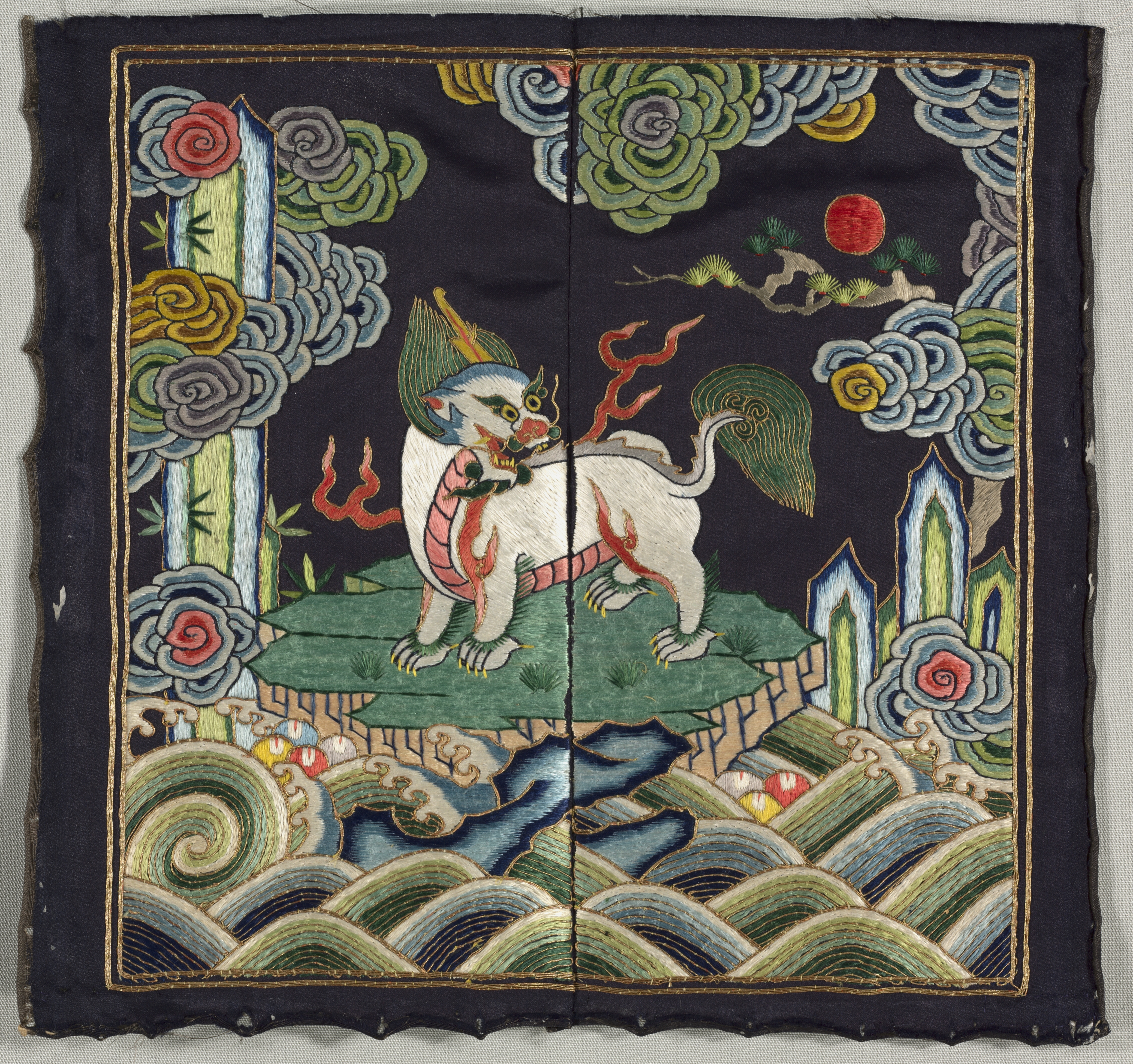
At Zoey Fashion Lab, our mandate extends beyond mere garment construction; we engage in the systematic deconstruction of historical artifacts to extract their latent design DNA. Our latest subject, a Qing dynasty rank badge (buzi) from the Qianlong reign (1736–95), presents a fascinating paradox. Crafted from silk satin and embroidered with silk and metal thread, this object was the ultimate symbol of bureaucratic order, hierarchy, and imperial stasis. Yet, within its rigid iconography and meticulous technique lies a blueprint for radical, avant-garde disruption. This analysis dissects the buzi’s material, symbolic, and structural codes to propose a new fashion lexicon—one that recontextualizes imperial authority as a form of subversive, kinetic art.
Material Memory: Satin as a Canvas for Light and Power
The ground fabric of the buzi—a lustrous silk satin weave—is not a passive background but an active participant in the object’s semiotic power. Satin’s high-gloss surface creates a play of light that shifts with the viewer’s perspective, lending the badge an almost holographic quality. In the Qianlong court, this shimmer was synonymous with imperial radiance, a visual metaphor for the emperor’s omnipresent gaze. For Zoey Fashion Lab, this satin base becomes a starting point for material experimentation. We propose translating this optical effect into contemporary textiles using liquid metallic coatings, iridescent bio-fabrics, or even reactive dyes that change hue with body heat. The goal is not to replicate the satin but to amplify its core property—the manipulation of light—into a dynamic, wearable interface. The metal-wrapped threads, typically gilded or silvered, further this dialogue. Their stiffness and high tensile strength allowed for the creation of raised, sculptural embroidery. In our avant-garde reinterpretation, we suggest replacing these threads with conductive fibers or flexible LED filaments, transforming the badge’s static surface into an interactive, luminous topography that responds to the wearer’s movements or environmental stimuli.
Iconographic Subversion: The Chaos Within the Cosmic Order
The buzi’s central motif—typically a mythical beast (here, a qilin or similar auspicious creature) surrounded by Buddhist and Daoist symbols (waves, clouds, mountains, and the Eight Treasures)—represents a microcosm of the cosmos as understood by the Qing court. Every element is codified: the waves signify the flood of chaos, the mountains represent stability, and the beast embodies the official’s rank and virtue. This is a system of total control. Our deconstruction targets this very control. We propose severing the iconographic hierarchy, isolating individual elements—a single wave crest, a detached cloud spiral, the beast’s claw—and scaling them to monstrous or minuscule proportions. Imagine a deconstructed trench coat where the back panel features a 3D-printed, oversized wave form that appears to crash over the shoulder, while the front is embroidered with a micro-scale, abstracted version of the qilin’s eye. This fragmentation destroys the original narrative of cosmic harmony, replacing it with a chaotic, surrealist collage that questions the very notion of order. The avant-garde imperative here is to move from representation to expression: the badge no longer tells the story of an official’s rank but becomes a personal, psychological landscape of the wearer.
Structural Geometry: The Square as a Prison and a Portal
Physically, the buzi is a square—a shape of absolute stability and containment. Worn on the chest or back, it literally framed the official’s torso, turning the body into a mobile monument. For our new DNA strand, we challenge this geometric tyranny. The square is a prison; we propose its dissolution. The collection will feature garments where the buzi’s square is deconstructed into a series of floating, articulated panels. These panels, connected by fine metal chains or transparent silicone, move independently with the body, creating a kinetic fringe that echoes the original embroidery’s raised texture but with a fluid, almost aquatic quality. Alternatively, we can warp the square into a trapezoid or a spiral, using pattern-cutting techniques that force the fabric into three-dimensional, sculptural folds. This distortion of the original geometry is a direct act of rebellion against the imperial aesthetic of rigidity. The wearer is no longer a static pillar of the state but a fluid, morphing entity—a living sculpture that challenges the boundaries of garment and architecture.
Chromatic Displacement: From Imperial Palette to Neon Spectrum
The Qianlong buzi employs a restrained, albeit sumptuous, palette: deep azure blues, imperial yellows, rich corals, and muted greens, all grounded by the gold and silver of the metal threads. This chromatic scheme was dictated by sumptuary laws—a visual language of rank and prohibition. Our avant-garde strategy is chromatic displacement. We will extract the original hues and push them through a digital filter, generating a neon, hyper-saturated spectrum: electric turquoise, acid lime, and phosphorescent magenta. These colors will be applied not as embroidery but through digital sublimation printing, creating a jarring contrast between the historical silhouette and a futuristic, almost toxic colorway. Furthermore, we propose a deliberate misalignment of color and form: the wave motif rendered in a neon orange against a black background, while the qilin’s body is partially obscured by a transparent, holographic organza overlay. This intentional visual dissonance disrupts the eye’s ability to settle on a single reading, forcing the viewer to engage with the piece as a dynamic, destabilized composition. The result is a collection that honors the buzi’s technical brilliance while violently rejecting its ideological constraints.
Synthesis: The Buzi as a Catalyst for a New Fashion Language
The Qing dynasty rank badge is not a relic to be preserved in a museum case; it is a coded message from a past civilization that we at Zoey Fashion Lab have chosen to decrypt and re-encode. Our analysis reveals that the buzi’s true DNA is not silk and metal, but control and light. By deconstructing its materiality (satin to reactive film), its iconography (cosmic order to personal chaos), its geometry (square to kinetic panel), and its palette (imperial to neon), we forge a new avant-garde language. This language speaks not of rank or history, but of fluid identity, technological embodiment, and the constant, necessary disruption of established systems. The buzi, once a symbol of static authority, becomes, in our hands, a catalyst for dynamic, individualistic expression—a true new DNA strand for the future of fashion.