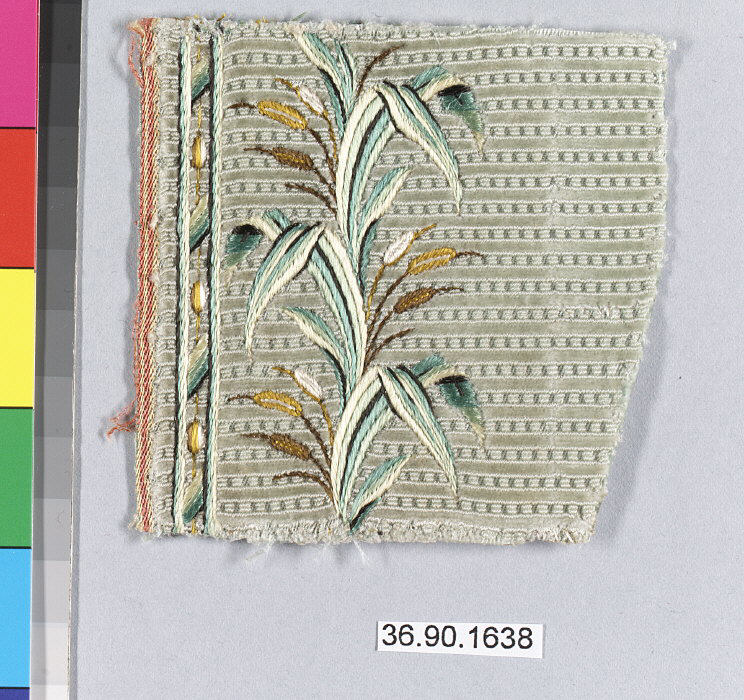
Deconstructing the Frontier: A Study in Structural Autonomy
The SS26 offering from Zoey Fashion Laboratory, titled “Sample: Global Frontier,” does not merely propose a garment; it presents a thesis on the very ontology of dress. In an era saturated with digitized reproduction and algorithmic trend cycles, this standalone study—crafted from the dialectical tension of silk against velvet—emerges as a defiant physical manifesto. It is not a collection piece but a singular probe, a laboratory experiment designed to interrogate the boundaries between the body, the architectural shell, and the cultural cartography of the future. The work abandons narrative nostalgia for a speculative present, positioning itself as a blueprint for a new form of sartorial citizenship.
The Dialectics of Material: Silk on Velvet as a Spatial Argument
The material pairing is not a matter of aesthetic contrast but a fundamental conflict of temporalities and textures, engineered to produce a new structural language. Silk, in its liquid, high-tensile form, represents the fluid, the kinetic, and the ephemeral. Velvet, conversely, is the plush, light-absorbing mass that suggests depth, stillness, and a certain historical weight. The Laboratory’s innovation lies in subverting their conventional hierarchy. Here, the velvet is not a base but a rigid, sculptural substrate—treated with a technical stiffener to create load-bearing planes that jut away from the body. The silk is not a drape but a tension membrane, stretched across these velvet buttresses like a photovoltaic sail catching artificial light.
This construction creates a negative-space silhouette, where the void between fabric and flesh becomes the primary design element. The garment does not cling to the anatomy; it negotiates with it, establishing a territorial buffer. This is a deliberate move away from the body-consciousness of the past decade toward a new, post-humanist architecture. The silk’s iridescence, catching the light at sharp angles, contrasts with the velvet’s matte, absorptive darkness, producing a visual static that suggests a garment in a state of digital and physical flux. It is a study in how opposing forces—weight and weightlessness, opacity and luminosity—can be synthesized into a cohesive, forward-moving structure.
From Silhouette to System: The Modular Architecture of ‘Sample’
The futuristic silhouette is not a singular shape but a system of variable geometries. The primary innovation is the “Cantilevered Collar,” a sweeping, asymmetric extension of the velvet shell that arcs over the shoulder without touching the clavicle. It functions as a visor, a sound baffle, and a directional signal, turning the wearer’s head into a sculptural focal point. This is complemented by the “Kinetic Hemline,” where the silk is cut on a severe bias and weighted with internal, invisible micro-beads. The result is a hem that moves with a delayed, liquid gravity, perpetually in a state of becoming, never at rest.
The construction methodology is equally radical, employing “reactive seam lines” that are not sewn but fused via a low-temperature sonic weld, leaving no perforation in the silk. This allows the fabric to retain its tensile integrity, creating surfaces that can flex and return to form without creasing. The overall effect is a garment that feels less like clothing and more like a piece of wearable infrastructure—a portable environment engineered for the unpredictable climates of the global frontier. The silhouette is simultaneously armored and ethereal, suggesting a being that is both protected from and transparent to its surroundings.
Contextualizing the Standalone: A Speculative Anthropology of Dress
As a standalone avant-garde study, “Sample: Global Frontier” must be read not as a prototype for mass production but as a theoretical instrument. It challenges the fashion system’s obsession with the seasonal cycle by proposing a garment that is conceptually timeless yet temporally specific. It speaks to the condition of the global citizen—the individual who exists across multiple time zones, cultural codes, and digital realities. The garment’s asymmetries and structural protrusions are not arbitrary; they are calibrated to create different silhouettes from every viewing angle, mirroring the fragmented, multi-perspectival nature of contemporary identity.
The choice of silk on velvet also carries a subversive political charge. It rejects the hyper-masculine, utilitarian techwear of the past decade in favor of a neo-romantic structuralism. The velvet’s historical association with aristocracy and luxury is deconstructed into a functional, almost brutalist element, while the silk—often seen as delicate—is empowered as a high-tension structural component. This inversion is a quiet rebellion against material determinism, proving that the future of couture lies not in new synthetic fibers alone, but in the radical re-contextualization of existing ones.
The Verdict: A Blueprint for SS26 and Beyond
“Sample: Global Frontier” succeeds because it refuses to be merely decorative. It is a functional philosophy, a garment that thinks. For SS26, this signals a definitive shift from the “soft power” of draped minimalism to a new “hard fluidity”—a design language where strength and delicacy are not opposites but interdependent forces. The piece demands a new kind of wearer, one who understands that fashion is not a costume but a cognitive extension of the self.
In its synthesis of material conflict, modular architecture, and speculative context, this study establishes a new benchmark for avant-garde practice. It is a compelling argument that the future of couture lies in the ability to create garments that are not just worn, but inhabited—structures that generate their own atmosphere, their own gravity, and their own silent commentary on the human condition. Zoey Fashion Laboratory has not just produced a garment; it has produced a manifesto in silk and velvet, a provocation to the industry to consider the body not as a mannequin, but as a frontier.