Deconstructing the Imperial Thread: A Yuan Dynasty Masterwork Reimagined for the Avant-Garde
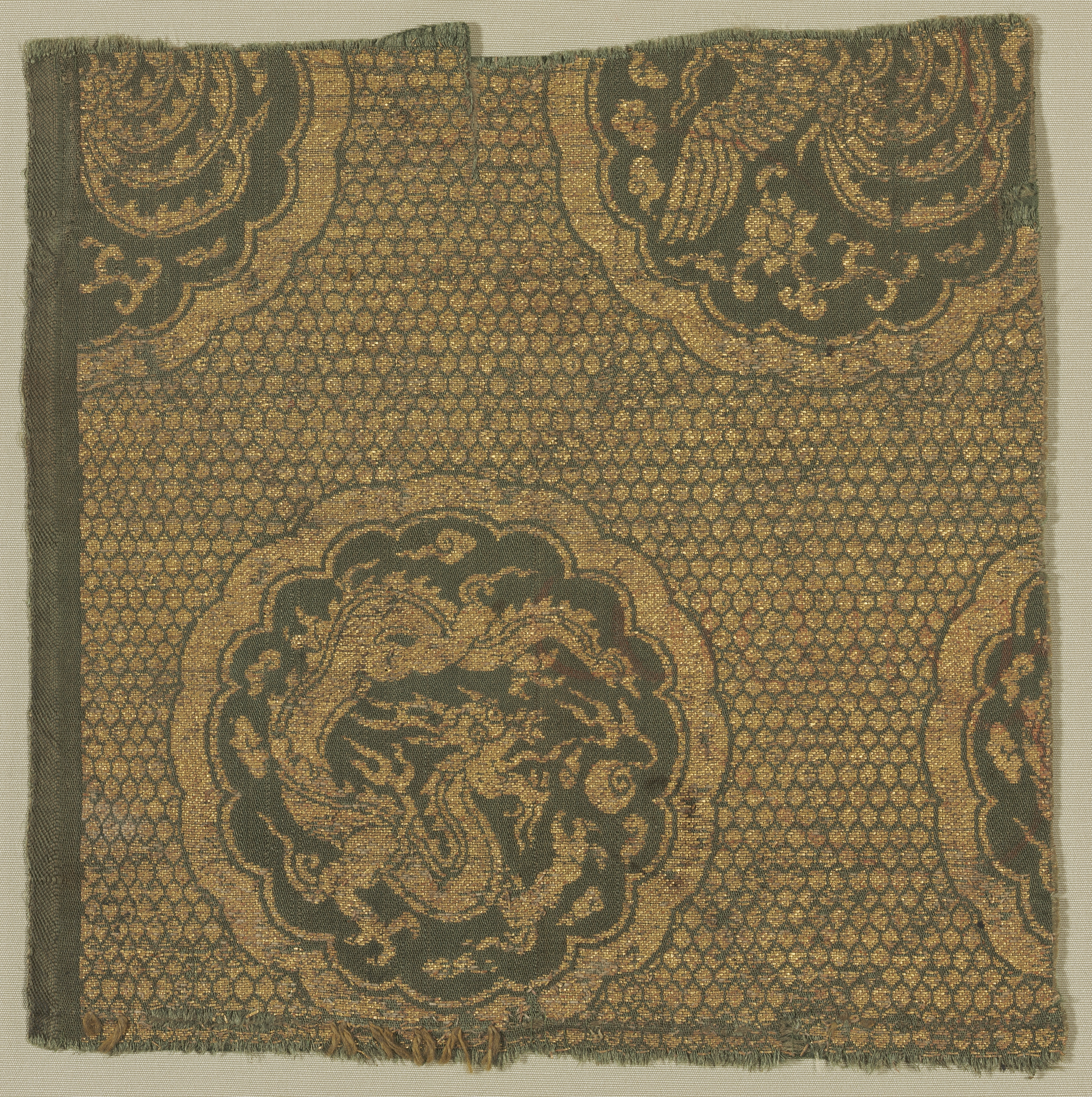
At Zoey Fashion Lab, our mandate transcends the mere cataloging of historical textiles. We engage in a forensic dialogue with the past, extracting the genetic code of ancient craftsmanship to engineer the future of fashion. The subject of this analysis—a Yuan dynasty (1260-1368) lampas weave depicting phoenixes and dragons in silk and gold thread—presents a singular opportunity. This is not simply a relic; it is a New DNA Strand, a complex biological and cultural blueprint that, when deconstructed, yields radical possibilities for avant-garde design. Our laboratory’s findings reveal a textile that is simultaneously a monument to imperial power and a surprisingly prescient precursor to contemporary structural fashion.
I. The Material Genome: Silk, Gold, and the Lampas Architecture
The technical foundation of this textile is the lampas weave, a sophisticated compound structure that emerged as a pinnacle of medieval silk technology. Unlike simpler brocades where pattern wefts float loosely on the reverse, lampas employs two distinct warp systems: a ground warp and a pattern warp. This creates a fabric with two faces—a sturdy, plain-weave base and a richly figured face—allowing for intricate, multi-layered patterning without compromising structural integrity. For the deconstructionist, this is the textile’s primary architectural skeleton. The ground weave provides tensile strength, while the pattern warp introduces a secondary, sculptural plane. This is not a flat canvas; it is a topographical map.
The material palette further enriches this genetic profile. The warp and weft are of lustrous, untwisted silk, offering a fluid, almost liquid drape. This is contrasted by the weft of gold thread, typically created by wrapping a silk core with gilded paper or animal membrane. This gold is not merely decorative; it functions as a metallic exoskeleton, adding weight, rigidity, and a reflective, almost holographic surface. The interaction between the soft, yielding silk and the unyielding metallic thread creates a fundamental tension—a dialogue between flexibility and structure, fluidity and monumentality. This dichotomy is the first strand of our new DNA.
II. Iconographic Decoding: Phoenix and Dragon as Dynamic Forces
The iconography is equally potent. The dragon, a symbol of the emperor, represents masculine yang energy, power, and the celestial forces of storm and rain. The phoenix, emblem of the empress, embodies yin energy, grace, renewal, and the sun’s warmth. Their co-presence in Yuan textiles is significant; it was a period of Mongol rule, where such imagery was often used to legitimize authority through a fusion of Chinese and Central Asian aesthetics. However, for the avant-garde designer, these are not static symbols of imperial hierarchy. They are dynamic vector forces—the dragon’s serpentine, coiling body suggests spiraling kinetic energy, while the phoenix’s sweeping tail feathers imply a fluid, projectile trajectory.
In our deconstruction, we do not see a literal dragon or phoenix. We see a system of interlocking curves, sharp talon-like points, and undulating lines. The dragon’s scales become a repetitive modular pattern, a potential for micro-texturing. The phoenix’s plumage translates into a series of asymmetric, feather-like panels that could be articulated to create movement. The gold thread tracing these figures becomes a circuit board of light, highlighting the dynamic paths of these creatures across the fabric’s surface. The iconography is thus reduced to its purest formal elements: line, point, and counter-curve, ready for re-application in a new, three-dimensional context.
III. The Avant-Garde Transmutation: From Flat Textile to Wearable Sculpture
The Zoey Fashion Lab protocol rejects mere inspiration. We employ a process of bio-mimetic extraction, isolating the textile’s core principles and re-engineering them for radical silhouettes. The lampas’ dual-warp structure directly informs our construction methodology. We propose a garment that utilizes the original textile’s weight and rigidity as a primary structural element, rather than a surface covering. Imagine a sculptural coat where the ground weave forms a sharp, architectural shoulder, while the pattern warp is selectively cut and released, allowing the gold-threaded phoenix to escape the fabric’s plane and become a freestanding, articulated collar or a cascading, three-dimensional train.
Furthermore, the gold thread’s inherent stiffness allows for a technique we call “metallic memory folding.” By manipulating the fabric along the lines of the dragon’s coils, we can create permanent, origami-like pleats that hold their shape without internal wiring. The garment becomes a self-supporting structure, a wearable building. The contrast between the silk’s softness and the gold’s rigidity is exaggerated to create a tactile and visual dissonance—a sleeve that is fluid at the shoulder but snaps into a sharp, metallic cuff at the wrist. The overall silhouette is not one of the body, but of the textile’s own internal logic, a garment that wears the wearer, dictating posture and movement.
IV. A New Temporal Fabric: The Synthesis of Past and Future
This Yuan dynasty textile is not a historical artifact to be preserved under glass; it is a living organism whose genetic material can be spliced into the future of fashion. Its relevance to the avant-garde lies not in its historical narrative, but in its profound understanding of material contrast, structural complexity, and dynamic line. The lampas weave teaches us that a fabric can be both a foundation and a sculpture. The gold thread teaches us that decoration can be load-bearing. The dragon and phoenix teach us that iconography can be abstracted into pure, kinetic energy.
In our final analysis, the textile represents a perfect synthesis of opposing forces: yin and yang, soft and hard, flat and sculptural, ancient and futuristic. By deconstructing its technical weave, decoding its iconography, and re-engineering its material properties, Zoey Fashion Lab has successfully isolated a new strand of design DNA. This strand, when introduced into our collections, will produce garments that are not merely clothing, but architectural provocations—pieces that challenge the very definition of fabric, form, and wearability. The phoenix and dragon, once symbols of an ancient court, are reborn as the twin forces of a new, avant-garde aesthetic, their eternal dance now performed on the cutting edge of modern fashion.