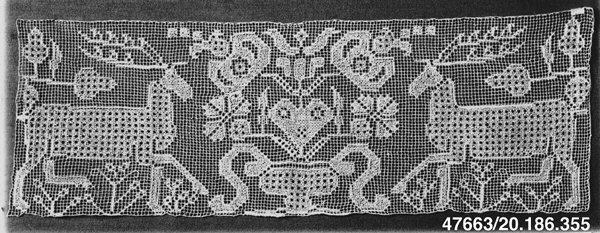
The Deconstruction of Surface: The Embroidered Net Panel as Architectural Lattice
In the relentless trajectory of contemporary fashion, the panel is often relegated to a mere functional afterthought—a structural necessity hidden within the seams of a garment. However, for the SS26 collection at Zoey Fashion Laboratory, we elevate the panel to a position of primacy, transforming it from a passive component into the very locus of narrative and form. Our latest standalone study, sourced from the Global Frontier, interrogates the embroidered net as a material of paradox: a substrate that is simultaneously transparent and opaque, fragile and formidable. This is not a study of decoration; it is a treatise on the reconfiguration of the human silhouette through the lens of architectural tension and release.
The Global Frontier: A Material Provenance of Disruption
The term "Global Frontier" is not merely a geographical marker but a conceptual space where disparate cultural lexicons of craft collide with machine-driven precision. Our embroidered net is engineered from a hybridized fiber matrix—a microfilament nylon base interlaced with a bio-derived cellulose thread. This is not the delicate lace of the 19th century; it is a high-tensile lattice, capable of holding its own structural integrity without internal boning. The embroidery itself is a form of digital cartography, mapping irregular, topographical grids that do not repeat. Each panel is a unique coordinate, a fragment of a larger, unseen world. For SS26, we have discarded the romanticism of hand-stitched florals in favor of a stark, almost cybernetic geometric embroidery that mimics the load-bearing trusses of futuristic architecture. The result is a textile that behaves like a skin, yet possesses the rigidity of a facade.
Silhouette Engineering: From Flat Plane to Volumetric Sphere
The fundamental innovation of this study lies in our manipulation of the panel’s bias and its interaction with negative space. Traditional couture seeks to mold fabric to the body; our methodology inverts this paradigm. We allow the embroidered net to dictate the body’s spatial boundaries. By cutting the panel on a severe 45-degree angle and anchoring it at asymmetrical stress points—the clavicle, the iliac crest, the scapula—we create a "flutter" effect that is neither draped nor tailored. The fabric stands away from the epidermis, creating a micro-climate of air between garment and wearer. This is the futuristic silhouette: not a silhouette of flesh, but a silhouette of contained atmosphere. The panels are engineered to billow and retract with kinetic movement, functioning as a living exoskeleton. In our flagship piece, "The Apex Divergence," a single, unbroken panel of embroidered net spirals from the right shoulder, wrapping around the torso to terminate in a sharp, cantilevered point at the left hip. It is a study in counterbalance, where the weight of the embroidery is offset by the void of the net, creating a visual gravity that defies the physical body.
Structural Innovation: The Self-Supporting Lattice
Our laboratory has pioneered a technique we term "Fused Articulation." Rather than sewing panels together—an act that introduces unnecessary bulk and linear stiffness—we employ a targeted ultrasonic welding process along the embroidered seams. This process fuses the net’s fibers at a molecular level, creating a seamless, articulated joint that allows for a full range of motion while maintaining the panel’s architectural integrity. This eliminates the need for darts, tucks, or any form of internal corsetry. The garment is, in essence, a self-supporting lattice that hovers around the body. The embroidery itself is not merely decorative; it is load-bearing. Denser clusters of thread are strategically placed at stress points to provide rigidity, while sparser areas allow for fluid drape. This creates a gradient of stiffness across a single panel, allowing for a garment that is rigid at the shoulder yet undulating at the hem—a feat impossible with conventional woven or knitted textiles.
The Semiotics of Transparency: Veiling the Future
Beyond the physical properties, the embroidered net panel serves as a potent semiotic device for the SS26 ethos. In an era of radical transparency—both digitally and socially—our panels offer a paradoxical commentary. The net reveals the skin, yet the embroidery obscures it, creating a fragmented vision of the human form. This is not a gesture of modesty but a deliberate act of visual distortion. The wearer is present, yet their form is refracted through the lattice, appearing as a series of discontinuous planes. This aligns with our overarching theme of "Post-Human Fluidity," where identity is not fixed but is a series of shifting, overlapping panels. The garment becomes a metaphor for the fragmented self, a composite of global influences stitched together by digital precision. The transparency is not an invitation but a challenge—a demand that the viewer engage with the architecture of the piece, not merely the body it encloses.
Contextualizing the Standalone Study
As a standalone avant-garde study, this panel system rejects the tyranny of the complete look. It is designed to be worn in isolation—a single panel affixed to the body via a magnetic clasp at the nape of the neck, or as a modular component over a stark, minimal base. This autonomy is crucial. The panel is not a part of a garment; it is a wearable artifact. In the context of SS26, where the industry oscillates between nostalgic maximalism and sterile minimalism, our embroidered net occupies a third space: a technological primitivism. It references the ancient craft of netting and embroidery, yet processes it through a futuristic, algorithmic lens. The result is a garment that is both timeless and aggressively of its moment. It demands a new posture, a new way of moving. It is not for the passive consumer but for the active participant in the construction of their own visual identity.
Ultimately, this study of the embroidered net panel is a declaration that fashion’s future lies not in the silhouette of the body, but in the architecture of the void around it. By mastering the tension between the embroidered thread and the empty net, we have created a new grammar of dress—one where structure is fluid, transparency is a shield, and the panel is the protagonist. This is the vanguard of SS26, and it is woven, quite literally, from the threads of tomorrow.