The Deconstructed Obi: Reimagining the Kimono as a Structural Blueprint for SS26
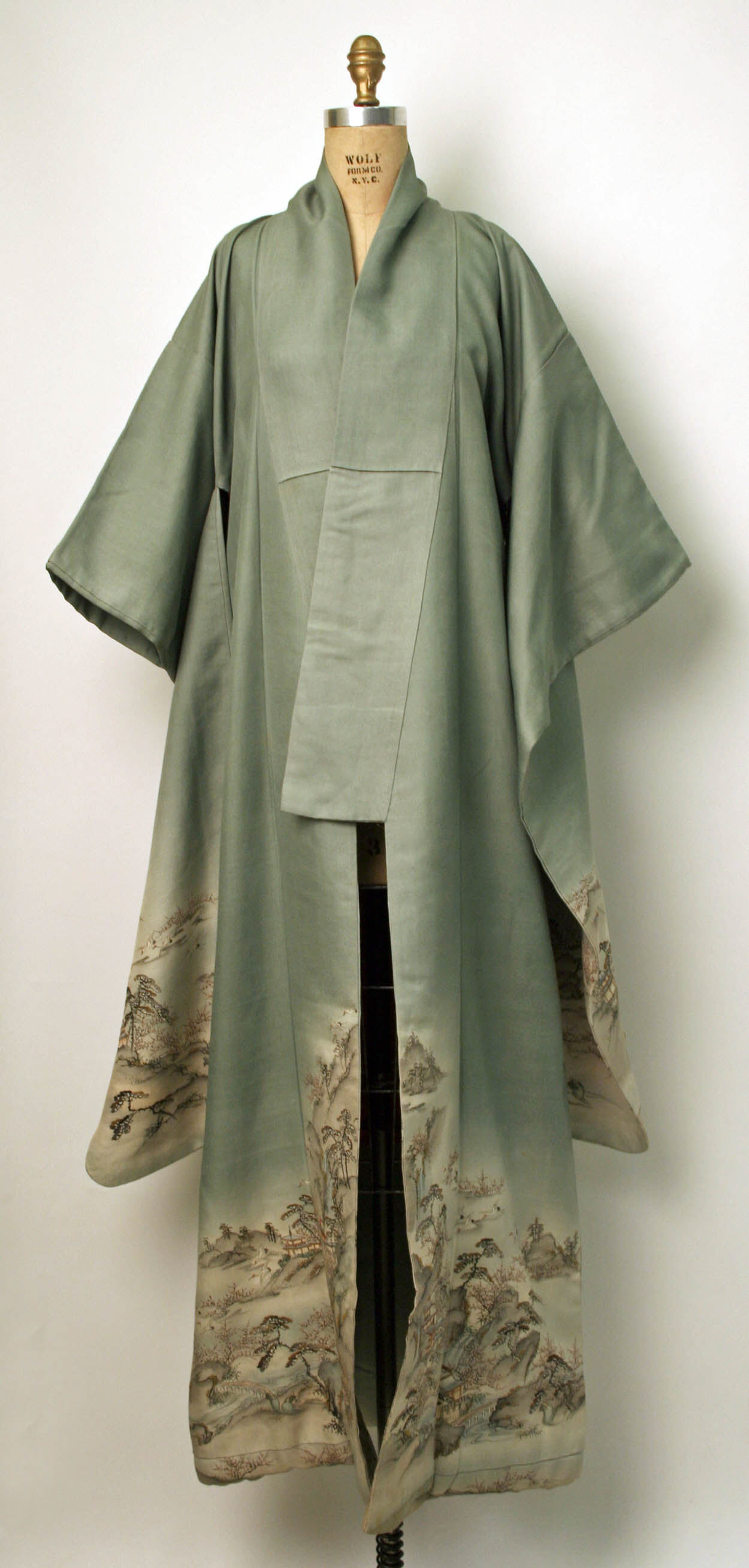
The kimono, in its canonical form, is a monument to restraint—a T-shaped expanse of silk that eschews the body’s contour in favor of an idealized, cylindrical presence. For Zoey Fashion Laboratory’s SS26 avant-garde study, we do not approach this garment as a relic, but as a generative matrix. We strip away the sacrosanct notions of symmetry, wrap, and closure, interrogating the kimono’s core architectural principles to birth silhouettes that are not merely futuristic, but post-gravitational. The objective is not to reference Japan, but to weaponize its sartorial logic against the tyranny of conventional tailoring.
From Flat Plane to Four-Dimensional Volume
The traditional kimono is constructed from a series of straight, uncut rectangles. This is its genius and its limitation. For SS26, we explode this geometry. Our primary intervention is the asymmetric volumetric shift. Instead of a single, continuous silk panel draping from shoulder to hem, we introduce a system of articulated, suspended panels that float independently from the wearer’s frame.
Imagine a silk that is not merely woven, but engineered with internal memory. We utilize a hybrid of habutae and a micro-encapsulated resin that allows the fabric to hold a crease or a billow on command. The result is a kimono that can be “programmed” to stand away from the body at a 45-degree angle, creating a negative space that is as deliberate as the garment itself. The sleeves, or sode, are no longer attached at the shoulder seam. Instead, they are tethered via a series of magnetic, carbon-fiber joints, allowing the wearer to detach and reattach them at varying heights, effectively morphing the silhouette from a sweeping bat-wing to a sharp, cropped architectural fin.
The Collar as a Cantilever
The eri (collar) is traditionally a folded band of cloth. In our SS26 analysis, it becomes a cantilevered structural element. We have developed a technique of “silk lamination” where multiple layers of the finest chirimen silk are bonded with a dissolvable polymer, then heat-pressed into a rigid, yet supple, curve. This collar does not fold against the neck; it projects forward and upward, creating a halo-like frame around the face. It is a piece of wearable sculpture that redefines the wearer’s presence in space, casting a shadow that is both architectural and ethereal.
This is not a costume; it is a functional exoskeleton. The collar’s internal structure contains a series of micro-channels that, when activated by body heat, release a subtle, cooling airflow. This is a direct response to the SS26 climate imperative—a futuristic garment that manages thermal regulation through structural design, not added layers.
Deconstructing the Wrap: The New Closure System
The okumi (front panel) and its overlapping closure are fundamental to the kimono’s identity. We deconstruct this entirely. The overlapping front panels are replaced with a torsion-based fastening system. The left and right panels are no longer symmetrical; the right panel is elongated and wraps around the torso, terminating in a high, sculpted point at the left hip. The left panel is truncated, ending in a sharp diagonal that mimics a laser cut.
These panels are secured not by an obi (sash), but by a series of interlocking, translucent resin discs that resemble futuristic vertebrae. This system allows for a dynamic range of motion—the wearer can adjust the tension to create either a severe, columnar line or a relaxed, diagonal drape. The obi itself is reimagined as a wearable kinetic belt, a rigid, articulated band of silk-wrapped aluminum that moves with the body, its segments flexing and locking into place with each gesture.
The Hem as a Dynamic Horizon
The susomawashi (lower hem) is traditionally straight and grounded. For SS26, we introduce the asymmetric, laser-fused hem. Rather than a cut edge, we use a high-frequency ultrasonic blade to seal the silk, creating a clean, molten edge that resists fraying. This hem is then manipulated into a series of deep, irregular folds that are permanently set using a steam-and-pressure technique. The result is a hem that appears to be in a state of constant flux—one moment a sharp, architectural line, the next a cascading, organic flow of silk that mimics the movement of liquid metal.
This is achieved through a gradient-weight silk composite. The fabric is heavier at the bottom and progressively lighter towards the shoulders. This creates a natural, gravitational pull that causes the garment to settle into unexpected, sculptural folds when the wearer is stationary, and to unfurl into a dramatic, fluid train when in motion. The kimono is no longer a static object; it is a living, responsive system that negotiates with the environment.
Silk as a Technological Membrane
We cannot discuss innovation without addressing the material itself. Our silk is not passive. We employ a bio-engineered silk substrate that is infused with photochromic micro-pigments. Under direct sunlight, the fabric shifts from an ivory white to a deep, iridescent indigo, echoing the traditional aizome dyeing process but with a futuristic, instantaneous application. In shaded interiors, it reverts to a pearl-grey, allowing the garment to change its visual weight and presence based on the surrounding light.
This is not a gimmick; it is a commentary on ephemerality and permanence. The kimono, traditionally a garment of ceremony and inheritance, becomes a transient piece that responds to the moment. The structural innovations—the cantilevered collar, the torsion panels, the dynamic hem—are all designed to interact with this color-shifting skin, creating a silhouette that is in constant dialogue with its own materiality.
Silhouette for the Post-Human Form
The final silhouette is not human in the classical sense. It is hybridized—part samurai armor, part architectural model, part organic organism. The shoulders are broadened by the cantilevered collar, creating a powerful, commanding V-shape. The torso is compressed by the torsion wrap, emphasizing a slender, cylindrical core. The lower body is liberated by the asymmetric, flowing panels, which create a sense of controlled chaos.
This is a garment for the individual who exists beyond conventional categories of gender, nationality, or style. It is a declaration of independence from the constraints of the body and the past. The kimono, in our hands, becomes a blueprint for a new kind of sartorial intelligence—one that prioritizes structural logic, environmental responsiveness, and the sheer, unadulterated pleasure of wearing a piece of the future.
For Zoey Fashion Laboratory, this is not a collection; it is a proof of concept. We have taken a garment defined by its stasis and transformed it into a dynamic, interactive sculpture. The SS26 kimono is not worn; it is inhabited. And in that inhabitation, we find the true avant-garde—not in shock, but in the radical re-engineering of a timeless form.