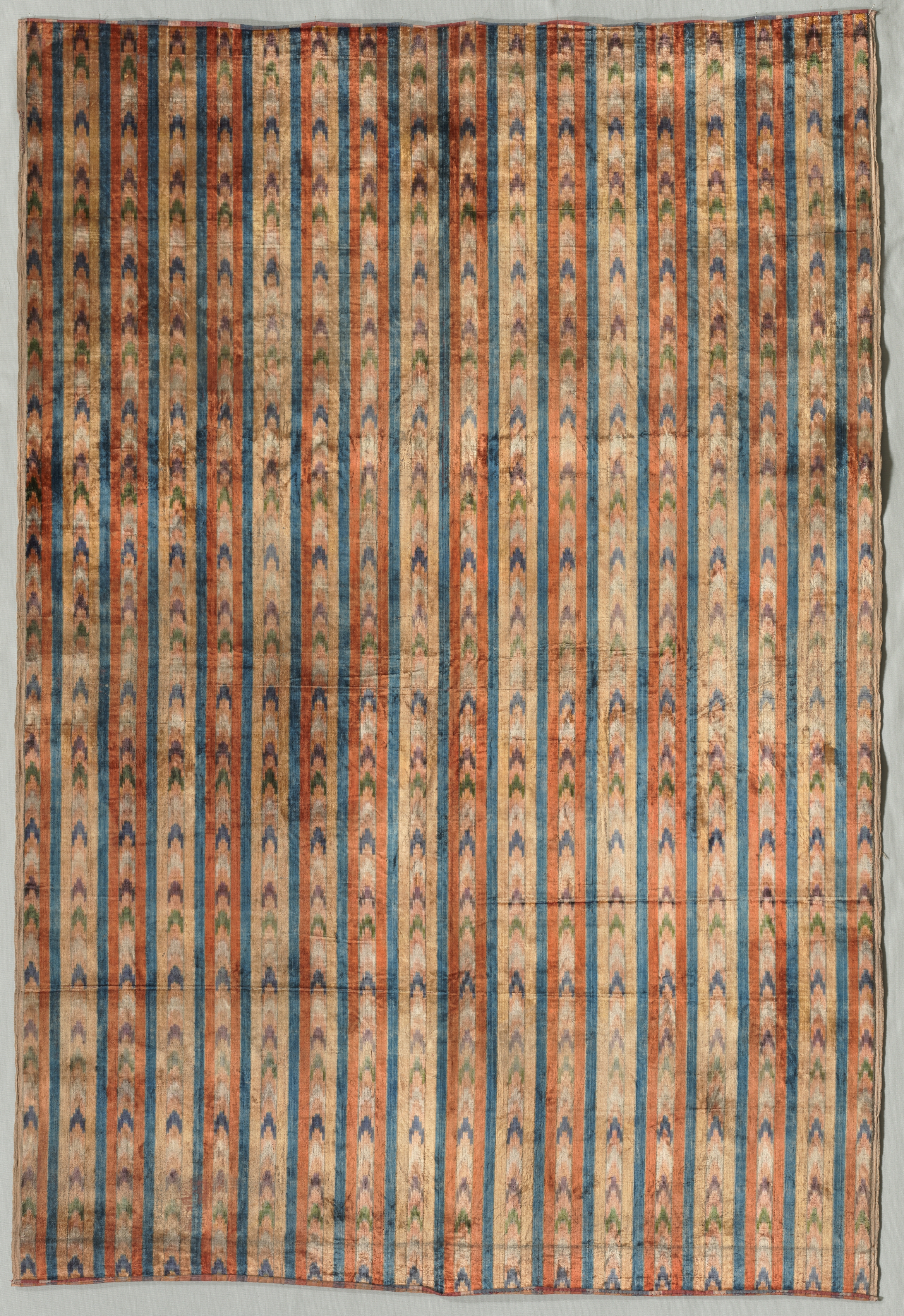
Deconstructing the Velvet Panel: A New DNA Strand for Avant-Garde Expression
At Zoey Fashion Lab, our mandate transcends mere garment construction. We are engaged in the systematic deconstruction of textile history to isolate and re-engineer the fundamental codes embedded within fabric. The subject of this analysis—a 19th-century Iranian velvet panel—presents a particularly potent case study. Far from being a static relic, this panel functions as a veritable New DNA Strand, carrying within its plush fibers the genetic instructions for a radical, avant-garde aesthetic. Our task is to extract this genetic material, decode its structural and cultural markers, and synthesize a new fashion language that speaks to the contemporary moment with the authority of ancient craft.
I. Material Provenance: The Silk Road as a Genetic Reservoir
The panel’s origin in 19th-century Iran is not a mere geographical footnote; it is a critical component of its DNA. This era, particularly under the Qajar dynasty, was a period of intense artistic synthesis. Persian velvet-weaving centers, notably in Kashan and Isfahan, were not isolated workshops but nodes within a vast network of cultural exchange. The technical mastery evident in the panel—the precise, high-relief pile created through the *gul-i-buta* and *herati* motifs—represents a culmination of centuries of Persian, Central Asian, and even Chinese textile influence. This is the panel’s foundational genetic code: a hybrid vigor born from the Silk Road’s constant cross-pollination of ideas, materials, and techniques. For the avant-garde designer, this tells us that true innovation is not a rupture from history but a deliberate, informed recombination of its most vital strands.
II. Chromatic and Textural Mutation: The Physics of Light Absorption
Technically, the velvet panel is defined by its unique surface. Unlike flat-woven silks, velvet’s pile creates a dynamic, three-dimensional field that interacts with light in a singular manner. The deep, often jewel-toned dyes—indigo, madder red, and copper green—are not merely applied but are absorbed into the silk filaments, creating a color that seems to emanate from within the fabric’s depth. This is the panel’s primary mutation: a textural language of opulence and shadow. The light strikes the raised pile and is scattered, creating a shimmer that shifts with the viewer’s perspective. In our deconstruction, we isolate this optical effect as a core design principle. The avant-garde application is not to replicate the pattern but to weaponize the texture. We propose garments that use velvet as a tool for dynamic camouflage, where the wearer’s silhouette is perpetually in flux, dissolving and re-forming as they move through varying light conditions. This challenges the static, graphic quality of contemporary digital prints, offering a physical, analog form of visual distortion.
III. Structural Grammar: The Panel as Architectural Blueprint
Our analysis moves beyond the surface to the structural logic of the panel itself. The 19th-century Iranian velvet was typically woven in narrow widths, designed for specific applications—cushion covers, tent hangings, or ceremonial robes. The composition is not a chaotic explosion of pattern but a rigorously organized system. Symmetrical layouts, mirrored arabesques, and a clear hierarchy of central medallion versus border elements govern the design. This is the panel’s architectural grammar. For Zoey Fashion Lab, this grammar is a direct challenge to the organic, draping forms that dominate contemporary fashion. We propose a new avant-garde silhouette that treats the body as a structural framework upon which velvet panels are mounted. Instead of cutting the fabric to follow the body, we will construct garments that force the body to negotiate with the fabric’s inherent geometry. This could manifest as exaggerated, squared shoulders built from stacked velvet panels, or a skirt that flares into a rigid, architectural bell shape, echoing the panel’s original function as a hanging, three-dimensional object. The wearer becomes a living plinth for a work of textile architecture.
IV. Subversive Recontextualization: From Decoration to Disruption
The most critical step in our deconstruction is the subversion of the panel’s original cultural signifiers. In its original context, this velvet was a marker of aristocratic status, religious piety, and courtly luxury. Its beauty was intended to affirm social order and divine order. The avant-garde imperative is to dismantle this association. We achieve this through deliberate acts of material violence and reconfiguration. The panel’s pristine surface is to be disrupted. We will introduce controlled fraying, intentional cuts that reveal the underlying weave structure, and strategic de-piling to create zones of flatness against the plush relief. This is not vandalism but a form of textual archaeology, exposing the fabric’s internal skeleton. Furthermore, we will recontextualize the velvet’s traditional palette. By over-dyeing sections with synthetic, acid-bright colors, we create a jarring juxtaposition between the antique, somber tones and a hyper-contemporary neon accent. This clash is the new DNA strand’s most potent mutation—a visual representation of the friction between historical craft and the disposable, digital-led culture of today. The garment becomes a provocation, forcing a conversation about value, permanence, and the role of heritage in a world of relentless novelty.
V. Synthesis: The Wearable Specimen
In conclusion, the 19th-century Iranian velvet panel is not a finished object but a starting point. Its DNA—a complex sequence of technical mastery, cultural hybridity, and architectural logic—provides the blueprint for a new avant-garde form. Our proposed collection will not simply use velvet as a fabric; it will treat it as a living material system. Each garment will be a laboratory specimen, showcasing the panel’s original beauty while simultaneously presenting its deconstructed and mutated forms. We will create pieces that are both reverent and irreverent, opulent and austere, static and kinetic. The final output is a fashion that is intellectually rigorous, technically demanding, and visually arresting. It is a testament to the idea that the most radical future is often encoded in the most profound past. At Zoey Fashion Lab, we are not merely designers; we are geneticists of style, and this velvet panel is our most promising subject yet.