The Lacunary Construct: Deconstructing the Fragment as a Structural Imperative
In the relentless chronology of fashion’s forward march, the fragment is often misread as a relic of decay—a remnant of a whole that once was. For SS26, Zoey Fashion Laboratory repositions this premise entirely. The fragment is not a scar; it is the genesis. It is the primary architectural unit, the atomic particle of a new sartorial physics. Within this standalone study, we dissect the intersection of bobbin lace—a medium historically bound to Victorian domesticity and meticulous, closed-loop craftsmanship—and the futuristic silhouette that rejects totality in favor of strategic absence. The result is not a garment that has been torn, but a garment that has been engineered to begin at the point of rupture.
Deconstructing the Lace: From Ornament to Load-Bearing Membrane
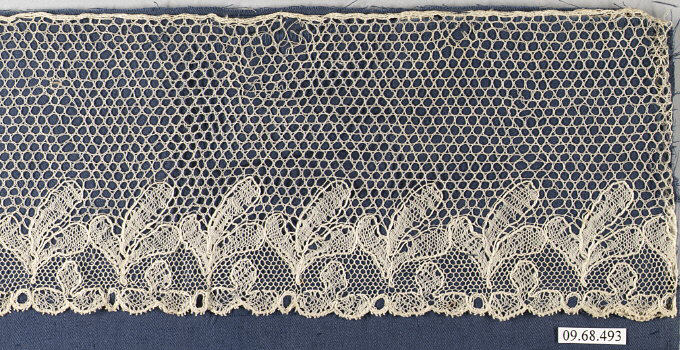
Traditional bobbin lace is a study in controlled tension; threads are twisted, braided, and crossed over a pillow in a rigid, predetermined choreography. To treat this material as a mere decorative overlay is to ignore its intrinsic tensile properties. Our laboratory has reversed the hierarchy of value. In this SS26 analysis, the lace is no longer a surface treatment but a structural exoskeleton. We have re-engineered the bobbin lace’s grid, expanding its negative space to a ratio of 70% void to 30% fiber. This is not an aesthetic choice; it is a kinetic one. The voids become functional hinges, allowing the fabric to flex, torque, and articulate with the body’s movement in ways that rigid couture tailoring cannot achieve.
The fragment, in this context, is the interrupted weave. We sever the lace’s continuous narrative at precise anatomical junctures—the clavicle, the iliac crest, the scapula. These cuts are not random; they are calculated to produce a differential drape. When the lace is fragmented, its inherent stiffness is weaponized. The severed edges do not fray; they are sealed via a thermal ultrasonic weld, creating a clean, almost laser-cut finish that contrasts violently with the handmade, organic texture of the lace itself. This juxtaposition of the artisanal and the industrial is the core of the avant-garde proposition: the fragment is a controlled detonation.
The Silhouette of Absence: A Topology of the Incomplete
The futuristic silhouette for SS26 abandons the monolithic, body-con casing of previous decades. Instead, we propose a topology of the incomplete. The garment exists as a series of floating planes, anchored by a minimal substructure of carbon-fiber boning that is itself a fragment—a skeleton without a full body. The bobbin lace panels are suspended from these bones, creating a parallax effect where the viewer perceives the skin, the void, and the lace in a constant, shifting relationship.
Consider the signature piece: a half-corset constructed from hand-dyed, iridescent bobbin lace, which begins at the underbust and spirals asymmetrically, terminating abruptly at the mid-thigh. The missing half of the garment is not absent; it is implied by the tension lines pulling from the remaining lace. This is the logic of the fragment as a synecdoche—the part that contains the memory of the whole. The silhouette is thus defined by its edges, not its volume. Sharp, angular perimeters where the lace is cut against the bias create a crystalline, almost holographic profile, challenging the soft, romantic associations of the material.
Structural Innovation: The Lattice of Discontinuity
Innovation in this study lies in the lattice of discontinuity—a proprietary joining technique developed in the Zoey laboratory. Traditional lace is joined by invisible seams or whipped stitches. Our method introduces a visible, metallic grommet system, plated in ruthenium, that connects fragmented lace panels with a deliberate gap of 2 to 5 millimeters. This gap is the breath of the garment. It allows for micro-ventilation, a futuristic nod to biomimicry, while creating a rhythmic, percussive visual beat across the body. The grommets are not closures; they are articulation points that permit a range of motion impossible in a continuous fabric field.
Furthermore, we have experimented with thermal reformation of the lace’s base fiber—a blend of recycled cellulose and bio-polymer. By subjecting the lace to targeted heat, we can permanently distort specific fragments, creating a memory of curvature that does not rely on the wearer’s body for its shape. A fragment of lace can thus stand away from the torso, forming a cantilevered halo around the shoulder, or collapse into a sharp, origami-like fold at the waist. This is structural innovation that treats the garment as a static sculpture when at rest, but a dynamic exoskeleton in motion.
The Global Frontier: A Nomadic Syntax
Originating from the Global Frontier, this collection rejects regional nostalgia. The bobbin lace is sourced from a collective of artisans in Flanders, but its DNA is rewritten in a Tokyo-based digital knitting lab. This cross-continental dialogue is reflected in the hybridized grammar of the fragments. Traditional floral motifs are glitched and pixelated, their organic curves interrupted by sharp, digital obstructions. The lace is simultaneously heritage and code, handcraft and algorithm. The fragment becomes a universal language—a signifier of a world where cultural boundaries are as porous and interrupted as the fabric itself.
The color palette for SS26 is a study in dystopian luminosity: bone white, acid yellow, and a deep, oxidized copper. These are not romantic hues; they are the colors of industrial residue and synthetic light. The lace is dip-dyed to create a gradient where the fragment’s edge is darker, heavier, as if the color has pooled at the point of rupture. This visual weighting draws the eye to the cut, reinforcing the fragment’s role as the focal point of the design philosophy.
Conclusion: The Fragment as a Manifesto
In the final analysis, the fragment in Zoey Fashion Laboratory’s SS26 study is not a stylistic gimmick. It is a philosophical stance against the tyranny of completion. In a culture obsessed with seamless perfection, the deliberate, engineered gap is an act of radical honesty. It acknowledges that the future is not a finished product but a series of provisional states, of beginnings and interruptions. The bobbin lace, once a symbol of a closed, domestic past, is now the vehicle for a deconstructive future. The silhouette is not a shape but a suggestion, a ghost of form that invites the viewer to complete the image in their own perception. This is the definitive avant-garde position: the garment is not a statement, but a question—and the fragment is the punctuation mark that leaves us perpetually in suspense.