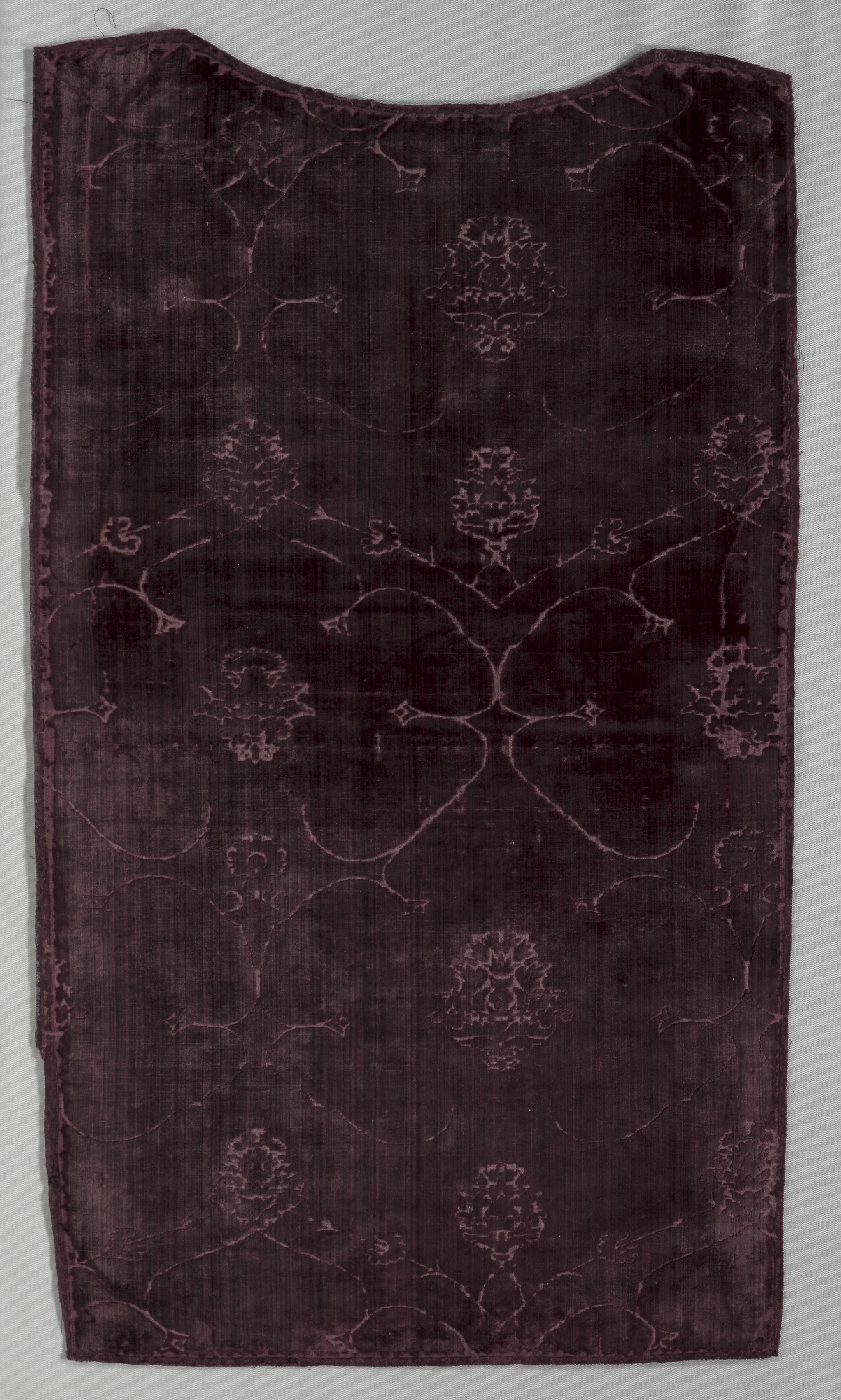
Deconstructing the Genetic Code of Luxury: Velvet with Pomegranate Pattern
At Zoey Fashion Lab, our mandate transcends mere garment construction; we engage in a forensic dialogue with the very fibers that constitute fashion’s future. Today’s subject—a sumptuous velvet bearing a pomegranate pattern, originating from the storied mills of Italy—presents a fascinating paradox. It is at once a relic of Renaissance opulence and a blueprint for avant-garde expression. Our analysis, framed by the technical precision of a cut and voided velvet weave in pure silk, reveals a fabric that operates less like a textile and more like a biological entity, a New DNA Strand waiting to be spliced into radical silhouettes.
I. The Technical Matrix: Cut, Voided, and the Architecture of Light
To understand the avant-garde potential of this velvet, one must first dismantle its physical construction. The term “cut and voided” is not merely descriptive; it is a declaration of intent. In this weave, the loom does not produce a uniform pile. Instead, it orchestrates a deliberate absence. The cut pile—loops of silk that have been severed to create a dense, plush surface—rises in specific, controlled zones. The voided areas, by contrast, are left as a flat, ground weave, often a fine silk taffeta or satin base. This is not a pattern printed on a surface; it is a pattern excavated from depth.
The pomegranate motif, a classic of Italian textile heritage, is rendered here not in flat color but in topographical relief. The light strikes the cut pile and is absorbed, creating a velvety darkness that feels almost liquid. In the voided areas, the light skims across the silk ground, producing a shimmering, mirror-like counterpoint. This oscillation between absorption and reflection is the fabric’s primary kinetic energy. For the avant-garde designer, this is not a decorative afterthought; it is a structural tool. The garment can be engineered so that the voided areas fall along the body’s flex points, creating natural ventilation and a visual slimming effect, while the cut pile is reserved for areas of volume—shoulders, hips, or sculptural drapes. The fabric itself dictates the garment’s architecture.
The choice of pure silk thread elevates this from a mere textile to a material with inherent intelligence. Silk’s protein-based molecular structure allows for exceptional dye uptake, producing the deep, almost black-crimson of the pomegranate seeds against a ground of oxidized gold or tarnished silver. More critically, silk’s tensile strength and natural elasticity mean that the velvet does not crush or flatten easily, preserving the integrity of the cut pile even under the stress of extreme tailoring. This is a fabric that can be corseted, cantilevered, or folded into origami-like structures without losing its plush memory.
II. The New DNA Strand: Reinterpreting the Organic Motif
The pomegranate has long been a symbol of fertility, abundance, and, in Christian iconography, resurrection. However, for Zoey Fashion Lab, we propose a radical re-reading. We see this motif not as a botanical illustration but as a genetic sequence. The pomegranate’s internal structure—a labyrinth of seeds encased in a leathery rind—mirrors the complex, folded architecture of cellular life. When we look at this velvet, we are not seeing a fruit; we are seeing a chromosomal map rendered in thread.
Our design directive is to treat the pattern as a mutable code. The traditional, symmetrical pomegranate is here deconstructed. We will instruct our pattern-makers to isolate individual seed clusters and scale them to monstrous proportions, turning them into abstract, organic blisters on the garment’s surface. Alternatively, we will use the voided ground to create negative space, where the pomegranate appears to be dissolving, its genetic material scattering across the silk like a virus escaping its host. This is the New DNA Strand—a fabric that suggests mutation, hybridity, and the breakdown of static forms.
This approach aligns perfectly with the avant-garde ethos, which rejects the decorative in favor of the conceptual. The pomegranate is no longer a symbol of abundance; it becomes a symbol of fractured identity. The garment becomes a wearable laboratory, where the wearer is not just clothed but is a vessel for a biological narrative. The velvet’s high pile can be manipulated through heat-setting or selective crushing to create a three-dimensional, scar-like texture, further emphasizing the genetic mutation theme. We can even employ laser-cutting on the voided areas to create micro-perforations, suggesting cellular respiration.
III. From Loom to Silhouette: Engineering the Avant-Garde
The transition from fabric analysis to garment construction is where our laboratory’s true work begins. This velvet, with its dual-surface nature, is not suited for conventional flat pattern-making. It demands draping on the form, a sculptural process that respects the fabric’s directional pile and its voided zones. We propose a series of experimental silhouettes:
1. The Exoskeletal Cocoon
Utilizing the velvet’s heavy drape, we will construct a cocoon-shaped coat where the cut pile forms the exterior shell, creating a monolithic, almost furry surface. The voided areas will be strategically placed at the neckline and cuffs, revealing the silk ground and creating a stark, luminous contrast. The pomegranate pattern will be positioned to mimic the segmentation of an insect’s carapace, reinforcing the idea of a protective, yet alien, outer layer.
2. The Deconstructed Gown
Here, the velvet is used as a structural skin. The gown will feature a fitted, boned bodice in the voided silk, showcasing the pattern’s flat, reflective quality. The skirt, however, will explode into a cascade of cut-pile velvet panels, each cut on the bias to maximize the pile’s vertical fall. The pomegranate seeds will appear to burst at the waistline, with individual seed motifs cut out and appliquéd onto the skirt as three-dimensional, velvet pods. This creates a garment that is both severe and organic, a study in controlled chaos.
3. The Modular Mutation
Embracing the New DNA Strand concept, we will create a garment that is not fixed but modular. The base is a simple slip dress in the voided silk. Over this, detachable panels of cut-pile velvet—each featuring a different scale of the pomegranate pattern—are attached via magnetic snaps or intricate hooks. The wearer becomes the genetic engineer, choosing to add or remove layers of ‘genetic material’ to alter the garment’s silhouette and visual density. This is fashion as a living system, constantly in flux.
IV. Conclusion: The Fabric as a Provocation
This Italian velvet, with its cut and voided weave, is not a passive material. It is a provocation. Its technical complexity demands a designer who is part engineer, part poet. Its historical resonance demands a conceptual framework that can elevate it beyond nostalgia. At Zoey Fashion Lab, we see this fabric as the ultimate test of avant-garde practice: to take a symbol of classical beauty and, through the lens of the New DNA Strand, transform it into a statement on the fragility and mutability of the human form.
The pomegranate pattern is not a repetition; it is a rhythm. The cut pile is not a surface; it is a terrain. The silk thread is not a material; it is a message. By deconstructing this velvet’s weave, we reconstruct its meaning. The result is not a dress, but a biological manifesto—a garment that whispers of ancient opulence while screaming of future mutations. This is not just fabric; it is the blueprint for a new kind of wearing.