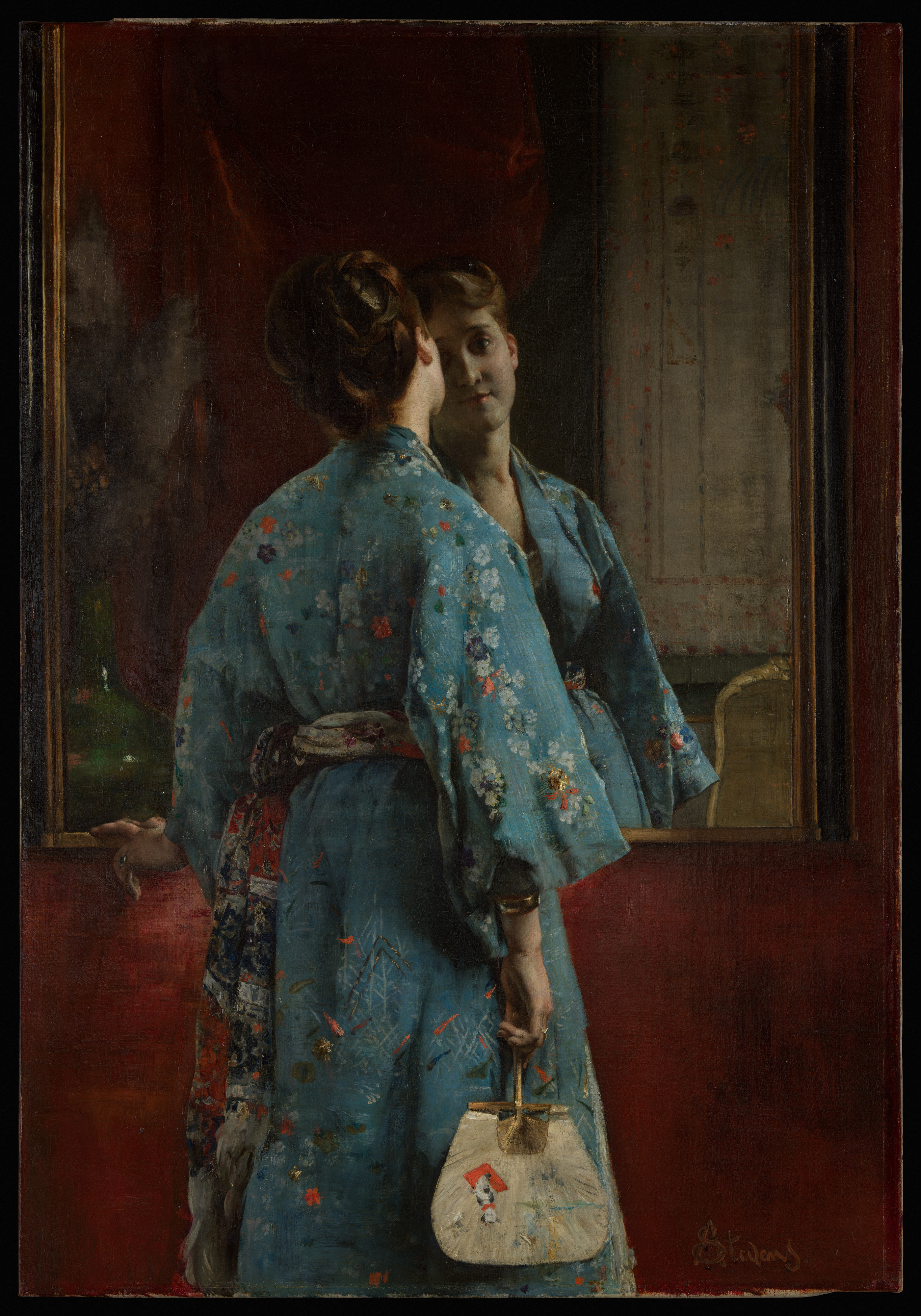
Deconstructing the Kimono: A Structural Autopsy for SS26
The Japanese robe—the kimono, the yukata, the haori—has long been treated by Western fashion as a static artifact, a museum piece of exoticized drapery. For SS26, Zoey Fashion Laboratory rejects this curatorial passivity. We approach the robe not as a garment to be replicated, but as a tectonic blueprint—a system of flat planes, orthogonal lines, and radical asymmetry that predates modern tailoring by centuries. In this standalone avant-garde study, we dissect the robe’s DNA, then reassemble it through the lens of futuristic silhouette engineering, using oil-on-canvas as our conceptual material metaphor. The result is not a homage; it is a mutation.
The Canvas as Structural Skin: From Textile to Tectonic Membrane
Traditional analysis fixates on silk and dye. We discard that. Our material premise is oil on canvas—not as a painterly surface, but as a load-bearing composite. Imagine the robe’s fabric replaced by a stiffened, resin-impregnated canvas that holds a crease like a steel beam. The garment no longer drapes; it articulates. Each fold becomes a deliberate architectural joint, a hinge point that can snap open or lock closed. For SS26, we propose a series of robes where the canvas is cut with laser-precision, then layered with micro-perforations that allow for breathability while maintaining a rigid, almost sculptural presence. The silhouette shifts from fluid to fractured—a series of angular, cantilevered volumes that defy gravity. The obi, traditionally a soft sash, is reimagined as a rigid, corseted exoskeleton, cinching the canvas shell into a hyper-defined waist that flares into a truncated, trapezoidal skirt. This is not a robe you wear; it is a robe you inhabit.
Deconstructing the T-Form: The Death of the Sleeve
The kimono’s iconic T-shape—straight sleeves, rectangular body—is our primary target for deconstruction. We sever the sleeve at the shoulder, not to remove it, but to reorient it. In our SS26 proposition, the sleeve becomes a detachable appendage, a modular component that can be worn as a cape, a hood, or a separate armature. This is a direct challenge to the Western tailoring tradition of the set-in sleeve, which prioritizes the body’s natural contour. Our futuristic silhouette rejects the body as a given. Instead, we create negative space—a void between the torso and the floating sleeve panel, filled with air, light, and architectural tension. The canvas is scored and folded to create a sharp, origami-like pleat that extends from the shoulder blade, projecting the silhouette outward by up to 40 centimeters. This is not about comfort; it is about presence. The wearer becomes a moving monument, a walking sculpture whose profile changes with every gesture.
Asymmetry as Algorithm: The Collar’s New Geometry
The traditional robe’s crossed collar—the okumi—is a study in balanced asymmetry. For SS26, we push this to a radical extreme. We propose a collar that is not a fold, but a spiral. Constructed from layered, oil-painted canvas strips, the collar wraps around the neck in a continuous, non-repeating helix, creating a dynamic, kinetic line that draws the eye upward. This is not a V-neck or a crew neck; it is a vortex. The asymmetry is algorithmic: each layer is offset by a precise geometric progression, creating a sense of controlled chaos. The front of the robe may be entirely closed, while the back is slashed open to the waist, revealing a second, inner robe made of translucent, liquid-like material—a nod to the traditional juban underlayer, but rendered in a futuristic, almost holographic finish. This layering is not decorative; it is a functional thermal system, trapping air between the canvas shell and the inner membrane, adapting to the wearer’s microclimate.
The Hem as Horizon: Grounding the Futuristic Silhouette
In traditional construction, the hem is a straight, sweeping line that brushes the floor. We disrupt this. Our SS26 robe features a scalloped, asymmetric hem that is cut on a bias, then stiffened with a heat-set polymer. The result is a hem that does not hang; it hovers. The front is cropped at the knee, exposing a high-tech boot with a sculptural, blade-like heel. The back extends to the ankle, but is split into two panels that can be mechanically fastened to the thigh, creating a dramatic, high-low silhouette that suggests motion even at rest. This is a deliberate engineering choice: the uneven hemline creates a directional airflow, allowing the canvas panels to flutter and snap like sails, introducing an element of unpredictability to the garment’s form. The oil-on-canvas material is treated with a matte, almost chalky finish, absorbing light rather than reflecting it, which makes the robe appear as if it has been carved from a single block of pigment.
Structural Innovation: The Integrated Frame
Our most radical departure is the internal exoskeleton. Hidden within the canvas layers is a network of flexible, 3D-printed carbon-fiber struts. These struts are not visible from the outside, but they control the robe’s entire geometry. They allow the wearer to adjust the shoulder width, the sleeve angle, and the hip volume on the fly, via a discreet magnetic clasp system. This transforms the robe from a static garment into a dynamic instrument. Press a hidden tab, and the shoulders expand by 15 centimeters, shifting the silhouette from a narrow, columnar form to a powerful, triangular one. This is the ultimate expression of avant-garde couture: a garment that is not merely worn, but performed. It is a direct response to the hyper-accelerated pace of contemporary life, where identity is fluid and the body is a site of constant reinvention.
Conclusion: The Robe as a Future Artifact
The Japanese robe, in our hands, is no longer a relic. It is a prophecy. By treating oil on canvas as a structural material, and by deconstructing the T-form into modular, asymmetric, and mechanically adjustable components, we have created a silhouette that is both deeply rooted in historical construction and utterly alien to it. For SS26, Zoey Fashion Laboratory does not offer a collection; we offer a manifesto in fabric and pigment. This is not about reviving the past. It is about excavating its latent potential, and forging it into a new language of dress—one that speaks of gravity, light, and the endless, restless motion of the human form. The robe is dead. Long live the robe.