Deconstructing Botanical Opulence: The Avant-Garde Synthesis of Silk, Linen, and Silver
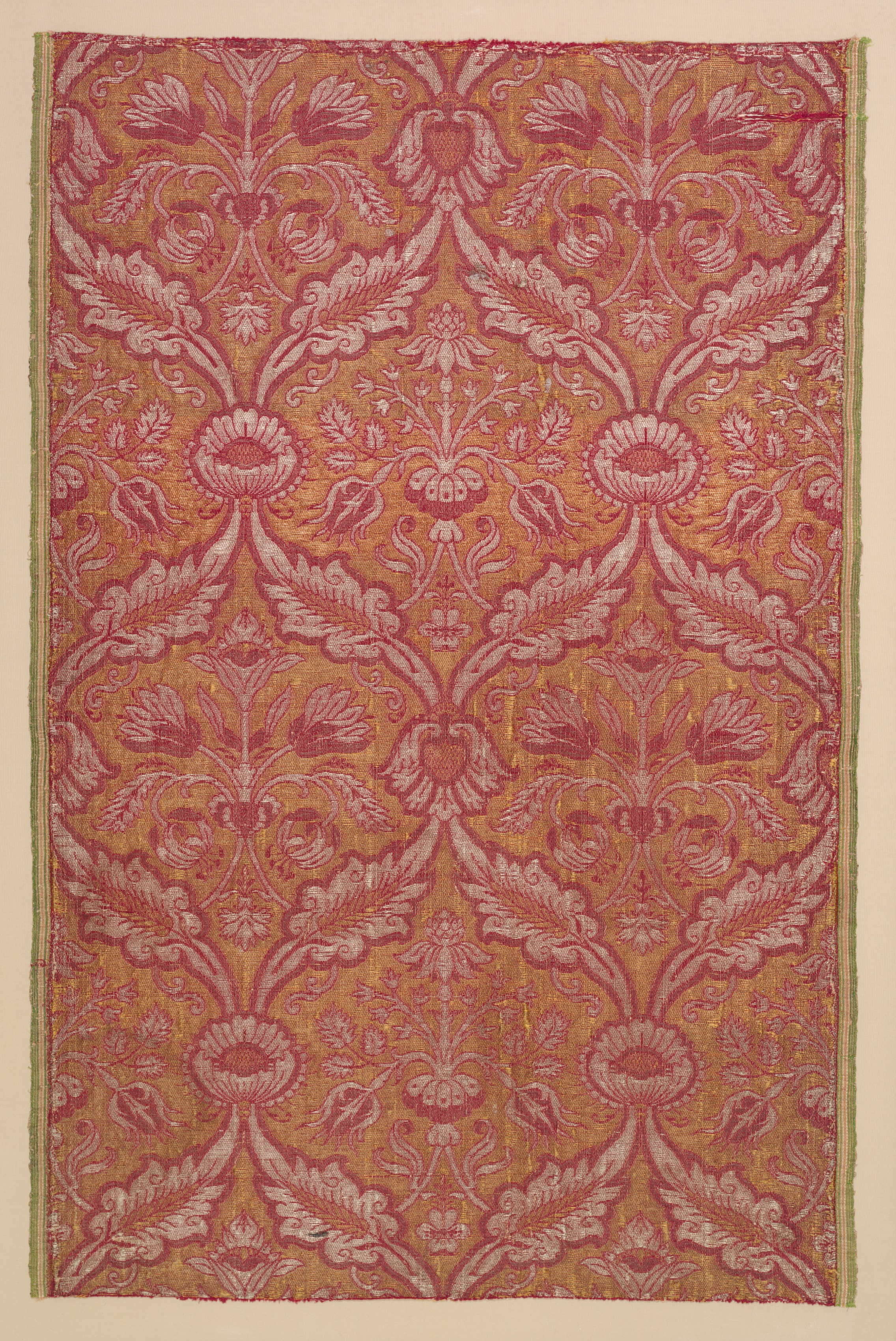
At Zoey Fashion Lab, our mandate transcends mere garment construction; we engage in the archaeology of material culture. The subject of this analysis—a textile bearing the indelible mark of flora, originating from the Iberian or Italian peninsulas—presents a profound paradox. On one hand, its technical composition of silk, linen, and silver thread speaks to a tradition of aristocratic luxury. On the other, its stylistic reinterpretation through an avant-garde lens demands a radical rupture from that very heritage. This document deconstructs the textile’s physical and conceptual strata, revealing how its historical resonance becomes a weapon of modern subversion.
I. Technical Provenance: The Alchemy of Fiber and Metal
The material triad of this textile is not arbitrary; it is a deliberate chemical and tactile dialogue. The silk, likely a filament of Bombyx mori, provides a lustrous, proteinaceous base that captures light with a liquid sheen. In contrast, the linen—derived from flax—introduces a matte, rigid, and irregular texture. This opposition is not a flaw but a feature: the silk offers fluidity, while the linen grounds the fabric with a peasant-like earthiness, a nod to the rustic Iberian or Tuscan landscapes where such fibers were cultivated. The inclusion of silver thread, whether as a brocading weft or a couched embroidery, is the decisive technical act. It is not merely decorative; it functions as a metallic skeleton, adding structural weight and a reflective, almost algorithmic, shimmer that disrupts the organic softness of the natural fibers.
From a laboratory perspective, the interaction between these materials under stress is critical. The silver thread, often a silver-gilt strip wrapped around a silk core, creates a point of tensile weakness but also a point of acoustic and visual interruption. When the fabric moves, the silver produces a faint, metallic whisper—an auditory cue that challenges the silence of traditional couture. This technical hybridity is the first step in our deconstruction: we do not see a finished cloth, but a battlefield of textures where the aristocratic (silk) meets the agrarian (linen) and the alchemical (silver).
II. Archive Resonance: The Ghost of the Sixteenth Century
The reference to “Archive Resonance” is pivotal. We are not looking at a modern reproduction but at a conceptual echo of the 16th and 17th centuries—a period of intense cultural collision between the Spanish Habsburg court and the Italian city-states. In that era, textiles were not mere clothing; they were diplomatic instruments, repositories of botanical knowledge (from the Columbian Exchange), and displays of theological power. The floral motifs—perhaps the pomegranate, the carnation, or the artichoke—were not innocent decorations. They were coded symbols of fertility, resurrection, and imperial reach.
Our analysis must treat this archive not as a museum relic but as a living, viral memory. The textile’s original function was to affirm hierarchy. The silver thread was a literal currency woven into the body, a sign of mercantile wealth. The linen, often used for undergarments, was the hidden layer of hygiene and modesty. By bringing these elements into a contemporary avant-garde context, we are performing an act of iconoclasm. We strip the flora of its heraldic meaning and re-plant it in a dystopian garden. The resonance is not nostalgia; it is a haunting. The fabric whispers of the Inquisition, of colonial extraction, and of the rigid gender roles of the court, yet we force it to speak a new, dissonant language.
III. The Avant-Garde Intervention: From Object to Concept
How does Zoey Fashion Lab transform this historical artifact into an avant-garde statement? The avant-garde is not about novelty for its own sake; it is about critical negation. Our intervention involves three distinct operations: fragmentation, inversion, and re-contextualization.
First, fragmentation: we do not preserve the textile’s integrity. Instead, we dissect it along the lines of its technical weaknesses. The silver thread is not woven into a perfect pattern; it is left as raw, unraveling fringes, or used to stitch together disparate, non-matching panels of silk and linen. This mimics the decay of archival materials, but here, decay is a deliberate aesthetic. It challenges the fetish for pristine preservation.
Second, inversion: the internal hierarchy of the materials is flipped. The linen, traditionally the humble base, is forced to the exterior, becoming the dominant visual field. The silk is hidden in the inner lining, a secret luxury against the skin. The silver thread is no longer a sign of wealth but of electrical circuitry—we treat it as a conductive pathway for wearable technology, turning a historical luxury into a functional, futuristic interface. This is a post-humanist gesture: the floral motifs are no longer botanical illustrations but biometric scans, abstracted into data points.
Third, re-contextualization: the garment silhouette is aggressively sculptural. We abandon the corseted, body-conforming shapes of the 16th century for exaggerated, asymmetric volumes. A sleeve might be constructed from a single, unbroken sheet of silver-threaded silk, while the bodice is a patchwork of raw linen, distressed and frayed. The result is a garment that looks both ancient and alien, as if excavated from a future archaeological dig where our current era is the archaic past.
IV. The Flora Reimagined: Botanical Dystopia
The floral subject is the final and most crucial layer. In the original textile, flora was ordered, symmetrical, and contained within a grid of weaving. Our avant-garde deconstruction mutates the flora. We employ digital sublimation printing to overlay the traditional floral motifs with glitch-art distortions, or we physically embroider the silver thread in chaotic, uncontrolled loops that resemble invasive vines choking the silk. The result is a botanical dystopia—a garden that has gone feral. This is not the romantic nature of the Renaissance but a nature corrupted by climate change and industrial toxicity. The silver thread, once a symbol of purity, now looks like mercury poisoning the plant life.
This conceptual shift is essential for the modern consumer. They do not want a nostalgic rehash of Spanish aristocracy. They want a garment that articulates anxiety—about heritage, about sustainability, about the collapse of boundaries between the natural and the synthetic. By wearing this textile, the client is not dressing up as a historical figure; they are dressing as a critic of history.
V. Conclusion: A Living Contradiction
In conclusion, the textile with flora, born of Italian or Spanish looms, is not a passive material. It is a dense, contradictory text. Its technical brilliance—the silk’s glow, the linen’s grit, the silver’s cold fire—is a testament to human skill. Yet, its archive resonance is heavy with the weight of empire and orthodoxy. Zoey Fashion Lab’s avant-garde approach does not seek to resolve these contradictions but to amplify them. We produce garments that are simultaneously archaeological and futuristic, luxurious and brutal, organic and metallic. The final piece is not a dress or a coat; it is a philosophical proposition. It asks the wearer and the observer: what does it mean to carry the past into a future that has rejected its values, yet still craves its beauty? We answer with a fabric that is deliberately, beautifully, and irreversibly broken—and in that breakage, we find a new form of integrity.