The Rectangular Fragment as a Blueprint for SS26: Deconstructing the Global Frontier
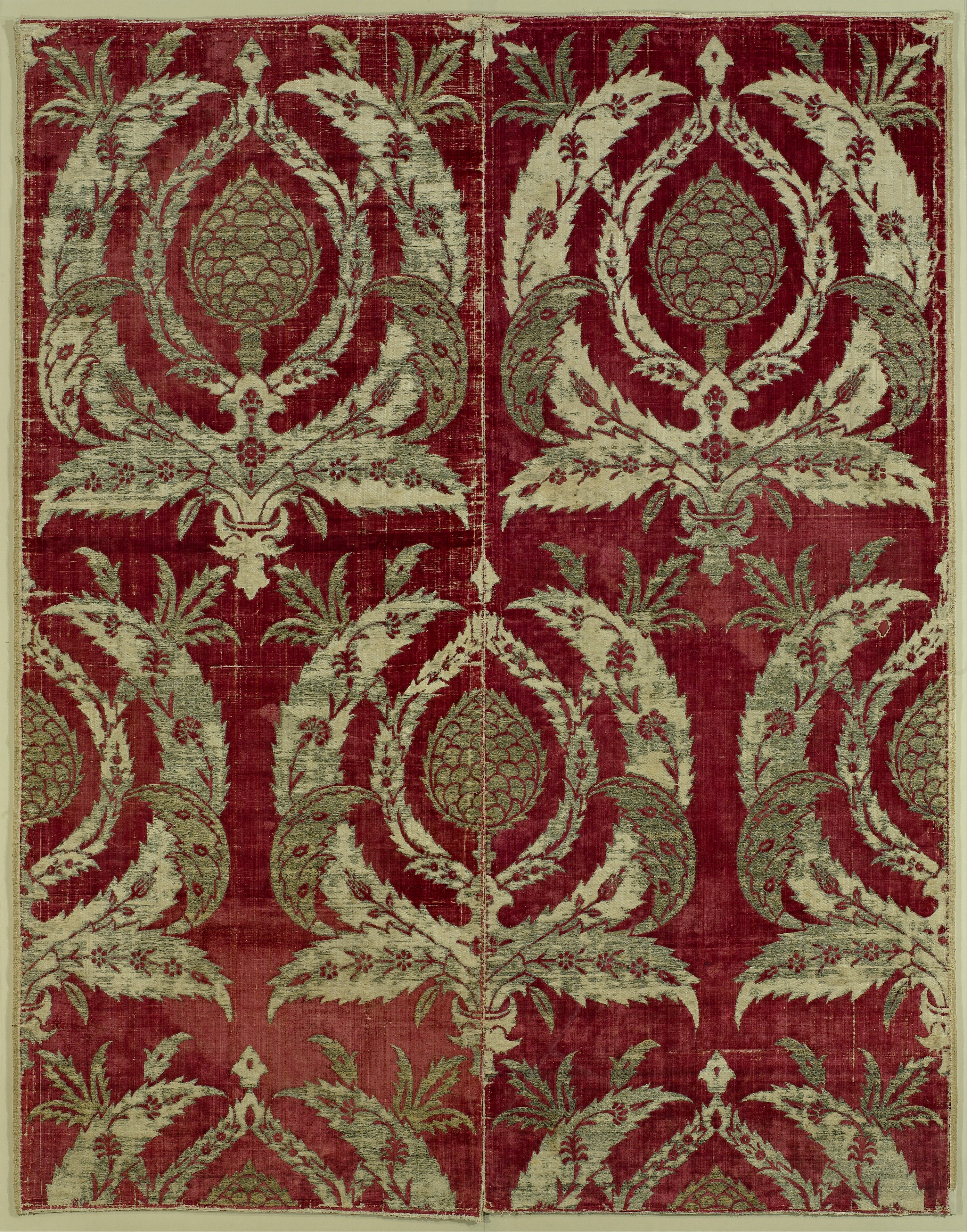
The rectangular textile fragment, ostensibly a relic of conventional craftsmanship, emerges in the Zoey Fashion Laboratory’s SS26 study as a radical proposition—not a remnant, but a generative matrix. Its materiality—silk, metal-wrapped thread, cut and voided velvet, and brocade—is not a nostalgic nod to opulence. Instead, it is a deliberate collision of temporalities, a palimpsest where the hand of the artisan meets the precision of the machine, and where the void becomes as critical as the fill. This analysis positions the fragment not as a finished garment, but as an architectural seed, a catalyst for futuristic silhouettes that defy the anthropomorphic norm and embrace a new, post-human elegance.
Material Dialectics: The Void as Structural Load-Bearing Element
The fragment’s construction—cut and voided velvet—is the primary site of innovation. The void, traditionally a decorative negative space, is here re-engineered as a load-bearing negative volume. In conventional couture, fabric is a continuous skin. In our SS26 paradigm, the void is a deliberate excision, a strategic absence that dictates the garment’s three-dimensional drape. The silk ground, with its inherent tensile strength, becomes the skeleton; the velvet pile, selectively removed, creates zones of transparency and opacity that modulate the silhouette’s optical density. The metal-wrapped thread, brocaded into the surface, functions as a flexible exoskeleton, providing localized rigidity without compromising the fabric’s fluidity. This is not embellishment; it is a system of micro-articulation, allowing the textile to fold, cantilever, and self-support in ways that mimic engineered architecture.
The brocaded metal thread is not merely decorative; it is a conductive pathway for light and, conceptually, for data. In the SS26 context, this thread is a metaphor for the garment’s nervous system, suggesting a future where clothing is not passive but responsive. The interplay between the matte silk, the lustrous metal, and the plush velvet creates a tactile hierarchy that invites a new form of haptic engagement. The wearer does not simply don the garment; they enter a dialogue with its surface, a conversation mediated by texture and reflectivity. This is a deliberate departure from the flat, graphic treatments of prior seasons, positioning the fragment as a precursor to a new, volumetric language.
Silhouette Engineering: From Rectilinear to Bio-Morphic
The fragment’s rectangular geometry is the starting point for a series of parametric transformations. We reject the notion of the rectangle as a static plane. Instead, it is a development surface—a flat pattern that, through strategic cutting, pleating, and the exploitation of the voided zones, can be mapped onto a non-Euclidean, bio-morphic form. The SS26 silhouette is not draped on the body; it is constructed in opposition to it. The rigid, metal-reinforced edges of the fragment can be coaxed into sharp, angular projections that extend beyond the human contour, creating a silhouette of architectural defiance. Conversely, the silk’s fluid drape allows for a collapse into soft, organic folds, producing a dualism of hard and soft, rigid and yielding.
Consider the potential for a cantilevered shoulder—a direct extrapolation of the fragment’s straight edge, reinforced by the metal thread, projecting outward like a minimalist wing. Or a voided torso, where the cut velvet creates a lattice of negative space over the skin, the silk ground acting as a translucent membrane. This is not about revealing the body; it is about abstracting it, creating a second, architectural skin that redefines the wearer’s spatial presence. The garment becomes a portable environment, a personal monument that alters the perception of scale and volume in a room. The wearer is not a mannequin for the cloth; they are a collaborator, a load-bearing element in a larger structural composition.
Structural Innovation for SS26: The Fragment as a Modular System
The most radical proposition is the fragment’s potential for modularity and reconfiguration. Unlike a traditional, finished garment, this fragment is a semi-autonomous component, designed to be connected, layered, or suspended in multiple configurations. The metal-wrapped thread edges can be fitted with micro-magnetic or mechanical connectors, allowing for the creation of a transformable wardrobe that adapts to context and climate. This challenges the very concept of a fixed silhouette, instead proposing a dynamic morphology where the garment is a living system, perpetually in flux.
This modularity is a direct response to the “Global Frontier” context—a world of nomadic, digital nomads and shifting cultural identities. The fragment is a cultural passport, a portable piece of heritage that can be integrated into any new context. The brocaded patterns, while abstract, evoke a global lexicon of textile traditions, but they are rendered in a futuristic material palette, creating a temporal dissonance that is both familiar and alien. The SS26 wearer is not defined by a single garment but by their ability to assemble and reassemble a personal aesthetic from a kit of parts. This is the ultimate luxury: not ownership of a singular object, but mastery of a system.
Furthermore, the voided velvet technique is reimagined as a tool for environmental modulation. The selective removal of pile creates micro-pockets of air, offering a form of passive thermal regulation. The metal thread can be used to dissipate heat or, in future iterations, to integrate flexible photovoltaic cells. The fragment is thus not merely a textile; it is a functional membrane, a proto-smart material that bridges the gap between haute couture and wearable technology. This is not about adding gadgets to clothing; it is about embedding intelligence into the very structure of the weave.
Conclusion: A New Ontology of Dress
The rectangular textile fragment, in this avant-garde analysis, is a manifesto in cloth. It rejects the tyranny of the finished garment and the static silhouette. It proposes a future where couture is a form of structural engineering, where the void is as important as the mass, and where the wearer is an active participant in the creation of their own form. The SS26 collection, born from this single fragment, will not be a series of dresses and suits. It will be a lexicon of possibilities, a set of tools for constructing a new, post-human elegance. The silk, the metal, the velvet, and the void are not materials; they are the vocabulary of a new architectural language for the body. The Global Frontier is not a geographic location; it is this very space of radical possibility, where a simple rectangle contains the blueprint for a revolution.