The Dialectics of Absence: Needle Lace and the Fragmented Silhouette for SS26
In the relentless churn of the fashion industrial complex, the concept of 'fragment' is often reduced to a stylistic trope—a ripped hem, a distressed print, a superficial nod to entropy. For Zoey Fashion Laboratory’s SS26 study, we reject this facile interpretation. Here, within the context of the Global Frontier, the fragment is not a state of decay but a generative principle of form. It is the deliberate, surgical severance of the garment’s totality to expose the architectural tension between structure and void. Our medium of choice, needle lace—a craft historically bound to domesticity, patience, and the preservation of the whole—becomes the perfect instrument for a radical deconstructionist thesis. This is not about mending; it is about weaponizing the hole, the gap, and the severed thread to construct a new, futuristic corporeal language.
Deconstructing the Grid: Needle Lace as Structural Calculus
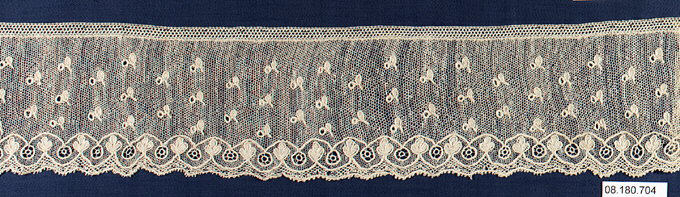
Traditional needle lace is a paradox: a fabric of air. Its strength lies in its negative space, the intricate network of stitches that define emptiness. In our SS26 exploration, we extrapolate this logic onto the human form. We begin by treating the body not as a volume to be draped, but as a coordinate system to be interrupted. The lace is no longer a delicate overlay; it is a load-bearing membrane. We construct panels of dense, architectural needle lace—using linen and metallic micro-fibers—that are then deliberately fractured along engineered stress lines. The 'fragment' is a calculated excision, a removal of mass that paradoxically increases the garment's kinetic energy.
Consider the Fragment-Exo Corset. It abandons the continuous torso casing. Instead, it exists as a series of lace 'chassis'—three distinct, rigid panels anchored at the sternum, the iliac crest, and the scapulae—connected by exposed, tensioned cords. The absence of fabric across the midriff is not a sexualized reveal but a structural declaration. It visualizes the forces that hold the body erect, transforming the wearer into a living diagram of biomechanical efficiency. The needle lace, worked in a honeycomb of 3D-printed resin and silk, provides the necessary rigidity while maintaining a ghostly translucency. The fragment, here, is the apotheosis of control, not its loss.
Silhouette as Ruin: The Asymmetric Collapse
Our futuristic silhouettes for SS26 are predicated on the aesthetics of the controlled collapse. We move away from the clean, monolithic lines of conventional couture. Instead, we propose a silhouette that appears to be a ruin of a former garment, a memory of a shape that has been subjected to an invisible, cataclysmic force. The needle lace is worked in long, sweeping arcs that mimic the trajectory of a falling drape, then abruptly terminated. One shoulder is encased in a high, architectural collar of dense lace, while the opposite side dissolves into a cascade of frayed, unworked threads that trail the floor like a comet's tail.
This is the Hemorrhage Gown—a study in radical asymmetry. The bodice is a masterpiece of micro-engineering, a seamless web of needle lace that hugs the ribcage with the precision of a second skin. However, at the hip, the pattern is violently interrupted. The horizontal threads are cut, and the vertical warp elements are allowed to unravel, creating a fringe that is not whimsical but geological. The fringe is weighted with tiny, hand-forged metallic beads, causing the fabric to fall in a parabolic curve that defies gravity. The garment does not end; it fragments into a trajectory, suggesting motion that has been frozen at its peak. The wearer is not inside a dress; she is inhabiting a sculpture of a dress in mid-explosion.
Transparency and the Ghost in the Machine
Needle lace's inherent transparency offers a unique philosophical dimension to the fragment. In our Global Frontier context, where digital and physical realities blur, the lace becomes a metaphor for the interface between the self and the algorithm. The fragmented panels do not conceal; they filter. They present a vision of the body that is simultaneously present and absent, solid and spectral. We utilize a technique we call Photonic Lace, where the needlework is interwoven with optical fibers that emit a low, pulsating light along the cut edges of the fabric. The severed ends glow, not as decoration, but as a signal—a warning that the system is compromised, that the totality is an illusion.
The Fracture Jacket exemplifies this. Constructed from a single, continuous piece of needle lace that has been digitally mapped and then physically cut into 40 distinct shards, each piece is reattached to the body via a system of magnetic clasps that allow for movement. The gaps between the shards are not empty; they are filled with a haze of micro-fiber that catches the light. The wearer appears to be wrapped in a digitized cloud, a being whose form is constantly being re-uploaded and re-rendered. This is not fragility; it is the new strength of fluidity, the power to exist in multiple states simultaneously.
Structural Innovation: The Lace Skeleton
Our most radical proposition for SS26 is the Exoskeletal Lace. We have abandoned the notion of lace as a fabric and re-imagined it as a construction system. Using a technique of knotless netting combined with a thermosetting polymer, we create lace elements that are as rigid as carbon fiber but as visually intricate as a spider's web. These elements form an external frame that hovers millimeters away from the skin, creating a new, secondary anatomy. The fragment is the primary module—a single, complex lace 'bone' that can be linked to others to form a full garment.
The Chassis Jumpsuit is a masterpiece of this system. It is composed of seven distinct, articulated lace bones that run along the spine, the outer arms, and the lateral thighs. These bones are connected by a gossamer-thin, elasticated needle lace that provides no structural support but creates a visual continuity. The result is a garment that looks like a fossil of a future species, a remnant of a biomechanical organism. The silhouette is elongated, angular, and almost insectoid. It is a profound statement on the future of dress: clothing as a support system, a prosthetic for a new era of human evolution. The fragment is no longer a loss but the fundamental unit of a new order.
In conclusion, for SS26, Zoey Fashion Laboratory posits the fragment as the most potent tool in the avant-garde arsenal. Through the meticulous, almost obsessive craft of needle lace, we have transformed destruction into a blueprint. The future is not a seamless garment; it is a series of deliberate, intelligent breaks. It is a lacework of possibilities, a silhouette of what has been removed, and a testament to the beauty of the interrupted line. The wearer of this couture is not a passive mannequin but an active participant in the creation of her own fragmented, futuristic identity.