The Towel Reconstructed: Deconstructive Purity and the Architecture of the Everyday
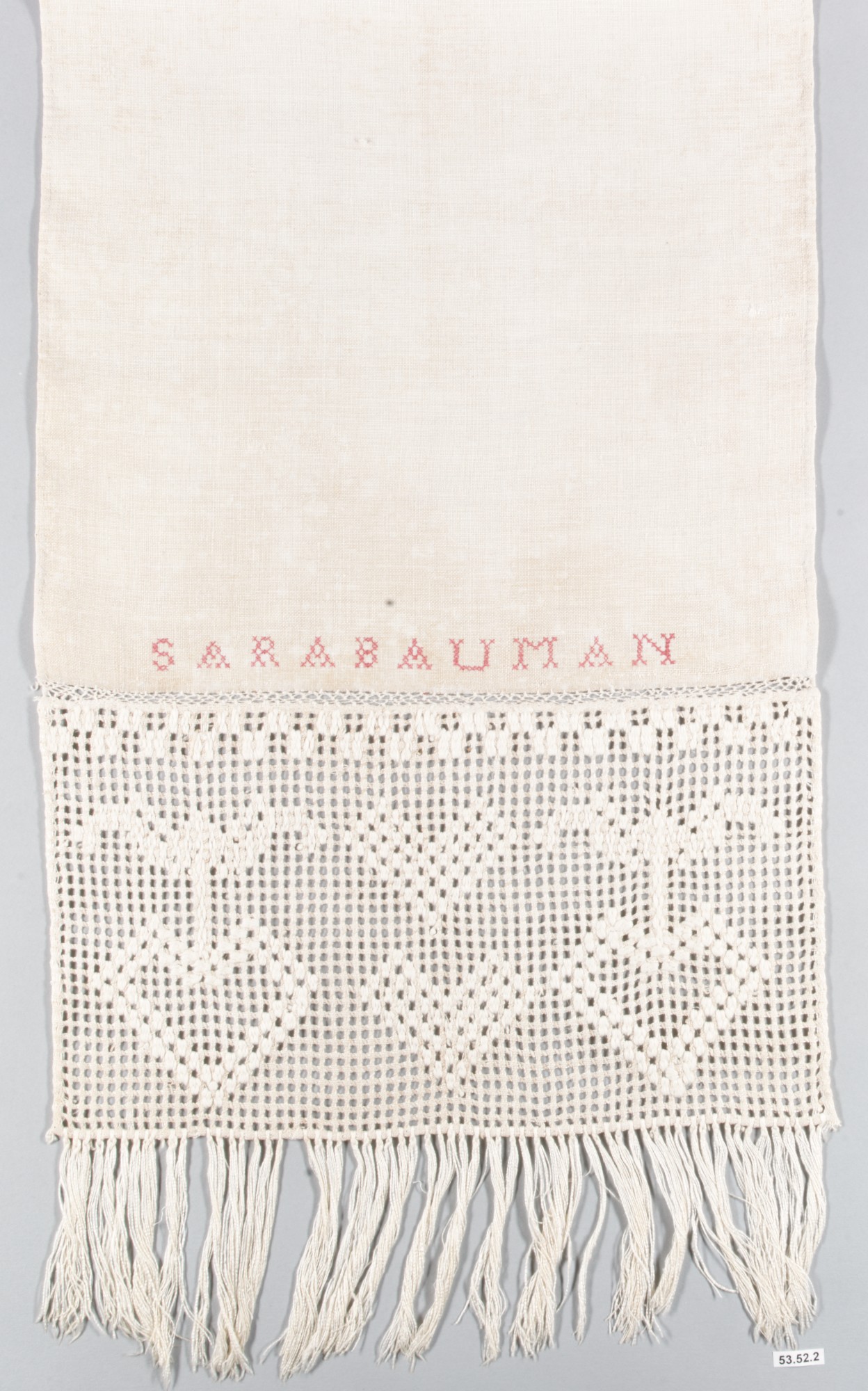
In the rarefied atmosphere of avant-garde couture, the mundane often serves as the most potent catalyst for radical reinvention. At Zoey Fashion Laboratory, we do not merely observe the quotidian; we dissect it, interrogate its form, and resurrect it within a new speculative framework. The subject of this definitive analysis is, paradoxically, the American Show Towel—a humble artifact of domestic utility, yet one whose geometric precision and tactile honesty offer a profound blueprint for SS26. Constructed from a rigid, unbleached linen base and embroidered with utilitarian cotton thread, this object is not a garment. It is a manifesto. This study transcends the textile itself, positioning the towel as a structural armature for a new genre of wearable architecture—one that challenges the boundaries between absorbency, drape, and the human silhouette.
I. Material Dialectics: Linen’s Rigidity and Cotton’s Cartography
The foundational dialectic of this study lies in the material opposition between the linen warp and the cotton weft. The American Show Towel, traditionally a display piece, is engineered for visual presentation rather than use. Its linen ground is woven with a high-twist yarn, resulting in a fabric that possesses an almost metallic stiffness. This is not the fluid linen of Provençal summer wear; this is a structural textile, one that holds a crease with the tenacity of folded steel. For the Laboratory, this inherent rigidity is the primary generative force. We are not interested in the towel’s capacity to absorb moisture, but rather its ability to resist gravity. This resistance becomes the foundational principle for our SS26 exploration of volumetric form.
Conversely, the cotton embroidery—typically a red or blue geometric pattern—functions less as decoration and more as a form of surface cartography. These embroidered lines are not merely stitched; they are scored into the linen, creating a subtle topographical relief that alters the way light interacts with the fabric’s surface. In our deconstructive process, we treat these embroidered pathways as pre-determined structural seams. They are the architectural blueprints that dictate where the fabric will fold, where it will flare, and where it will collapse upon itself. The cotton thread acts as a tensile element, pulling the rigid linen into new, three-dimensional configurations. This is not decoration; it is the genetic code for a new species of garment.
A. The Absence of Absorbency: Redefining Function
By stripping the towel of its utilitarian purpose—its absorbency—we liberate its aesthetic potential. The very quality that defines it in the domestic sphere becomes irrelevant in the couture context. This deliberate erasure of function is a critical avant-garde gesture. It allows us to focus on the towel’s pure formal properties: its rectangular geometry, its fringed edges, and its woven density. The fringe, traditionally a byproduct of the weaving process, is recontextualized as a fringe of kinetic energy, a series of micro-filaments that tremble and sway with the wearer’s movement, creating a secondary, ghostly silhouette against the primary form. The towel ceases to be an object and becomes a system of lines, planes, and tensions.
II. Futuristic Silhouettes: The Modular, The Inflated, and The Sheared
Our SS26 analysis proposes three distinct, futuristic silhouettes derived from the Show Towel’s structural vocabulary. These are not mere garments; they are wearable propositions for a post-utilitarian era.
1. The Modular Torso-Cradle
This silhouette exploits the linen’s rigidity to create a garment that hovers off the body. The towel is folded longitudinally and diagonally, its embroidered lines acting as living hinges. The result is a torso-cradle that does not cling, but rather floats above the epidermis, creating a negative space between fabric and skin. The fringed edges are deployed at the shoulders, not as trimming, but as a deliberate disruption of the shoulder line, suggesting a form of exoskeletal plumage. The silhouette is sharp, angular, and architectural, evoking the clean lines of brutalist design while maintaining a tactile, woven warmth.
2. The Inflated Column
Here, we invert the towel’s planar nature. By stitching the long edges of multiple towels together and introducing internal, unseen structures—not padding, but strategic tension points—we create a garment that inflates away from the body. The result is a columnar silhouette, reminiscent of Issey Miyake’s early experiments, but grounded in the American towel’s specific weave. The embroidery now serves as a series of horizontal or vertical restraining bands, creating a rhythmic compression against the inflated volume. This produces a series of organic, almost pneumatic bulges, a futuristic silhouette that suggests both protection and vulnerability. The wearer becomes a walking monument, a figure of static power.
3. The Sheared Plane
The most aggressive deconstruction involves the literal shearing of the towel. We cut through the linen at sharp, oblique angles, exposing the raw, fraying edges. These exposed cuts are not finished; they are left to unravel, celebrating the entropy of the material. The garment is then reassembled using only the embroidered seams as connection points. This creates a silhouette that is fragmented, incomplete, and perpetually in a state of becoming. The sheer planes of linen jut outwards like broken wings, while the cotton embroidery acts as the sutures holding the chaos together. This is the silhouette of the deconstructed hero, a figure of fragmented strength for a fragmented age.
III. Structural Innovation and the Art of the Fold
The true innovation of this study lies not in the cutting, but in the folding. The American Show Towel is, at its heart, a study in the fold. Its display in the home is predicated on being hung, folded over a rack, or draped with precision. We have translated this domestic ritual into a high-level structural technique. The origami-esque folding of the linen allows for the creation of garments that require no darts, no complex pattern cutting, and minimal stitching. The fabric itself becomes the pattern. This is a zero-waste methodology, a radical departure from the traditional couture practice of cutting away fabric to achieve shape.
Furthermore, the inherent stiffness of the linen allows for a new form of kinetic drape. Unlike silk or jersey, which flow and cling, this linen moves in distinct, angular steps. When the wearer walks, the fabric does not ripple; it folds and unfolds in sharp, mechanical increments. This creates a visual rhythm that is entirely novel in contemporary fashion, a staccato beat that underscores the wearer’s movement. The garment is not merely worn; it is animated, its structure responding to the body’s kinetic energy in a direct and uncompromising dialogue.
A. The Embroidered Seam as a Joint
In traditional tailoring, the seam is a point of connection, often hidden or pressed flat. In our avant-garde methodology, the embroidered seam is elevated to the status of a mechanical joint. It is the point where the fabric’s rigidity is articulated, allowing for controlled movement. The cotton thread, in this context, acts as a tendon, connecting the rigid linen bones. This biological metaphor is central to our design philosophy. We are not building clothes; we are constructing a second skeleton, an exoskeleton of woven fiber that moves in concert with, but not subservient to, the human form. This is the future of couture: a synthesis of material science, structural engineering, and pure artistic expression, all born from the humble, yet profoundly complex, American Show Towel.
In conclusion, the Show Towel, stripped of its domestic identity, emerges as a cornerstone for a new architectural language in fashion. Its rigid linen and embroidered cotton provide the perfect materials for exploring volume, tension, and the deconstructive aesthetic. For SS26, Zoey Fashion Laboratory posits that the future of couture is not found in new, synthetic marvels, but in the radical reinterpretation of the objects that surround us. We look to the towel, and we see a skyscraper, a sculpture, a suit of armor for the soul. This is not a revival; it is a resurrection.