Deconstructing the Partisan: A Study in Avant-Garde Materiality
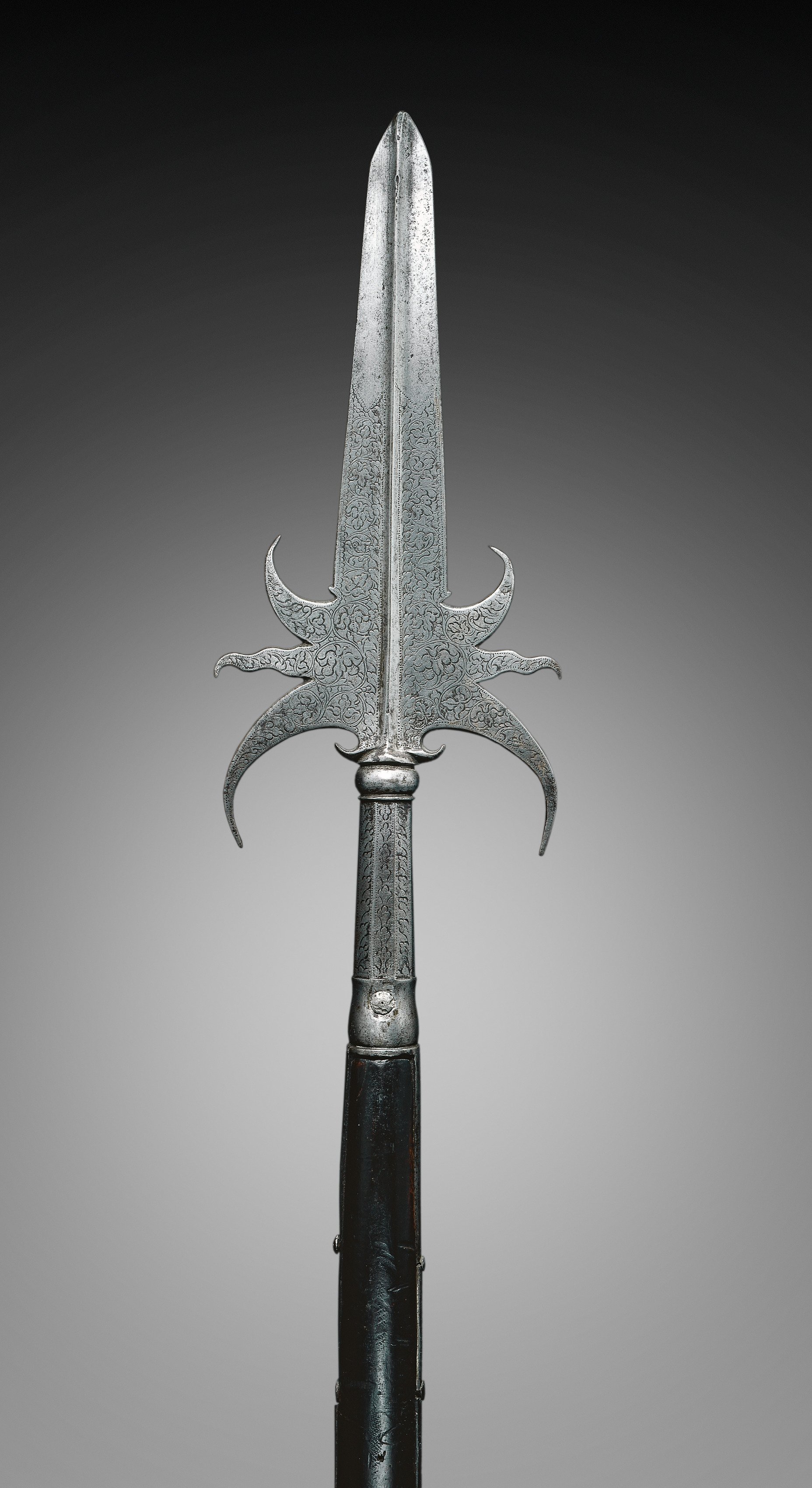
At Zoey Fashion Lab, our mandate extends beyond the conventional boundaries of garment construction. We interrogate the very essence of form, function, and the cultural memory embedded within materials. In this analysis, we turn our lens to a most unexpected subject: the Partisan, a ceremonial polearm of French origin. Historically a weapon of elite guards and a symbol of aristocratic power, this artifact—comprising a tempered steel head and a round wood haft—presents a rich paradox. When filtered through our avant-garde design philosophy, the Partisan ceases to be a relic of war and becomes a new DNA strand for sculptural fashion, architectural silhouettes, and material innovation. This deconstruction is not about literal adaptation but about extracting the weapon’s core tensions—rigidity versus fluidity, ornament versus utility—and re-synthesizing them into wearable art.
Material Dialectics: Steel as Structural Memory
The steel component of the Partisan is our primary point of departure. In its original context, this metal was forged for penetration, for decisive, linear force. Its surface, often polished to a mirror sheen, carries the patina of centuries—a silent witness to ceremony and conflict. For Zoey Fashion Lab, this steel is not a material to be mimicked but a tension to be translated. We deconstruct its properties into three avant-garde principles: rigidity, reflectivity, and edge geometry.
In our new DNA strand, steel’s rigidity is reimagined as a structural exoskeleton. We propose garments that use laser-cut, heat-set technical polymers with a metallic chrome finish, capable of holding sharp, cantilevered folds that defy gravity. These are not mere embellishments; they are load-bearing elements that reshape the human silhouette, creating negative space and angular profiles reminiscent of the Partisan’s blade. The reflectivity of the steel is harnessed not for vanity but for disruption. By integrating micro-mirrored panels into a garment’s surface, we fragment the wearer’s outline, making the body a dynamic, ever-shifting entity. This challenges the static nature of traditional couture, introducing a performative element where light and environment become co-designers.
Finally, the edge geometry of the blade informs our cutting methodology. We are abandoning the soft, organic curves of standard pattern-making in favor of asymmetric, beveled seams that mimic a honed edge. These seams do not simply join fabric; they create a visual and tactile hierarchy, where each panel appears to have been carved from a larger, monolithic block of material. This approach transforms a simple jacket or gown into a study of negative space, where the absence of fabric is as deliberate as its presence.
The Haft: Organic Counterweight and Kinetic Flow
In stark contrast to the steel, the round wood haft represents organic warmth, ergonomic grip, and rotational potential. Historically, this was the point of human contact, the interface between wielder and weapon. In our deconstruction, the haft becomes the antidote to metallic severity. It introduces the principles of flexibility, tactility, and rotational dynamics into our design lexicon.
We translate the wood’s grain and texture through biodegradable, cellulose-based yarns and ribbed, corduroy-like weaves that wrap the body in a spiral motion. This is not a literal imitation of wood but an abstraction of its energy. The roundness of the haft inspires a new approach to draping: we are exploring continuous, spiral-wrapped silhouettes that coil around the torso, limbs, and neck, creating a sense of perpetual motion. These garments are engineered to move with the wearer, not against them, echoing the haft’s role as a lever for the blade.
Furthermore, the haft’s ergonomic function informs our approach to wearable architecture. We are designing integrated, swivel-jointed connections—akin to a modern reinterpretation of a grommet or a hinge—that allow different garment modules to rotate or lock into place. This creates a modular wardrobe where a sleeve can be repositioned, a collar can be raised into a protective cowl, or a train can be swung to the front, all inspired by the rotational control a soldier once had over the polearm. The wood haft is thus not a static element but a catalyst for kinetic couture.
Avant-Garde Synthesis: The New DNA Strand
The true innovation of this analysis lies not in isolating these elements but in splicing them together to form a new genetic code for fashion. The Partisan’s duality—steel and wood, aggression and support—mirrors the contemporary human condition: the need for both armor and vulnerability, for precision and adaptability. Our new DNA strand is a double helix of these opposing forces.
Consider a signature piece from this conceptual collection: The Ceremonial Bodice. Its front is constructed from a rigid, chrome-finished resin that mimics the blade’s profile, with sharp, asymmetric darts that cut inward toward the waist. The back, however, is a cascade of spiral-cut, raw-edged silk organza, dyed in deep, wood-toned umber and charcoal, flowing outward like the grain of the haft. The garment is held together not by traditional zippers but by a series of magnetic, ball-and-socket joints—a nod to the haft’s pivot point—allowing the wearer to adjust the tension between the rigid front and the fluid back.
This synthesis extends to our color palette and textile finishing. We propose a monochromatic scheme of oxidized iron grays, gunmetal blues, and warm, burnt sienna—the colors of aged steel and seasoned wood. Textures are equally dualistic: high-gloss, patent-like finishes are juxtaposed against matte, brushed surfaces that feel like sanded oak. The result is a garment that is visually and haptically complex, demanding a second glance and a deliberate touch.
Conclusion: From Weapon to Worn Philosophy
In deconstructing the French Partisan, Zoey Fashion Lab has not created a costume or a historical pastiche. Instead, we have extracted a philosophical blueprint for avant-garde design. The weapon’s inherent contradictions—its lethal precision and its ceremonial grandeur—are resolved into a new aesthetic language that speaks to resilience, transformation, and the power of material memory.
This analysis serves as a foundational reference for our upcoming collection, where each garment is a living artifact, a wearable argument that fashion can be both intellectually rigorous and viscerally beautiful. By splicing the steel’s sharp geometry with the haft’s organic flow, we have engineered a new silhouette that is unapologetically bold, deeply tactile, and conceptually sound. The Partisan, once a tool of division, becomes in our hands a symbol of sartorial synthesis—a true new DNA strand for the future of fashion.