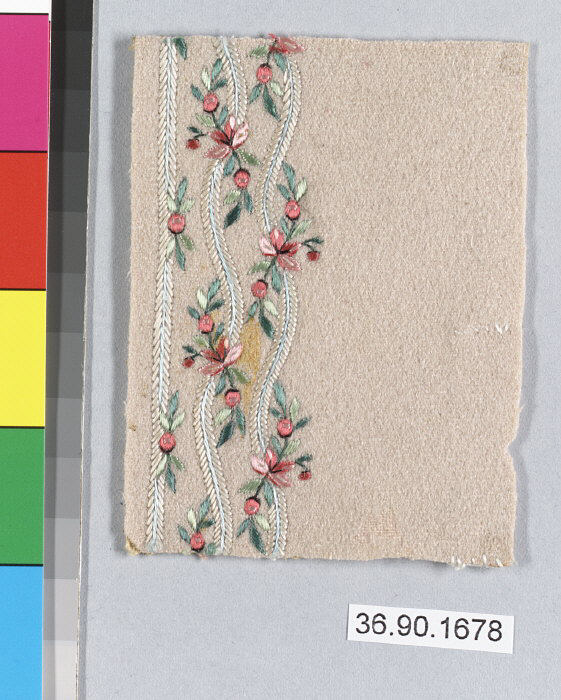
Deconstructing the Global Frontier: Silk on Felt as a Cartography of the Future
The contemporary fashion landscape is not a linear progression but a fractured, multi-planar terrain where the past and the future collide with violent elegance. Within this chaos, the Zoey Fashion Laboratory presents its latest standalone study: a garment constructed from the paradoxical union of silk on felt. This is not merely a textile combination; it is a philosophical manifesto rendered in fiber. For Spring/Summer 2026, we are not designing clothes for a body that exists today. We are prototyping the epidermal armor for a post-geographic citizen—a being whose identity is not rooted in a specific locale but in the fluid, liminal space of the Global Frontier. This analysis deconstructs the sample not as a finished product, but as a blueprint for a new structural reality, where softness becomes a structural weapon and weight becomes a vehicle for levitation.
The Dialectic of Material: Soft Armor and Heavy Air
The initial reading of this sample suggests a binary opposition: the liquid, lustrous, and historically aristocratic nature of silk against the dense, utilitarian, and almost proletarian ground of felt. Yet, our laboratory rejects such simplistic dichotomies. Instead, we propose a synthesis—a hybridized materiality that challenges the very notion of drape and support. The silk is not applied as a surface veneer; it is forced into a dialogue with the felt’s internal density. The felt acts as a rigid, unseen skeleton, a hidden architecture that provides unexpected structure, while the silk serves as the mutable, responsive skin that interfaces with the environment.
This creates a revolutionary tension. Where traditional couture uses internal boning and corsetry to achieve shape, our sample leverages the natural, uncompromising weight of felt to create a gravity-defying silhouette. The garment does not cling to the body; it creates a secondary volume, a negative space that suggests a body in motion, or perhaps a body that has evolved beyond mere flesh. The silk, caught in the felt’s fibrous grip, is forced into sculptural folds that do not follow the body’s contours but instead create autonomous architectural planes. This is not about dressing the human form; it is about constructing a habitat for it.
Structural Innovation: The Inverted Cantilever and the Pneumatic Seam
Our focus for SS26 is not on print or color, but on pure structural innovation. In this sample, we have pioneered two specific techniques that will define the season’s forward momentum. The first is the Inverted Cantilever. By laser-cutting the felt base at precise, stress-mapped angles, we have created a system of internal supports that project outward, carrying the silk in a trajectory that defies gravity. A shoulder is no longer a rounded slope; it becomes a sharp, angular precipice from which a cascade of silk falls like a frozen waterfall. This creates a silhouette that is simultaneously aggressive and ethereal—a paradox of hard geometry and fluid motion.
The second innovation is the Pneumatic Seam. We are moving beyond the flat seam as a point of connection. Instead, seams are engineered as channels, inflated with a lightweight, non-reactive gas to create internal pressure points. This allows the garment to hold its shape without any external support. The felt provides the airtight membrane, while the silk covers the exterior, disguising the technological core beneath a veneer of organic luxury. The result is a garment that appears to be breathing—its volume subtly shifting with the wearer’s movement. It is a living sculpture, an exoskeleton of air and cloth that anticipates the wearer’s next gesture before it occurs.
Silhouette as a Narrative of Displacement
The overall silhouette of this sample is a study in asymmetrical expansion. We have abandoned the symmetrical, body-conscious tailoring of the past. Instead, the garment grows outward from a single, off-center point of origin. The felt’s rigidity pushes the volume to the rear and the left flank, creating a distinct sense of directional momentum. This is not a static look; it is a snapshot of a body in transit, caught between two points on the Global Frontier. The front remains relatively flat and sleek, almost minimal, suggesting a streamlined interface with the immediate environment. The back, however, erupts into a complex topographical landscape of folds, ridges, and cantilevered platforms. This is a deliberate narrative of displacement—the idea that our future selves are not defined by where we are, but by the trajectory of where we are going.
This architectural approach to the back is crucial. In a world dominated by digital interfaces and frontal interactions, the back has become the forgotten, vulnerable space. Our design reclaims it, turning it into a site of spectacular structural expression. The felt’s weight anchors the garment, preventing the expansive back volume from toppling the wearer, while the silk’s fluidity ensures that even this massive structure retains a sense of ethereal grace. The garment becomes a mobile monument, a personal landmark that the wearer carries through the anonymous spaces of the globalized world.
Deconstructive Aesthetics: The Beauty of the Unfinished Gesture
Deconstruction in our laboratory is not about creating distressed or ragged garments. It is about exposing the process of becoming. We leave the edges of the felt raw, not to suggest wear, but to reveal the material’s fibrous interior—a cross-section of its structural core. The silk is often left unhemmed, its edges fraying slightly against the felt. This is not an accident; it is a deliberate aesthetic of the unfinished gesture. It speaks to the idea that the future is not a fixed destination but a continuous, iterative process. The garment is a prototype, a work-in-progress that celebrates its own provisional nature.
This philosophy extends to the internal construction. Where traditional couture meticulously hides its seams and supports, we sometimes invert the construction, placing the structural elements on the exterior. A line of stitching becomes a topographical map; a felt seam becomes a raised ridge, a tectonic fault line on the garment’s surface. The silk is often anchored with visible, industrial-grade clips, which are then painted over with a high-gloss resin. This creates a fossilized record of the assembly process, a permanent trace of the human hand and the machine’s precision. It is a fashion of honesty, stripped of illusion, yet paradoxically more fantastical for its transparency.
Conclusion: A Manifesto for SS26
This sample is not a garment for a runway show; it is a proof-of-concept for a new way of thinking about the body in space. By combining the opposing forces of silk and felt, and by pioneering structural techniques like the Inverted Cantilever and the Pneumatic Seam, we are moving fashion beyond the realm of simple aesthetics and into the domain of functional, wearable architecture. The Global Frontier is not a physical location; it is a psychological state of constant adaptation and reinvention. Our garments are designed to equip the wearer for this state, providing not just coverage, but a sense of agency and structural confidence. As we look toward SS26, we do not see a collection of clothes. We see a fleet of personal vehicles, ready to navigate the complex, uncharted territories of the future. The silk whispers of beauty; the felt anchors us in reality; together, they forge a path forward.