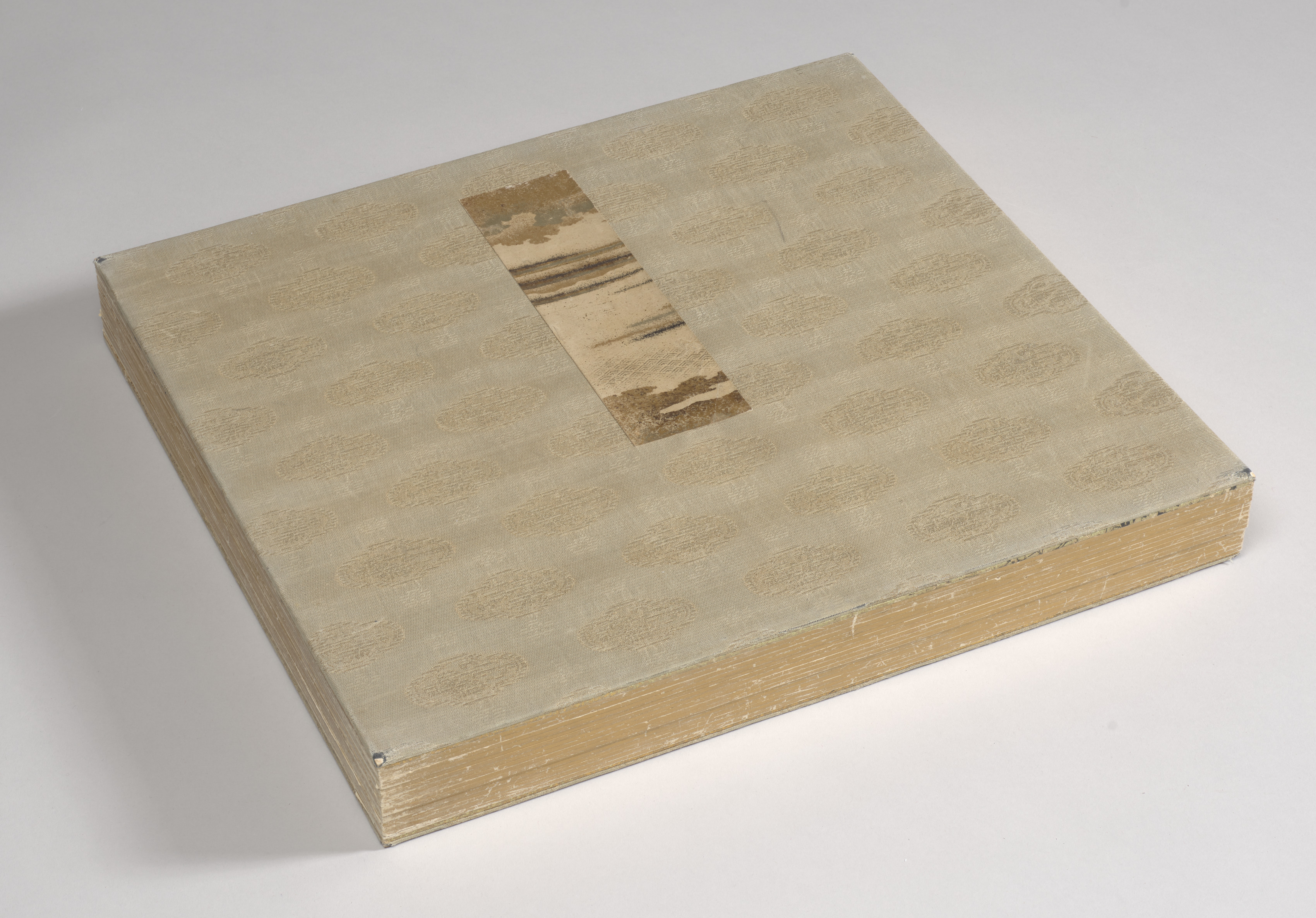
Executive Summary: The Tangible Paradox of the Tang/Nara Silk Album
For Zoey Fashion Lab, the Album of Textile Samples—a silk-bound compendium originating from either China’s Tang dynasty (618–907) or Japan’s Nara period (710–794)—presents more than a historical artifact. It is a deconstructive blueprint, a pre-industrial precursor to the avant-garde’s obsession with fragmentation, material honesty, and cross-cultural synthesis. This analysis dissects the album’s technical, aesthetic, and philosophical resonances, positioning it not as a relic to be preserved, but as a generative matrix for radical textile innovation.
I. Provenance as a Rupture: The Tang/Nara Dialectic
The album’s dual attribution—Tang or Nara—is not a curatorial ambiguity but a productive instability. The Tang dynasty was a cosmopolitan superpower, its silk industry defined by imported Sogdian weaves, Sassanian pearl roundels, and Buddhist iconographic flows along the Silk Road. The Nara period, conversely, represents Japan’s first great state-sponsored appropriation of continental culture, particularly through the Shōsōin repository, which preserves Tang textiles with almost obsessive fidelity.
For the avant-garde designer, this ambiguity is a weapon against linear chronology. The album refuses a single origin story. It exists in the interstice—a liminal object that simultaneously claims Chinese imperial technical mastery and Japanese ritualistic preservation. This mirrors the contemporary practice of cultural sampling, where a motif is detached from its geopolitical source and recontextualized within a new sensory economy. The album’s provenance is not a question of “where” but of “how it breaks.” It breaks the assumption that East Asian textile history is monolithic. It is, instead, a series of tectonic shifts, and the album is a fossilized record of that movement.
Technical Signatures: Warp, Weft, and the Logic of the Fragment
Technically, the album’s silk samples—likely including monochrome gauze (luo), compound twills (jin), and warp-faced plain weaves (qi)—reveal a sophisticated understanding of structural tension. The Tang weaver’s genius lay in the manipulation of warp floats to create iridescent color shifts, a technique that predates the European shot-silk by nearly a millennium. The Nara copyist, however, may have introduced a subtle modification: a tighter twist in the filament, a more disciplined repeat.
From a deconstructionist perspective, the album’s true innovation is its format. By isolating samples into a bound book, the anonymous compiler performed an act of radical abstraction. Each swatch is a synecdoche—a part that claims to represent a whole garment, a loom setup, a regional workshop. This is the earliest form of textile deconstruction: the removal of cloth from its functional drape, its bodily context, its ritual use. The album transforms silk from a utilitarian surface into a specimen for analysis, a move that directly parallels the avant-garde’s use of the “muslin toile” as a visible skeleton of design logic. The samples are not finished garments; they are conceptual prototypes.
II. Archive Resonance: Reading the Chinese Epigraph Against the Grain
The provided reference, “Archive Resonance,” speaks of “器物与绘画” (artifacts and paintings) as “无声见证” (silent witnesses) to cultural collision and aesthetic fusion between the 16th and 17th centuries. This is a later echo of the Tang/Nara dynamic. The epigraph’s focus on a later period (16th–17th c.) forces us to read the Tang album retroactively. The later Ming dynasty or Momoyama period saw a revival of Tang aesthetics, but through the lens of connoisseurship and nostalgia.
For Zoey Fashion Lab, this “archive resonance” is a directive to treat the Tang/Nara album not as a primary source, but as a secondary trigger. The 16th–17th century collectors who bound these Tang fragments were themselves engaging in an act of creative misreading. They were not preserving the Tang past; they were constructing a fantasy of Tang-ness to legitimize their own contemporary taste. This is precisely the avant-garde operation: to take a historical motif (e.g., a phoenix roundel) and deliberately misread its symmetry, its color logic, or its scale, to produce a new emotional frequency. The album’s true content is not silk; it is the history of its own reinterpretation.
Materiality and the Illusion of Permanence
The silk itself is a paradox. Silk is proteinaceous—it ages, oxidizes, and becomes brittle. Yet the album format was designed to arrest decay, to present a false eternity. The avant-garde eye sees this fragility as performative vulnerability. The cracks, the fading dyes (indigo to beige, madder to rust), the creases from repeated handling—these are not damages but additive layers of narrative. A deconstructionist would intentionally replicate this aging through processes like ozone fading, enzyme washing, or tactile abrasion, not to faux-antique a garment, but to expose the temporality of all material. The album teaches us that silk is not eternal; it is a document of time’s passage. The avant-garde garment, therefore, should not hide its own construction or wear; it should celebrate the trace of the hand and the hour.
III. Avant-Garde Translation: From Album to Actionable Design Language
How does this 8th-century artifact inform a 21st-century avant-garde collection? The translation requires a tripartite methodology: Structural Disruption, Chromatic Anachronism, and Semantic Detachment.
Structural Disruption: The Unstable Grid
The Tang album’s layout—a clean grid of swatches—is a logical system. The avant-garde response is to corrupt the grid. Instead of a standard 60-inch silk bolt, we propose a deconstructed jacquard that weaves in deliberate float errors, creating a cellular, almost organic grid that mimics the album’s pages after centuries of humidity. Garment construction would use visible seam allowances that reference the album’s binding—raw edges, exposed silk threads, and a “page-like” layering of panels that can be flipped or unfolded, turning the wearer into a living index of textile samples.
Chromatic Anachronism: Faded Vibrancy
The album’s colors are not the saturated hues of Tang court life but the ghostly residues of those colors. We propose a palette of “archival neutrals”: the pale ochre of aged yellow silk, the grey-green of oxidized copper mordants, the dusty rose of faded madder. These are not pastels; they are witnessed colors. The avant-garde move is to print these “faded” tones onto high-luster, technical silks (e.g., silk organza with a liquid metallic finish), creating a dissonance between the ancient hue and futuristic sheen. This is not nostalgia; it is speculative archaeology.
Semantic Detachment: Motif as Noise
The Tang motifs—hunting scenes, floral scrolls, celestial beings—carried specific Buddhist or imperial meanings. In the album, these motifs are reduced to decorative data. For Zoey Fashion Lab, we detach these motifs entirely from their iconography. A Tang lion is not a symbol of protection; it is a vector pattern. We would enlarge a single paw motif to 300% scale, distort it through a digital glitch algorithm, and then re-embroider it using deconstructed silk threads—unspun, slubby, irregular. The result is a motif that is unrecognizable yet uncannily familiar, a semantic ghost that speaks to the impossibility of pure origin.
IV. Conclusion: The Album as a Living, Breathing Contradiction
The Album of Textile Samples from the Tang or Nara period is not a closed historical object. It is a catalytic rupture that challenges the avant-garde to rethink the relationship between preservation and innovation. Its power lies in its fragmentary completeness—each swatch is a finished world, yet the album as a whole is an unfinished conversation.
For Zoey Fashion Lab, this analysis yields a clear directive: design from the archive’s damage, not its perfection. Let the collection be a series of “bound samples” that explore the tension between the warp’s discipline and the weft’s rebellion. Let the garments be wearable archives—pieces that do not hide their seams, their fading, or their cultural multiplicity. The album’s ultimate lesson is that authenticity is a fiction, but a necessary one. By deconstructing its silk, its grid, and its provenance, we do not destroy the past; we activate its latent futurism. The album is not a relic. It is a prophecy of textile deconstruction, waiting thirteen centuries for a lab like ours to read it correctly.