Deconstructing the Frontier: The Textile Fragment as Architectural Genesis for SS26
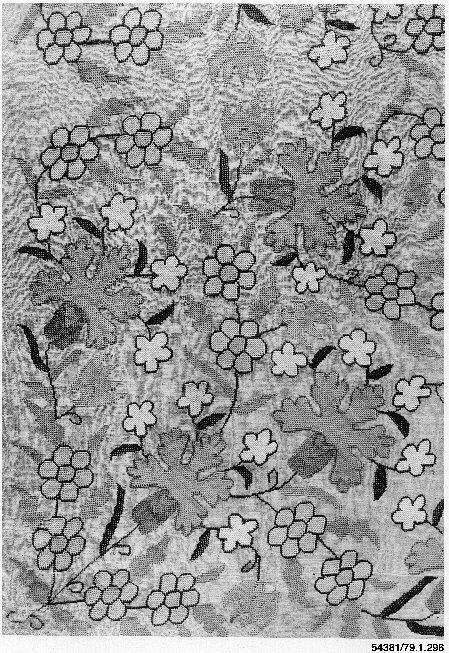
The contemporary fashion landscape is saturated with noise—a cacophony of fleeting trends and digitally rendered hyper-realism that often obscures the fundamental dialogue between material and form. At Zoey Fashion Laboratory, we reject this superficiality. Our investigation for the SS26 season begins not with a silhouette, but with a singular, potent artifact: a textile fragment sourced from the Global Frontier. This is not a nostalgic relic, but a proto-architectural blueprint. Composed of humble linen and lustrous silk in a plain weave, yet elevated by the meticulous hand of embroidery, this fragment functions as the conceptual and structural nucleus for a new paradigm of avant-garde couture. It is a study in opposition—the earthy rigidity of linen against the fluid luminosity of silk, the austere grid of plain weave against the organic chaos of stitched narrative.
From Flatland to Form: The Fragment as a Load-Bearing Membrane
Our analysis begins with a radical premise: the textile is not a covering, but a building material. The plain weave, often dismissed as the most elementary of constructions, is here re-evaluated as a high-tensile, load-bearing membrane. The linen’s inherent stiffness provides the skeletal integrity, while the silk’s supple strength offers a counterbalancing flexibility. In the Zoey Fashion Laboratory, we do not drape; we engineer. The fragment is treated as a prefabricated panel, a module of potential energy awaiting release from its two-dimensional constraints.
The embroidery, therefore, is not mere decoration. It is a system of trusses and cantilevers. Each stitch is a point of convergence, a locus of tension that can be manipulated to induce curvature or to create rigid, three-dimensional relief. We map these embroidered pathways as stress vectors. A cluster of dense, silk-threaded knots becomes a structural joint, capable of holding a sharp, angular fold in place. A long, unbroken line of stitching acts as a living hinge, allowing the fabric to articulate with mechanical precision. This process transforms the fragment from a passive surface into an active agent of form.
The Dynamics of the Plain Weave: A Study in Tension and Release
The choice of the plain weave is a deliberate act of intellectual provocation. In an era obsessed with complex jacquards and technical knits, we find our most profound innovation in the primitive. The plain weave’s grid offers a predictable, Cartesian foundation. However, our intervention lies in its manipulation. By selectively cutting, twisting, and re-securing the warp and weft, we create controlled zones of distortion. The grid can be collapsed, creating dense, compacted areas that act as counterweights. It can be stretched on the bias, creating a fluid, torsional flow that defies the fabric’s inherent stability.
This process of controlled destabilization yields the futuristic silhouettes that define our SS26 proposition. We envision a jacket where the front panel, derived from the stiffest section of the linen, is a rigid, sculptural carapace. Its surface is punctuated by embroidered, honeycomb-like cells that create a subtle, topographic relief. Conversely, the back panel, where the silk content is higher, is released from its grid, allowed to cascade in a liquid, asymmetrical train that suggests motion and ethereality. The garment is no longer a static object but a dynamic equilibrium between opposing forces—a study in tension and release, structure and flow.
Silhouette as a Cartography of the Global Frontier
The Global Frontier is not a geographical location but a conceptual space—a liminal zone where cultures intersect, and traditional boundaries dissolve. The textile fragment, with its humble materials and sophisticated embroidery, embodies this hybridity. Our silhouettes for SS26 are a direct cartography of this space. They are not organic or fluid in a conventional sense, but rather are built from sharp, angular planes that intersect at unexpected junctures, mimicking the jagged lines of a geopolitical border or the strata of a newly discovered terrain.
We propose a silhouette that appears almost alien in its construction. Shoulders are exaggerated, not with padding, but with internal cantilevered structures created from multiple layers of the manipulated linen-silk weave. The waist is not cinched but architecturally defined by a series of floating, embroidered panels that orbit the body without ever fully constraining it. The final form is one of controlled chaos—a garment that looks as if it has been assembled from the fragments of a larger, unknown structure. It is a deliberate departure from the soft, romantic shapes that often dominate spring collections. Instead, we offer a vision of strength, intellect, and forward-looking optimism.
Structural Innovation: The Embroidered Exoskeleton
Our most significant innovation lies in the development of what we term the Embroidered Exoskeleton. This technique elevates the embroidery from a surface treatment to a primary structural system. By using a high-tensile, silk-wrapped thread, we create a dense, skeletal network directly onto the linen substrate. This exoskeleton can be engineered to perform specific functions. In one iteration, it forms a rigid, curved collar that rises from the shoulders to frame the face, echoing the architecture of a futuristic helmet. In another, it creates a spiral of stiffened material that wraps around the torso, acting as an external corset that requires no lacing or boning—its shape is locked in by the geometry of the stitches.
This approach allows for a remarkable degree of precision and reproducibility, bridging the gap between haute couture craftsmanship and advanced manufacturing logic. The embroidered exoskeleton can be designed digitally, with the stress points and structural requirements calculated with mathematical accuracy before a single stitch is made. Yet, the execution remains firmly rooted in the artisan’s hand, creating a beautiful paradox between the machine-like precision of the design and the humanistic imperfection of the craft. The result is a garment that is both intellectually rigorous and emotionally resonant.
Conclusion: A Manifesto for the Material Future
The textile fragment from the Global Frontier is more than an object of study; it is a philosophical catalyst. It challenges us to see beyond the surface, to understand the latent power embedded within the material itself. For SS26, Zoey Fashion Laboratory proposes not just a collection of clothing, but a new methodology. We are building a future where the garment is an intelligent, responsive structure, born from a deep understanding of its constituent parts. The interplay of linen and silk, of plain weave and embroidery, provides the foundational grammar for this new language of form.
This is a definitive statement against the ephemeral. It is a commitment to a couture that is substantial, meaningful, and intellectually potent. The future of fashion is not in the digital ether, but in the physical world of textiles, where the humble fragment holds the key to monumental structural innovation. Through this analysis, we have deconstructed the past to build the future, one stitch, one vector, one architectural fold at a time. The result is a wardrobe for the frontier of tomorrow, engineered with the soul of yesterday.