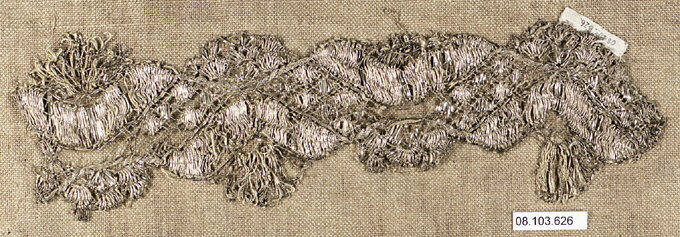
The Lace Hypothesis: Deconstructing Material Memory for the SS26 Frontier
In the rarefied atmosphere of Zoey Fashion Laboratory, where the lexicon of fashion is perpetually rewritten, the Piece emerges not as a garment, but as a thesis. Hailing from the Global Frontier—a conceptual space where geographic boundaries dissolve into aesthetic ideologies—this study isolates a singular, paradoxical material: bobbin lace. Traditionally the apotheosis of feminine domesticity and meticulous, time-bound craftsmanship, lace is here violently and tenderly recontextualized. For Spring/Summer 2026, we are not witnessing a revival; we are witnessing a structural insurgency. This analysis dissects how the Laboratory transmutes lace’s fragile historicity into a futuristic armor of luminous negative space, challenging the very ontology of the silhouette.
I. The Paradox of the Substrate: Vulnerability as Structural Load-Bearing
The immediate intellectual provocation of the Piece lies in its material inversion. Bobbin lace, by definition, is a construction of voids; its strength is derived from the tension between its twisted threads and the emptiness they delineate. In the hands of the Laboratory, this inherent fragility is not concealed but amplified into a load-bearing architectural principle. The SS26 directive rejects the notion of padding or boning as external supports. Instead, the lace is treated as a self-supporting exoskeleton, stiffened via a proprietary bio-resin infusion that renders the delicate floral and geometric motifs into rigid, translucent panels.
This process yields a silhouette that hovers between the organic and the machinic. The eye expects the drape and yielding nature of textile; it is instead met with a frozen fluidity. The lace’s traditional scalloped edges are sharpened into angular, almost laser-cut trajectories. The result is a garment that appears to have been grown, not sewn—a crystalline formation that captures the ghost of a handcrafted past while pointing unequivocally toward a synthesized future. The structural innovation here is not in the material itself, but in the re-engineering of its failure points. Where traditional lace would snag or tear, the new composite allows for engineered stress fractures—deliberate, controlled breaks that create dynamic apertures across the body, offering glimpses of skin as a conceptual, rather than merely sensual, act.
A. Silhouette Displacement: The Anti-Body Contour
The futuristic silhouette of the Piece is defined by what the Laboratory terms Displacement Architecture. This is not the exaggerated shoulder or the cinched waist of historical futurism. Rather, it is a radical departure from the body’s natural topography. The lace is manipulated into hyperbolic paraboloid forms—saddle-shaped surfaces that rise sharply at the clavicle, dip into a concave shell at the sternum, and flare asymmetrically around the hip, creating a volume that is independent of the wearer’s anatomy. This is a post-human silhouette, one that suggests a body in constant negotiation with its environment, adapting its physical boundaries to modulate airflow and light.
This displacement is most evident in the integrated cowl system, which is not draped but cast. The lace is molded into a three-dimensional spiral that originates at the nape and wraps around the torso, creating a vortex of negative space. The visual effect is one of motion arrested in a state of perpetual acceleration. For SS26, this speaks to a global consciousness that is both nomadic and static—a frontier where movement is constant, but presence is monumental. The silhouette does not follow the body; it commands the space around it, establishing a new ergonomic reality where the garment is the primary environment and the body is the secondary inhabitant.
II. Chromatic Asceticism and the Optics of Light
In a season often predicted to be dominated by digital neons and hyper-saturation, the Piece makes a radical argument for a return to monochromatic purity as a form of avant-garde rebellion. The bobbin lace, in its SS26 incarnation, is rendered exclusively in a spectrum of optical white, bone, and a singular, eerie iridescent filament that catches light like a hologram trapped in amber. This is not a nostalgic nod to bridal wear; it is a study in the physics of perception. The white acts as a canvas for shadow, and the intricate relief of the lace becomes a topographical map of light.
The structural innovation is further realized through the integration of photonic threads woven into the lace’s grid. These are not LEDs or obvious technological additions; they are passive light conductors that channel ambient luminosity to the edges of the garment’s apertures. As the wearer moves, the edges of the lace panels glow with a soft, internal luminescence, creating a halo effect that blurs the boundary between the physical garment and its atmospheric aura. This is a futuristic silhouette that is not defined by shape alone, but by its interaction with the electromagnetic spectrum. The lace ceases to be a textile and becomes a lens, focusing and refracting the environment onto the wearer’s form.
A. The Deconstruction of Ornament
Deconstruction in the Zoey Fashion Laboratory context is not about fraying or unfinished seams. It is a semantic deconstruction of ornament itself. The floral motifs of traditional bobbin lace—the rose, the lily, the acanthus—are here abstracted into geometric ciphers. They are enlarged, distorted, and repeated at varying scales to create a disruptive rhythm across the garment’s surface. This is a critique of the notion that decoration is subordinate to structure. In the Piece, the ornament is the structure; the floral forms are the load-bearing pillars that define the garment’s architecture.
This approach demands a new mode of haute couture craftsmanship. The Laboratory employs a hybrid methodology: master lace-makers work alongside robotic arms equipped with micro-extrusion nozzles. The human hand creates the initial complex matrices, while the machine precisely applies the resin stiffener and cuts the engineered stress points with micron-level accuracy. This collaboration does not diminish the artisanal value; it elevates it. The human error—the subtle irregularity of thread tension—becomes a signature of authenticity against the machine’s perfect geometry. The result is a dialectical garment, a conversation between the hand and the algorithm, producing a texture that is at once deeply familiar and utterly alien.
III. Contextualizing the Frontier: A Standalone Manifesto
As a standalone avant-garde study, the Piece exists outside the commercial exigencies of a seasonal collection. It is a manifesto in material form, designed to provoke discourse on the future of dress. The Global Frontier context is crucial here; it implies a state of cultural fluidity, where the rigid codes of Western tailoring and Eastern drapery are obsolete. The Piece is a garment for a citizen of no single nation, but of a networked, data-driven world. Its lace is not a signifier of European heritage but a universal language of intricacy and patience, repurposed for a time that values speed and disruption.
The futuristic silhouette is thus a proposition for how we might inhabit our bodies in an era of climate change and digital ubiquity. The open, airy lattice of the lace allows for unparalleled breathability, while its rigid panels offer a psychological armor against the onslaught of information. The garment does not cling to the skin; it creates a micro-climate, a personal bubble of engineered space. This is the ultimate luxury: not the weight of fabric, but the power of controlled emptiness.
In conclusion, the Piece from Zoey Fashion Laboratory is a masterclass in dialectical thinking. It reconciles the historical weight of bobbin lace with the weightlessness of a digital future. It argues that true innovation in couture is not the invention of a new material, but the re-invention of a material’s purpose. By removing lace from the realm of the decorative and placing it into the realm of the architectural, this study redefines the potential of the human form. For SS26, the frontier is not a place to be discovered; it is a condition to be constructed—one thread, one void, one luminous silhouette at a time.