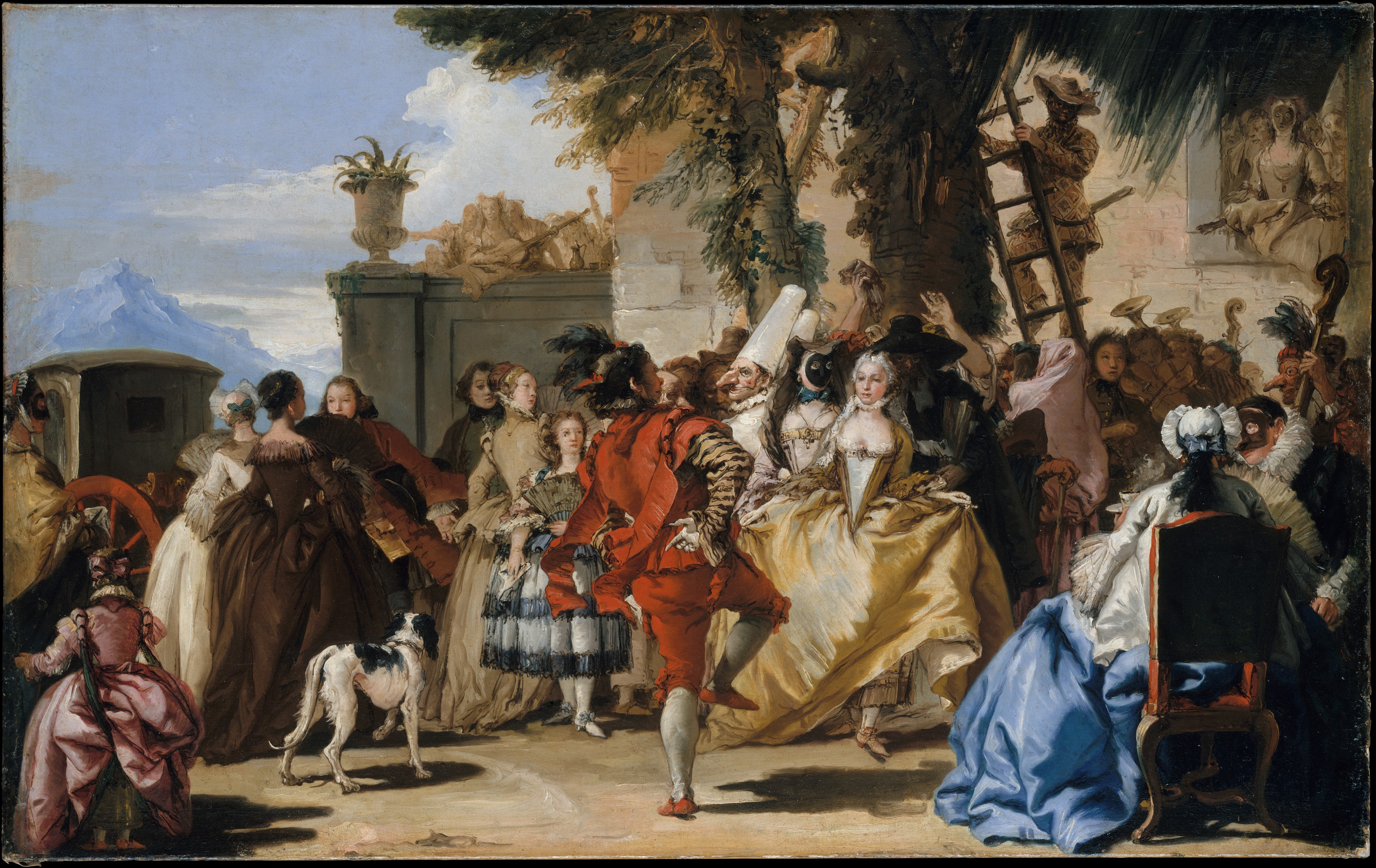
A Dance in the Country: Deconstructing Pastoral Memory for the SS26 Frontier
In the relentless churn of the fashion calendar, the avant-garde often mistakes noise for novelty. At Zoey Fashion Laboratory, we reject this cacophony. Our latest standalone study, A Dance in the Country, is not a collection; it is a thesis on temporal dislocation. Originating from the Global Frontier—a conceptual space where geographic borders dissolve into cultural ether—this analysis interrogates the bucolic idyll through a lens of radical structural futurism. We do not reference the past to romanticize it; we excavate it, dissect its skeletal geometry, and rebuild it as a wearable proposition for SS26. The result is a silhouette that breathes with the memory of wind through wheat, yet is armored for the velocity of tomorrow.
I. The Canvas as a Blueprint: Translating Painterly Gesture
The source material—an oil painting titled A Dance in the Country—is not a literal illustration but a cartographic document of motion. Its pigment-laden strokes are not merely color; they are vectors of kinetic energy, frozen mid-gesture. Our laboratory's methodology bypasses the visual reproduction of the canvas. Instead, we analyze its impasto topography: the ridges of paint become seams; the glazes become translucent technical membranes; the chiaroscuro becomes a study in volumetric shadowing. For SS26, this translates into garments that do not drape but rather aggregate—layered panels that mimic the physical buildup of oil on linen. The palette is not quaint: acid chartreuse cuts through ochre earth tones, while a sterile, clinical white—reminiscent of gallery walls—anchors the chaos.
From Pastoral to Prosthetic: The New Rural Form
Traditional rural dress implies softness, utility, and a passive relationship with the land. We invert this paradigm. The pastoral is reframed as a cyborgian ecosystem. The dancer’s swirling skirt is not recreated in tulle; it is re-engineered as a cantilevered shell of bio-resin and recycled technical jersey. The hemline, instead of floating, is articulated with a series of micro-hinges that allow the wearer to control the garment’s volume via a subcutaneous tension cable. This is not costume; it is exoskeletal couture. The silhouette for SS26 is therefore defined by a paradox: it is simultaneously grounded in the agrarian (the heavy, weighted ankle) and lifted by the aerospace (the parabolic, arched shoulder).
II. Structural Innovation: The "Fallow Frame"
Our primary innovation is the "Fallow Frame"—an internal architecture that allows the garment to exist in a state of suspended animation. Inspired by the negative space between dancers in the painting, this frame is a lattice of 3D-printed nodes connected by elasticized, biodegradable cords. It does not constrain the body; it defines a new perimeter for it. In SS26, we see jackets that hover three centimeters off the torso, creating a thermal and visual gap that speaks to the distance between the historical subject and the modern observer. Sleeves are not sewn into armholes; they are docked to the frame via magnetic compression locks, allowing for modularity that was previously the domain of menswear utility, now elevated into a couture-level dialogue of absence and presence.
The Kinetic Seam: Engineering Movement
Where traditional tailoring relies on static stitching, A Dance in the Country introduces the Kinetic Seam. This is a seam that is not a closure but a pivot point. Laser-cut from a single sheet of fabric, the garment’s structure is mapped to the body’s proprioceptive responses. The "dance" is encoded into the pattern mathematics. A skirt, for example, is cut in a spiral that, when static, resembles a columnar sheath. When the wearer moves, the internal weighting—tiny, concealed metallic pellets—forces the spiral to unfurl into a wide, circular train. This is not choreographed movement; it is probabilistic movement, where the garment offers multiple potential forms, all valid, all derived from the initial painterly gesture.
III. Materiality as a Chronometer
Material science is the true protagonist of this study. We reject the fetishization of "virgin" luxury fibers. Instead, our laboratory has developed a textile compound called Petrichor Weave, a hybrid of regenerated nylon and mycelium-based leather. This material is not merely sustainable; it is chrono-sensitive. When exposed to changes in humidity or body heat, the weave subtly shifts its opacity and surface tension, mimicking the way oil paint changes as it dries. The garment becomes a living record of its environment—a couture piece that documents the micro-climate of its wearer. This is the Global Frontier made manifest: a material that has no single national identity, only a temporal one.
The Accessory as Architectural Footnote
In this standalone study, accessories are not afterthoughts. Footwear is constructed as a monolithic wooden clog, but one that is hollowed and reinforced with carbon fiber—a nod to the dance floor's planks, yet weighted for zero-gravity agility. Headpieces are not hats but acoustic visors, curved panels of smoked glass that refract the wearer’s gaze, turning the act of viewing into a sculptural gesture. They are not meant to protect from the sun but to frame the face as a piece of moving art, referencing the portrait's static gaze while propelling it into a dynamic future.
IV. Conclusion: A Dialectic of Solitude and Assembly
A Dance in the Country is a standalone manifesto against the tyranny of the seasonal trend cycle. It proposes that innovation is not found in the new, but in the re-sequencing of the known. By taking a nostalgic, painterly subject and subjecting it to a rigorous, futuristic structural analysis, Zoey Fashion Laboratory demonstrates that the avant-garde is not a retreat from the world, but a deeper engagement with its underlying physics. The SS26 silhouette is not about clothes that are worn; it is about architectures that are inhabited. The global frontier is not a place on a map; it is a condition of perpetual becoming. And in this dance, we are not the dancers—we are the choreography itself, written in resin, light, and the ghostly memory of pigment.