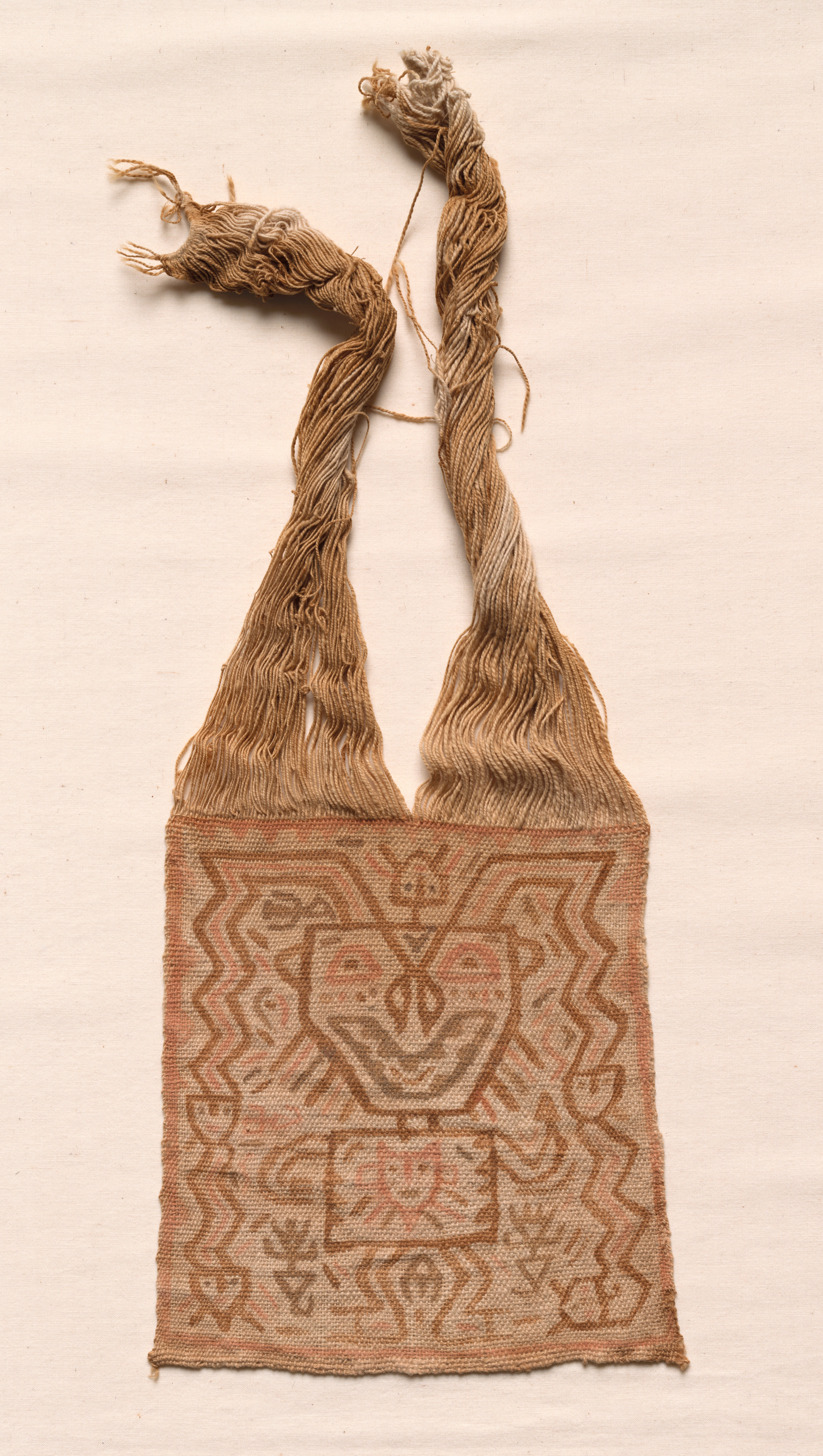
Deconstructing the Paracas "Mummy Bundle Mask": An Avant-Garde Dialogue with Andean Textile Ontology
At Zoey Fashion Lab, our mandate transcends the mere replication of historical garments. We engage in a process of fabric deconstruction—a methodological stripping away of layers to reveal the structural, philosophical, and aesthetic DNA embedded within a textile. The subject of this analysis, a painted cotton "Mummy Bundle Mask" from the Paracas culture of Peru’s Ica Valley, presents a profound paradox. While its origin is funerary and its technique deceptively simple—a plain warp-faced cotton cloth—its visual and conceptual resonance aligns uncannily with the tenets of contemporary avant-garde fashion. This piece is not an artifact of the past; it is a proto-concept for the future, challenging our understanding of surface, body, and temporality.
I. Technical Autopsy: The Primacy of Warp-Faced Cotton
The foundation of this object is a masterclass in material economy. Unlike the elaborate, polychrome interlocked tapestry we often associate with Paracas necropolis textiles, this mask employs a plain warp-faced cotton cloth. This technical choice is critical. In a warp-faced structure, the warp threads are packed so densely that they completely obscure the weft, creating a surface that is not merely a plane but a ribbed, resilient architecture. The cotton itself, native to the region and cultivated in hues ranging from ivory to ecru and soft brown, provides a natural, unbleached canvas.
From an avant-garde perspective, this is the ultimate rejection of decorative excess in favor of structural integrity. The warp-faced weave acts as a taut membrane, a skin stretched over a void. This is not a soft, draping textile; it is a rigid, sculptural substrate. The mask’s form, likely a rectangular or trapezoidal panel designed to cover the face of the deceased within a funerary bundle, is defined by the inherent stiffness of the weave. We see here a precursor to the modern concept of textile as armor—not for physical combat, but for spiritual transition. The high thread count and tight weave create a surface that is both protective and receptive, a perfect ground for the painted narrative that follows.
A. Surface as a Site of Transformation
The act of painting on this plain-woven cotton is not merely decorative; it is an act of semantic overwriting. The paint, likely a mineral or vegetal pigment mixed with a binder, does not soak into the fibers to dye them. Instead, it sits upon the surface, creating a distinct layer of pigment that interacts with the texture of the warp ribs. The brushstrokes catch the light differently, creating a subtle, kinetic shimmer that shifts with the viewer’s angle. This is a deliberate manipulation of the textile’s tactile and optical properties.
For Zoey Fashion Lab, this is the genesis of surface manipulation. The mask is not a flat image; it is a relief map. The painted iconography—often featuring the "Oculate Being" with its streaming, serpentine appendages and disembodied eyes—is rendered in bold, graphic strokes. These motifs are not naturalistic; they are abstract, geometric, and anthropomorphic, reducing the human form to its essential, spiritual components. The face becomes a canvas for a higher-order reality, a visual incantation meant to guide the soul. In our deconstruction, we recognize this as the first step toward wearable art that communicates through abstract symbolism rather than literal representation.
II. The Archive Resonance: A Collision of Temporalities
The provided "Archive Resonance" mentions a period of cultural collision in the 16th and 17th centuries. However, the Paracas mask predates this by over a millennium, forcing us to consider a temporal dislocation. The mask is not a product of colonial encounter, but its re-contextualization in our modern archive creates a new resonance. We are engaging in a retrospective dialogue, placing this ancient object in conversation with the aesthetics of rupture and hybridity that define the avant-garde.
The "Mummy Bundle" itself is a powerful metaphor for the fashion archive. It is a layered construct—multiple textiles, offerings, and objects wrapped around the body, each layer holding a specific meaning. The mask is the outermost, most visible layer, the final interface between the deceased and the cosmos. In our practice, we see the modern garment as a similar bundle: a collection of influences, techniques, and cultural references wrapped around the wearer. To deconstruct the mask is to unwrap the bundle, to expose the structural logic of its creation and the belief system that necessitated its form.
A. The Avant-Garde Lens: Deformation and Re-contextualization
Viewing this piece through an avant-garde lens requires us to abandon the museum’s reverence for the "original" and instead embrace its potential for deformation. The mask’s flat, geometric frontality is its most striking feature. When translated to a contemporary runway, this frontality could be exaggerated through extreme shoulder padding, creating a silhouette that is both monolithic and confrontational. The painted eyes, detached and floating, could be re-imagined as digital prints or embroidered appliqués that disrupt the natural flow of the fabric, creating a sense of visual disembodiment.
The mask’s function as a funerary object is its most potent avant-garde quality. It is a garment designed not for a living, moving body but for a static, eternal body. This challenges the very core of fashion, which is predicated on movement and ephemerality. By appropriating this static quality, we can create garments that feel frozen in time, that resist the kinetic energy of the wearer. Think of sculptural, non-draping silhouettes in stiffened cottons or technical fabrics, painted with pigment-heavy, matte finishes that absorb light. The garment becomes a mobile monument, a wearable relic that carries the weight of its own history.
III. Material Alchemy: From Funerary Cloth to Wearable Concept
Our deconstruction protocol at Zoey Fashion Lab involves four key stages: Disassembly, Analysis, Abstraction, and Synthesis. For the Paracas mask, this translates as follows:
- Disassembly: We separate the concept of the "mask" from the concept of the "face." The mask is not a covering; it is a new, autonomous surface.
- Analysis: We study the warp-faced structure, recognizing its inherent rigidity. We analyze the painted motifs not as icons but as pure graphic forms—circles, lines, and abstract appendages.
- Abstraction: We strip the object of its funerary context. The "Oculate Being" becomes a study in repetitive geometry. The cotton becomes a study in natural, unbleached materiality.
- Synthesis: We re-imagine these elements in a contemporary context. The warp-faced weave is recreated in a high-tech, compacted cotton or a bio-based alternative. The painted surface is translated into a form of pigment-infused resin applied to the fabric, creating a glossy, impermeable surface that contrasts with the matte, absorbent nature of the original.
A. The Silhouette of the Afterlife
The resulting avant-garde garment is not a costume. It is a conceptual piece that explores the relationship between the body and its metaphysical shell. We propose a series of garments with exaggerated, rectangular proportions, echoing the mask’s trapezoidal form. Sleeves are constructed as flat, painted panels that jut out from the body, refusing to conform to the arm’s anatomy. Necklines are high and severe, creating a barrier between the head and the torso, much like the mask separated the face of the deceased from the world.
Color palettes are drawn directly from the archaeological record: the ivory and ecru of the natural cotton, the deep ochres and cinnabar reds of the mineral pigments, and the carbon blacks of the painted lines. There is no room for pastel or synthetic color. The materiality itself is the message. The garment must feel substantial, almost heavy, as if it carries the weight of centuries. It is a piece of wearable archaeology, not for the faint of heart but for the individual who understands that fashion is a medium for exploring the deepest questions of existence.
IV. Conclusion: A Static Revolution
The Paracas Mummy Bundle Mask is a testament to the enduring power of textile as a primary medium for human expression. Its technical simplicity—a plain warp-faced cotton—belies its profound conceptual complexity. For Zoey Fashion Lab, this artifact is not a relic to be preserved but a catalyst for radical innovation. It teaches us that true avant-garde practice is not about creating the new from nothing, but about excavating the forgotten, the sacred, and the structural truths of the past, and re-presenting them in a form that challenges our contemporary sensibilities.
By deconstructing this mask, we are not destroying it; we are liberating its core principles—rigidity, frontality, abstract symbolism, and a static, monumental presence—and allowing them to speak to a new audience. The garment we propose is a paradox: a piece of clothing that does not move, painted with images that do not look, and created for a body that is not present. In this, it becomes the ultimate fashion statement: a defiant, silent, and eternal object in a world obsessed with the transient. The mask from Ocucaje is not an ancestor of fashion; it is a prophecy of its most radical potential.