Deconstructing the Throne: The Dantesca Armchair as SS26 Silhouette Genesis
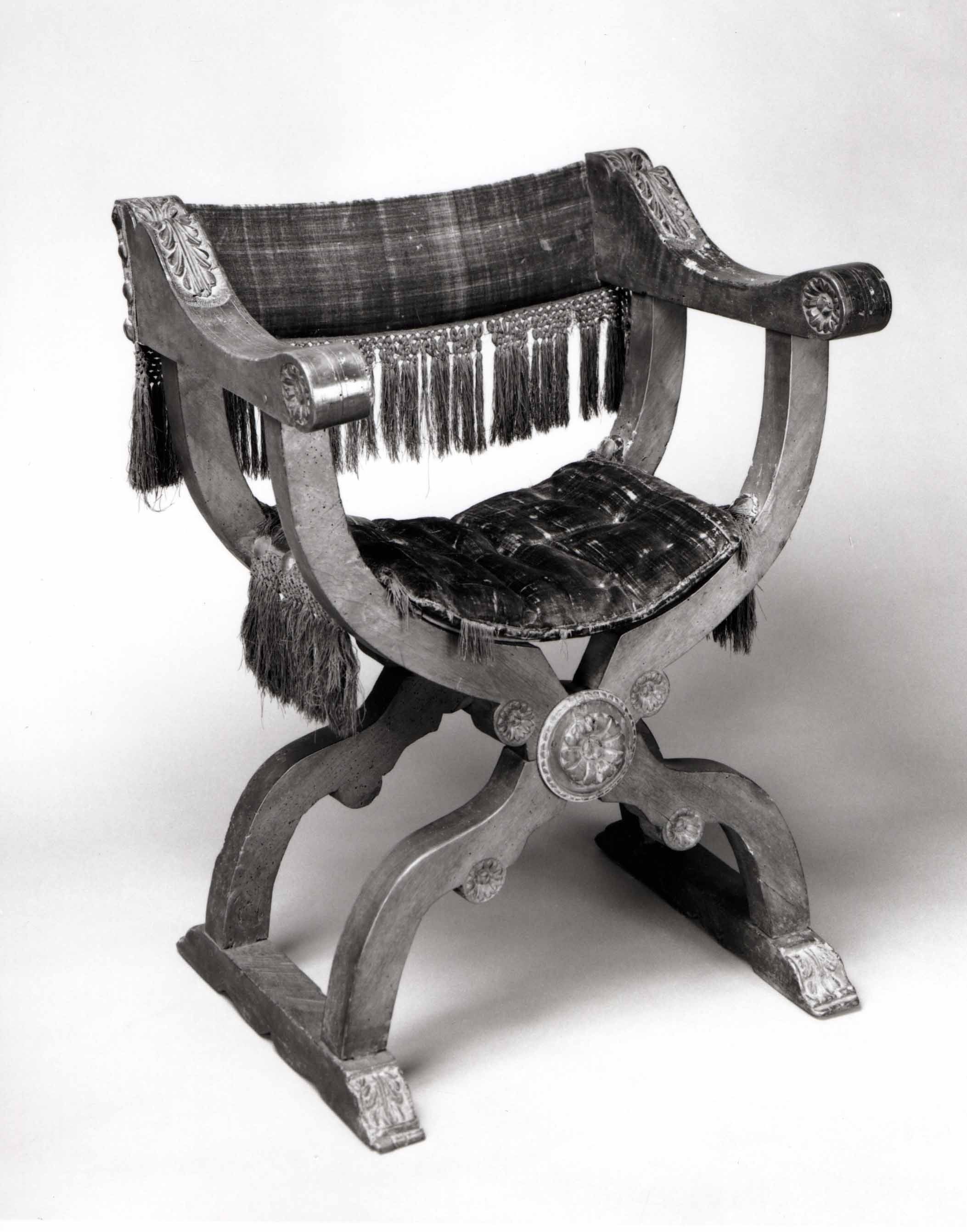
The Dantesca hip-joint armchair, a formidable artifact of uncertain Italian provenance, arrives in the atelier not as a relic but as a primordial blueprint. Its very nomenclature—“hip-joint”—is a sartorial commandment. We do not see a chair; we perceive an exoskeletal articulation, a rigid encapsulation of the human form’s pivotal hinge. For Zoey Fashion Laboratory’s SS26 collection, this object is our Rosetta Stone. It decodes a future where clothing is not worn but architected around the body’s kinetic potential, where the walnut’s carved rigidity and the silk velvet’s plush surrender engage in a material dialectic that will define the next era of avant-garde couture. This analysis dissects its principles to forge a new structural lexicon.
Structural Dogma: The Exoskeletal Framework
The chair’s carved walnut frame presents a philosophy of externalized infrastructure. This is not mere tailoring; it is civil engineering for the physique. The SS26 silhouette emerges from this dogma through garments that propose a wearable armature. Imagine bodices and jackets where articulated boning, crafted from lightweight alloys or bio-polymers, echoes the chair’s robust stiles and crest rail. These elements will not be concealed but celebrated as external geodesic lines, mapping the body’s topography—the scapula, the rib cage, the iliac crest. The “hip-joint” itself translates into a pivotal design nexus: waistlines become transformative hinges, allowing garment segments to rotate or separate with the body’s movement, creating dynamic negative space and variable silhouettes from a single piece. The rigidity of the walnut instructs us to explore materials that hold memory and form: molded technical felts, heat-set acrylic shards, and laminated organic composites that provide sculptural integrity while permitting controlled flexion.
The Material Dialectic: Rigor versus Caress
The Dantesca’s material juxtaposition—unyielding walnut against surrendering silk cut velvet—is a masterclass in tactile contrast. SS26 will operationalize this tension as its core material narrative. The structural “walnut” elements, in their futuristic guise, will be met with their antithesis: liquid-metal jersey, thermo-reactive gels encapsulated in mesh, and foam-backed technical silks that mimic the velvet’s plush density but with a mutable, algorithmic behavior. This is not about ornamentation; it is about functional emotional resonance. A garment may feature a rigid, chair-back-inspired panel that abruptly dissolves into a cascading avalanche of weighted silk, representing the moment structure yields to sensation. The “cut” of the velvet, with its play of light on sheared piles, informs surface manipulation through laser-etching on bonded fabrics, creating photochromatic patterns or textured zones that respond to environmental stimuli, making the garment a living canvas.
Silhouette as Occupied Space
Avant-garde fashion often considers the body’s form. The Dantesca, as a vessel for the body, compels us to consider the form of the space the body occupies. Its high back and enveloping sides create a spatial cocoon. SS26 silhouettes will thus explore volumetric negation and projection. Built-out shoulders and hip arches, constructed from lightweight cellular structures, will extend the body’s outline, creating a protective, chair-like personal space in crowded environments. Conversely, garments may feature void-based design: strategic cut-outs framed by rigid structures that expose the hip joint, the shoulder blade, or the sternum, making the body itself the “velvet” within the architectural “walnut” frame. This creates a dialogue between wearer and viewer, protection and exposure, akin to the chair’s offer of both sanctuary and display.
Contextual Synthesis: The Standalone Monument
As a standalone study, the Dantesca possesses a self-referential monumentality. This translates to SS26 as a collection of singular, statement pieces that are ecosystems in themselves. Each look will be a resolved world of contrast, articulation, and concept, capable of standing alone as a sartorial sculpture. The narrative is not one of fleeting trends but of enduring ideas. The collection will embody a “post-organic” aesthetic, where biological form is optimized and augmented by human design intelligence, much as the chair is an optimized form for seated support. Colors will derive from the material palette: walnut umbers, oxidized metal patinas, and the deep, resonant hues of historic velvets, juxtaposed with stark biomechanical whites and silicon greys.
In conclusion, the Dantesca hip-joint armchair is far from a passive muse. It is an active provocateur, demanding a fashion that is structurally intelligent, materially dialectical, and spatially conscious. For Zoey Fashion Laboratory’s SS26, it provides the foundational code for a collection that will not merely clothe the body but will re-frame it within a new architectural and philosophical context. We move beyond deconstruction into a realm of sophisticated anatomical architecture, building not from the cloth up, but from the joint out. The future of silhouette is here, carved in walnut and draped in velvet, waiting for its kinetic embodiment.