The Architectural Skeleton: Deconstructing the Global Frontier
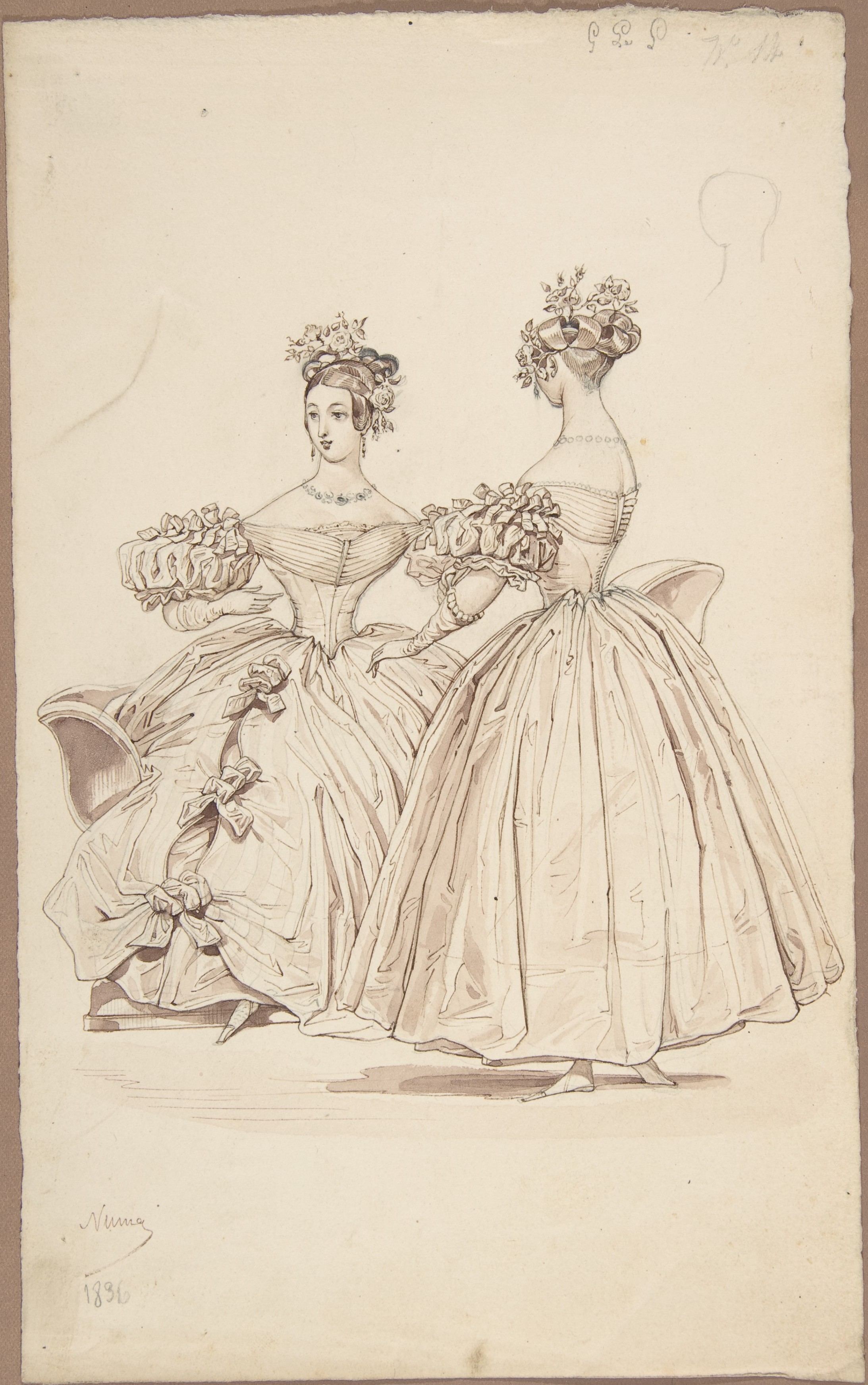
The SS26 avant-garde study, rendered in the stark intimacy of pen, brown ink, and graphite, does not merely sketch a garment; it performs an archaeological dig into the future of dress. This is not costume design in the theatrical sense of mimicry, but rather a blueprint for kinetic sculpture, a dialogue between the human form and the structural possibilities of negative space. The medium itself—fluid wash against brittle line—mirrors the collection’s core tension: the fluidity of movement versus the rigidity of the armature. The Global Frontier origin is not a geographical claim but a philosophical one; these silhouettes exist at the edge of known ergonomics, where the body is a launching point rather than a constraint.
Silhouette as a Cartographic Error
Forget the waist. Forget the hip. The SS26 study proposes a radical recalibration of proportion, where the garment’s silhouette is drawn as a deliberate misreading of anatomical landmarks. The brown wash suggests a soft, almost liquid volume that pools at the sternum, only to be sharply reined in by a graphite line that cuts diagonally across the lower ribcage. This is not a naturalistic contour; it is a topographical map of a territory that does not yet exist. The shoulder, in this study, is not a point of support but a cantilever—an exaggerated, asymmetric blade that projects forward like the prow of a vessel. In the costume designer’s lexicon, this is the heroic silhouette, but here it is rendered with a dysfunctional elegance, as if the armor were built by an engineer who had never seen a human skeleton.
The most subversive element is the treatment of the lower torso. The pen strokes fracture the figure at the pelvis, creating a discontinuous line that suggests a floating basque, detached from the skirt. This is not a peplum or a drape; it is a deliberate architectural separation, a gap that allows the eye to pass through the body’s mass. In the context of SS26, this translates to garments constructed with modular panels that hover over the skin, anchored only at the clavicle and the inner thigh. The result is a silhouette that reads as perpetually in motion, even in stillness—a static drawing that contains the kinetic energy of a jump cut.
Materiality of the Mark: Ink as a Structural Proxy
The choice of brown ink and wash is not an aesthetic accident. In this study, the brown wash functions as a metaphor for bonded, non-woven textiles—materials that are neither woven nor knitted but fused, like felted carbon fiber or bio-fabricated leather. The wash’s soft, bleeding edges suggest a fabric that is pliable yet memory-retentive, capable of holding a crease that snaps back with force. Conversely, the sharp pen line denotes rigid exoskeletal elements: recycled polycarbonate ribs, 3D-printed joint casings, or even laser-cut mycelium composites. The graphite, with its smudged, powdery quality, implies a transitional layer—a membrane that is both conductive (for embedded technology) and ephemeral (for disposal).
This material dichotomy is crucial for the structural innovation. The wash does not fill the pen’s outline; it spills beyond it, suggesting a garment that is unfinished by design, with raw edges that are heat-sealed rather than hemmed. The costume designer’s hand is evident in the way the wash pools at the joints—elbows, knees, wrists—indicating stress points where the fabric would gather and compress. These are not decorative gathers; they are functional pleats that deploy upon movement, like the bellows of an accordion. The graphite smudges, meanwhile, are not shading but rather annotations for sheer zones, where the structural layer is absent, leaving a translucent membrane that exposes the skin’s thermographic glow.
The Costume as a System of Choreography
In traditional costume design, the garment serves the narrative. In this avant-garde study, the garment is the narrative. The SS26 direction suggests we move away from clothing as a static object and toward clothing as a wearable algorithm. The pen-drawn lines on the paper are not seams but rather vectors of articulation—paths along which the fabric will be tensioned or released by micro-servos. The brown wash, in its organic spread, indicates zones of pneumatic inflation that would alter the silhouette in real-time, responding to the wearer’s biometric data or ambient sound frequencies.
This is where the Global Frontier context becomes literal. The costume is no longer designed for a stage or a runway; it is designed for an interstitial space between physical and digital realms. The graphite smudges suggest haptic feedback zones—areas that vibrate or change opacity when the wearer is in proximity to others. The structural innovation is not in the cut, but in the integration of the garment’s skeleton with its nervous system. The pen lines are the bones; the wash is the muscle; the graphite is the synapse. This is a costume that performs its own construction and deconstruction, a chimeric form that is both armor and skin.
Conclusion: The Unstable Equilibrium
This SS26 study is not a solution; it is a provocation. It refuses the comfort of ergonomic certainty, instead proposing a wardrobe for a body that is perpetually out of balance—a body that leans into the future. The use of pen and wash is a masterclass in economy of means, proving that a concept’s power lies not in its finish but in its structural logic. The costume is a vehicle for a new kind of posture, one that is defiantly asymmetrical and elegantly dysfunctional. The Global Frontier is not a place we will ever arrive at; it is the very act of drawing the line that separates us from it. And in that line, held taut between ink and graphite, Zoey Fashion Laboratory finds its definitive statement for SS26: fashion is not worn; it is inhabited.