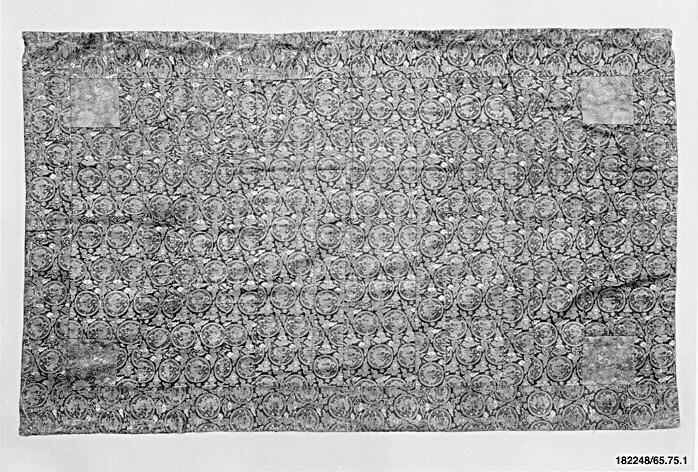
The Sacred Deconstructed: Reimagining the Japanese Priest’s Robe for SS26
In the rarefied echelons of avant-garde couture, the garment is rarely a mere covering; it is a manifesto stitched into form. At Zoey Fashion Laboratory, our SS26 investigation transcends the conventional boundaries of fashion archaeology. We do not seek to revive the past but to disassemble its spiritual architecture and rebuild it through a lens of speculative futurism. The subject of this standalone study—the Japanese priest’s robe, rendered in lustrous silk and shot through with metallic thread—serves as a profound catalyst for rethinking silhouette, motion, and the very ontology of sacred dress in a post-humanist era.
Ritual as a Blueprint for Structural Innovation
The traditional Japanese priest’s robe, particularly the kesa or the layered hōjū, is a study in geometric restraint. Its construction is horizontal, rectangular, and fundamentally two-dimensional. Yet, within this apparent simplicity lies a complex system of folds, drapes, and asymmetrical wrapping that creates a dynamic relationship between the body and the void. Our SS26 analysis begins by isolating these structural principles—the straight seam, the deliberate excess of fabric, the ceremonial obi-like closures—and subjecting them to radical volumetric distortion.
We propose a silhouette that abandons the natural shoulder entirely, replacing it with a cantilevered, origami-inspired yoke that projects outward and upward. This is not a nod to historical armor but a speculative gesture toward a body augmented by digital precision. The silk, in its natural state, possesses a fluid, almost liquid quality. To counter this, we have engineered the fabric with strategic, heat-set pleats that mimic the rigid folds of a ceremonial fan, yet remain responsive to kinetic energy. The result is a garment that stands as an autonomous sculpture when static, but unfurls into a breathtaking, aerodynamic cascade upon movement—a living paradox of stillness and flight.
Metallic Thread and the Luminescence of the Void
Materiality is the primary lexicon of our deconstructive practice. The choice of silk is deliberate—it is a material historically imbued with purity and impermanence in Japanese aesthetics. However, our intervention introduces a disruptive element: the metallic thread. This is not a subtle embellishment but a structural weft, interwoven at high tension to create a subtle, shimmering grid that fractures light across the garment’s surface. This is not decoration; it is a form of optical engineering. The metallic filaments serve as a conductive map, suggesting an interface between the sacred and the technological. As the wearer moves, the light does not merely reflect; it articulates, tracing the lines of the new silhouette with the precision of a laser-cut blueprint.
This metallic infusion allows us to explore a chromatic narrative that oscillates between opalescent white and deep, oxidized silver. In the context of SS26, this is a deliberate departure from the season’s typical palette of sterile whites. Instead, we propose a “lunar patina”—a surface that appears to have been touched by a celestial, non-terrestrial force. The silk’s natural drape is manipulated to create pockets of shadow, which the metallic threads then activate, producing a chiaroscuro effect that challenges the viewer’s perception of depth. The garment becomes a living, breathing canvas of light and absence, a meditation on the duality of the sacred and the profane.
Asymmetric Draping and the Fluidity of Power
Traditional priestly garments often convey a sense of immutable authority through their symmetry and weight. Our avant-garde analysis inverts this power dynamic. We have deconstructed the robe’s inherent symmetry, introducing a radical asymmetry that begins at the left shoulder and spirals diagonally across the torso, culminating in a dramatic train that is not attached to the floor but floats, suspended by internal, invisible boning. This creates a silhouette that is both grounded and ethereal—a paradox that speaks to a new form of spiritual leadership that is not rigid but adaptive, not monolithic but multifaceted.
The draping technique employed is a hybrid of traditional Japanese drapé and advanced pattern-cutting algorithms. We utilize a “negative-dart” construction, where excess fabric is not removed but intentionally folded inward and secured with magnetic closures hidden beneath the metallic thread. This allows the wearer to reconfigure the garment’s volume in real-time, shifting from a closed, meditative column to an open, expansive wing-like form. This modularity is a core tenet of our SS26 philosophy: the garment is not a fixed object but a responsive system, a wearable architecture that adapts to the environment and the wearer’s internal state.
Toward a Post-Ritualist Future
In conclusion, this standalone study of the Japanese priest’s robe is not an exercise in historical recreation but a proposition for a new taxonomy of dress. We have extracted the robe’s spiritual essence—its sense of containment, its ceremonial gravity, its connection to the transcendental—and re-encoded it within a futuristic, deconstructive syntax. The silk and metallic thread are not merely materials; they are conduits for a dialogue between ancient tradition and speculative innovation. The silhouette, with its cantilevered volumes and asymmetric spirals, does not clothe the body; it redefines the body’s potential for expression.
For SS26, Zoey Fashion Laboratory posits that the future of couture lies not in novelty for its own sake, but in the profound, critical reinterpretation of our most sacred sartorial codes. This garment is a testament to that belief—a piece that is at once a respectful homage and a radical departure, a silent prayer whispered in the language of futuristic form. It is a wearable manifesto, asserting that the spiritual and the technological are not opposing forces but synergistic partners in the creation of a new, transcendent elegance.