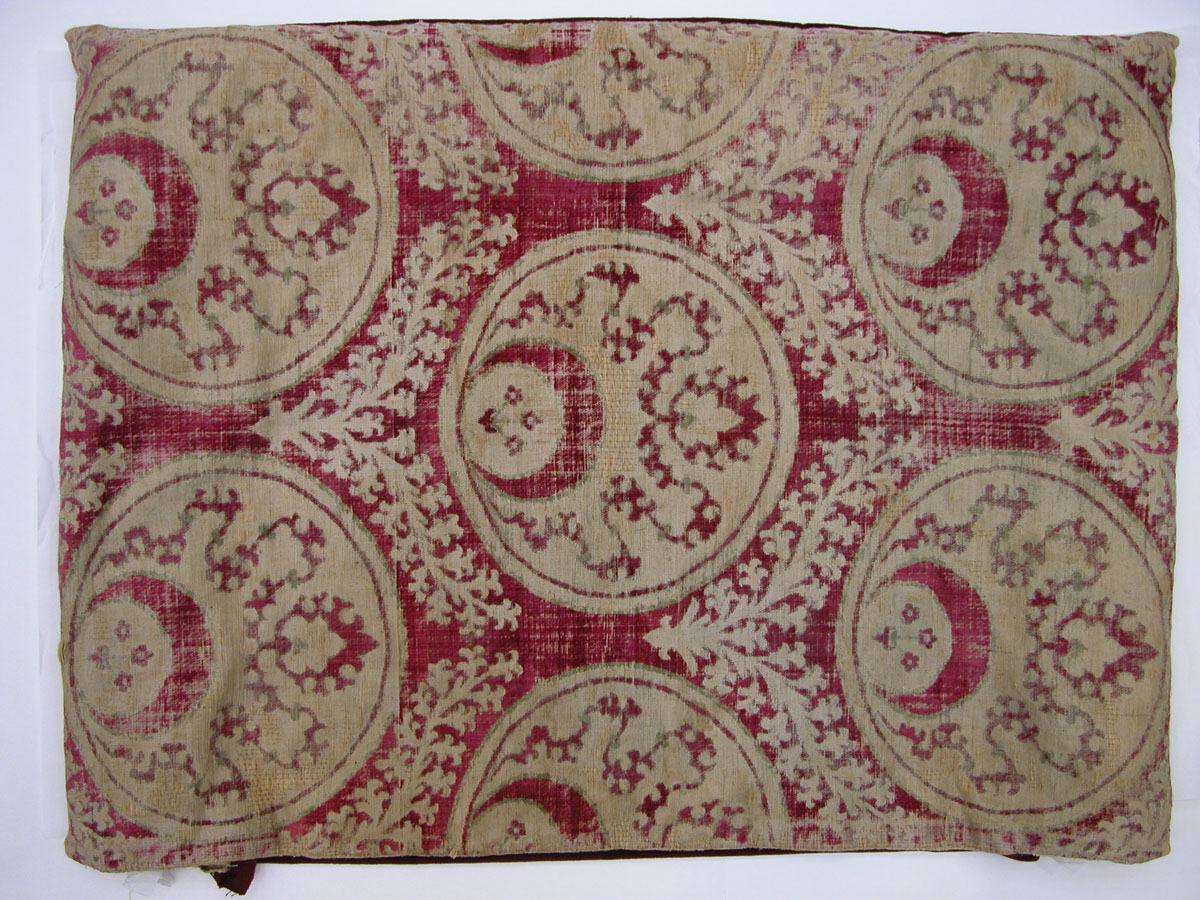
The Yastik Deconstructed: An Avant-Garde Study in Soft Architecture for SS26
The domestic cushion cover—a signifier of repose, of the bourgeois interior, of the supine body’s final surrender—is an unlikely protagonist for a futurist manifesto. Yet within the hallowed confines of Zoey Fashion Laboratory, the quotidian object undergoes a radical ontological shift. We do not merely elevate the humble Yastik; we dissect, re-forge, and re-contextualize it as a wearable thesis on structural tension, sensory paradox, and the mutable boundaries between garment and environment. This is not an exercise in literal translation, but a deconstructive synthesis where the pillow’s plush geometry meets the rigid exigencies of the architectural silhouette. The result is a collection of pieces that function as autonomous, breathing sculptures—soft armor for the post-domestic subject of SS26.
From Object to Ornament: Re-Scripting the Silhouette
The primary innovation lies in the subversion of the cushion’s inherent volume. Traditionally, a cushion is a passive, static mass. Our methodology treats that mass as a dynamic, kinetic reservoir. The SS26 silhouette is defined by a new term: “Suspended Plushness.” Here, the Yastik is not placed upon the body but is integrated into its structural logic. Garments are engineered with internal, articulated channels—think of them as negative-space seams—that allow the internal cushioning to migrate and shift with the wearer’s movement. A jacket’s shoulder is no longer a padded epaulet but a fluid, bulbous crescent that reconfigures itself with each gesture, mimicking the way a pillow molds to a sleeping head. This creates a silhouette that is perpetually in flux, a living geometry that challenges the static perfection of traditional couture.
Furthermore, we explore the concept of “Reclined Architecture.” The rigid, boxy forms of futuristic tailoring are softened by inserting voided velvet panels that mimic the indentations of a well-used cushion. These are not mere surface decorations; they are structural cuts that create optical illusions of depth and shadow, making the garment appear to have been recently vacated. The wearer becomes a ghost in their own clothing, a presence defined by an absence of form. This dialogue between the solid and the void, the filled and the hollow, is the cornerstone of our new sartorial language.
Material Alchemy: The Metallurgical Softness
The material palette is a deliberate study in contradiction. We reject the simple dichotomy of hard and soft. Instead, we forge a hybrid materiality. The core of the Yastik is preserved in its most luxurious form—a plush, high-density silk and cotton blend that retains the memory of pressure. Yet this softness is violently, exquisitely interrupted by the introduction of metal-wrapped thread.
This is not a subtle metallic shimmer. The thread is a fine, flexible steel filament, woven into the fabric’s weft to create a structural exoskeleton. When the garment is at rest, it drapes with fluid ease. When manipulated—when the wearer moves or the fabric is twisted—the metal thread locks into place, holding the fabric in a permanent, sculptural fold. This is “Programmable Drape.” The wearer can literally shape the garment’s silhouette, transforming a soft, flowing sleeve into a rigid, cantilevered wing. The metal thread also introduces a new sonic dimension—a faint, whisper-like rustle that evokes the sound of shifting armor, a futuristic counterpart to the silent plumpness of a feather pillow.
The brocaded and cut voided velvet further complicates this narrative. The velvet’s pile is selectively burned away, not for mere pattern, but to create topographical relief. The resulting surfaces resemble aerial views of futuristic cities—a landscape of plush towers and metallic canyons. This juxtaposition of seductive touch and industrial rigor encapsulates the Zoey Fashion Laboratory ethos: we do not choose between comfort and structure; we weaponize one against the other to create a new, thrilling tension.
Structural Innovation: The Wearable, Kinetic Cushion
Our most radical departure is the “Bio-Morphic Bolster,” a series of garments that are literally constructed from a single, continuous cushion form. A dress, for instance, begins as a rectangular, oversized Yastik. Through a complex system of hidden drawstrings, magnetic closures, and metal-thread articulation, this single mass is folded, pleated, and cinched to conform to the body. The excess fabric is not discarded; it is allowed to bloom outward into exaggerated, organic protrusions—a hip that extends into a soft shelf, a collar that rises into a protective, enveloping hood.
This approach challenges the very notion of tailoring. There are no conventional armholes or princess seams. Instead, the body is inserted into a pre-formed architectural shell, and the garment’s final form is determined by the wearer’s interaction with its internal mechanisms. The construction process is akin to “Soft Origami.” Each fold is a structural decision, each tuck a functional necessity. The result is a garment that is both a piece of furniture and a piece of clothing, a hybrid object that questions where the body ends and the environment begins.
Consider the “Somnambulist’s Corset,” a piece that integrates a full, cylindrical cushion down the spine. This is not merely supportive; it is a prosthetic extension of the vertebral column, forcing the wearer into a posture of exaggerated, regal poise. The cushion’s softness is a deceptive lure; its scale and placement are a demanding architectural statement. The silhouette is simultaneously alien and familiar, evoking the armored carapaces of insects and the plush comfort of a nursery.
Futuristic Silhouette: The Body as a Landscape
The SS26 Yastik series ultimately redefines the human form as a mutable landscape. We see the body not as a static mannequin to be draped, but as a terrain to be sculpted. The shoulders become rolling hills of velvet; the hips become plateaus of engineered softness; the torso becomes a valley of shadowed voids. The garments are designed to be viewed from all angles, as a piece of architecture is viewed. The back is as important as the front; the profile is a deliberate, sculpted line.
This is a decisive move away from the body-con silhouettes of the past decade. We are not interested in revealing the body’s natural contours but in creating new, synthetic ones. The Yastik provides the perfect medium for this exploration. Its inherent volume allows us to exaggerate, distort, and abstract the human figure. The future of fashion is not about the second skin; it is about the “Third Skin”—a protective, expressive, and intellectually provocative layer that stands between the individual and the world. The cushion, once a symbol of private comfort, becomes a public declaration of self-authorship and structural audacity. This is the definitive avant-garde statement: to transform the most passive object into the most powerful tool for redefining the human presence.