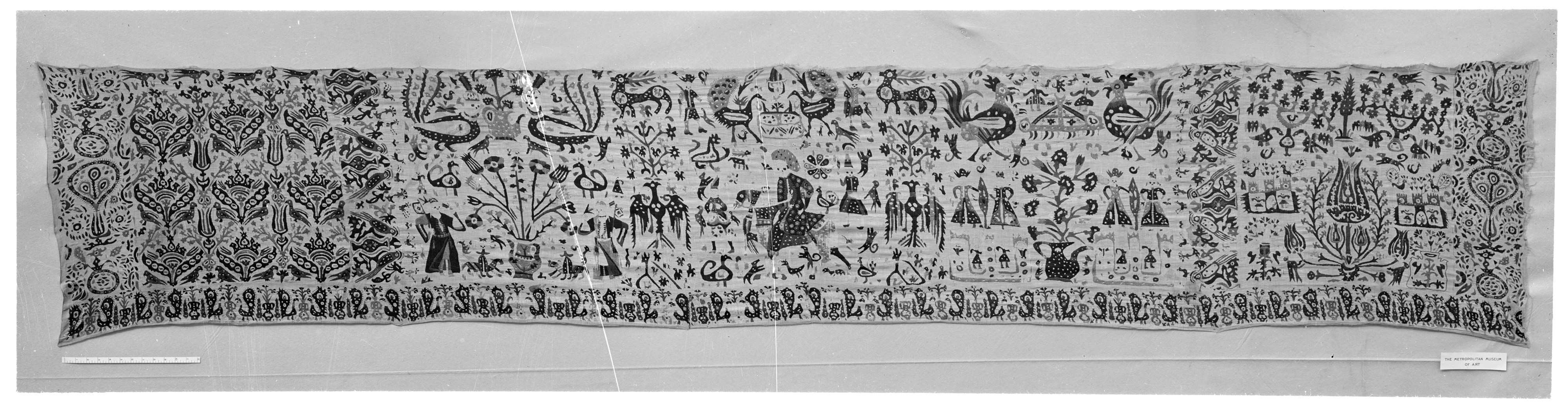
The Valance Unbound: Deconstructing Domestic Architecture for the SS26 Frontier
The valance—historically a passive intermediary, a fabric footnote in the grammar of domestic drapery—has long been dismissed as a mere architectural afterthought. It exists to conceal hardware, to soften the transition between window and wall, to offer a whisper of texture against the void of glass. In the context of Zoey Fashion Laboratory’s SS26 study, however, this humble textile artifact is violently, gloriously recontextualized. We are not merely elevating a curtain topper; we are dismantling the very concept of the "window" as a boundary, and in doing so, we are constructing a new paradigm for the human silhouette. This analysis posits that the valance, stripped of its utilitarian origin and reimagined through a lens of global frontier aesthetics, becomes a potent architectural metaphor for the body as a threshold—a liminal zone where interiority and exteriority collide.
Material Dialectics: Silk’s Tension Against Cotton’s Gravity
The chosen materiality—silk on cotton—is not a decorative pairing but a deliberate dialectical conflict. Silk, with its liquid luminosity and capacity for hyper-saturation of color, represents the kinetic, the future, the ephemeral glow of digital dawn. Cotton, conversely, is the anchor of the terrestrial, the memory of soil, the structural integrity of the everyday. In traditional couture, these fabrics are often layered for comfort or opulence. Here, we invert that logic. The silk is not lined with cotton; it is tensioned against it.
For SS26, we propose a technique of "puckered tensioning," where the silk is applied in asymmetric, almost violent swathes across a cotton base that has been chemically stiffened to mimic the rigidity of architectural cornices. The result is a garment that appears to be in a state of perpetual structural negotiation. The silk billows where it is unconstrained, creating micro-valances that ripple across the torso, while the cotton holds a severe, unyielding line at the shoulder and hip. This is not drapery; this is controlled instability. The wearer becomes a living study in the physics of fabric, a mobile installation where every gesture alters the relationship between the supple and the static.
From Window to Womb: Re-Framing the Silhouette
The valance’s inherent geometry—a horizontal band, often pleated or scalloped, that terminates in a decisive edge—offers a radical departure from the verticality that dominates contemporary fashion. Our SS26 silhouette is defined by the inverted valance. Instead of hanging downward from a structural point, the garment’s primary mass is suspended from a high, rigid yoke, projecting outward and upward to create a cantilevered shelf around the shoulders and upper chest. This is a futuristic nod to the Elizabethan ruff, but executed with the precision of a modernist skyscraper’s facade.
This "architectural eave" silhouette serves a dual purpose. Visually, it creates a dramatic, protective canopy over the body, suggesting a mobile sanctuary. Conceptually, it redefines the wearer’s relationship to space. The body is no longer a column to be dressed; it is a portal. The space between the garment’s projecting edge and the body’s torso becomes a negative space, a "window" through which the world views the wearer’s internal landscape. In a world of pervasive digital surveillance, this garment offers a physical, tangible zone of privacy, a personal valance that shields the core while projecting an armored, forward-facing presence.
Global Frontier: The Nomadic Valance
Dismissing the valance as a relic of sedentary, Western domesticity would be a critical error. Our study traces its lineage across the Global Frontier, finding echoes in the tented structures of Central Asian yurts, the layered awnings of North African souks, and the intricate paper-cut shadow screens of East Asia. The valance is, in essence, a portable threshold. It defines a sacred space without the weight of a wall.
In this SS26 collection, we translate this nomadic principle into garments that are fundamentally transformable. A single piece, constructed from our silk-on-cotton matrix, can be worn as a sculptural, wide-brimmed collar (a "window hood"), then unfastened and reconfigured into a sweeping, asymmetric train that trails behind the wearer like a banner of territorial claim. Fasteners are not hidden; they are celebrated as exposed architectural joints—industrial-grade magnetic clasps, visible tension cables, and articulated hinges that echo the folding screens of a global past. The garment is not a static object but a system, capable of adapting to the wearer’s environment, whether that be the sterile grid of a corporate tower or the chaotic energy of a desert festival.
Structural Innovation: The Internal Frame
The true innovation for SS26 lies not merely in silhouette but in the unseen infrastructure. To achieve the cantilevered valance forms without resorting to heavy crinolines or restrictive corsetry, we have developed a novel exo-skeletal understructure composed of recycled carbon-fiber and bio-resin. This frame is not worn beneath the fabric; it is woven into the seams, creating a "smart skeleton" that responds to the wearer’s posture.
When the wearer stands erect, the frame expands, pushing the silk valance outward into a dramatic, horizontal plane. When the wearer slouches or bends, the frame compresses, drawing the fabric closer to the body, creating a dense, pleated mass at the waist. This is kinetic couture, where the garment’s architecture is in a constant, silent dialogue with the human form. It challenges the passive nature of clothing, demanding an active, conscious engagement from the wearer. To wear this garment is to perform architecture; every movement is a structural decision.
A New Threshold
The avant-garde is not about shock for its own sake; it is about proposing alternative realities. By isolating the valance from its domestic context and subjecting it to a rigorous, global, and futuristic analysis, Zoey Fashion Laboratory has not created a mere garment. We have created a philosophical proposition. We propose that clothing can be a space of psychological safety, a monument to personal autonomy, and a dynamic interface between the self and the world. The silk-on-cotton valance, once a passive observer of the outside world, now becomes the primary lens through which the wearer is seen and sees. It is a fragment of a home that one carries into the wilderness of the future—a defiant, beautiful, and structurally profound statement that the body is the last true frontier. This is not the end of the valance; it is its glorious, deconstructive rebirth.