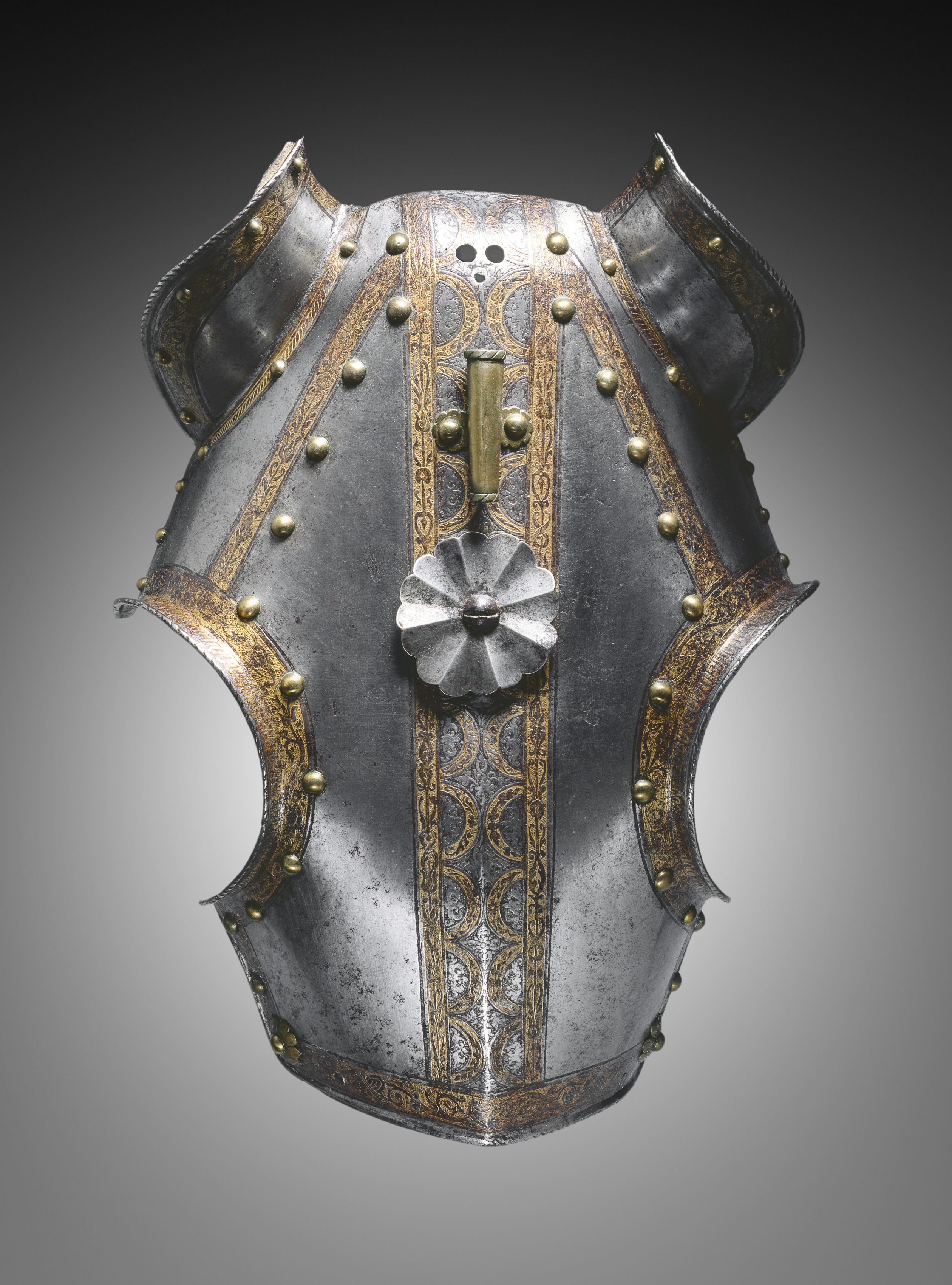
Deconstructing the Demi-Chanfron: An Avant-Garde Blueprint for Zoey Fashion Lab
At Zoey Fashion Lab, our mandate transcends mere garment construction. We are engaged in the systematic deconstruction of historical artifacts to extract their latent design DNA, re-sequencing it for contemporary, avant-garde expression. Our latest subject of study is the Demi-Chanfron, a piece of equestrian armor originating from 16th-century Germany, specifically Augsburg. While ostensibly a protective plate for a horse's forehead, our analysis reveals a complex lexicon of material tension, geometric restraint, and metallurgical artistry that holds profound implications for modern fashion architecture.
The Demi-Chanfron, as a historical object, is a study in controlled aggression. Unlike full chanfrons, the demi version covers only the upper half of the equine skull, leaving the muzzle and mouth unobstructed. This partial coverage is not a flaw but a deliberate design choice, creating a dynamic interplay between armored solidity and exposed vulnerability. For Zoey Fashion Lab, this principle of strategic exposure is foundational. We are not interested in totalizing protection or complete coverage; rather, we seek to frame and highlight specific anatomical zones, creating a dialogue between the protective shell and the organic form beneath.
Material Dialectics: The Steel-Leather Conversation
The Augsburg Demi-Chanfron is a composite structure, marrying the rigid permanence of steel with the supple, organic nature of leather. The steel provides the structural narrative—a story of defense, status, and technical mastery. The leather, conversely, serves as the connective tissue, the silent infrastructure that allows the rigid plate to function upon a living, moving creature. This is not a hierarchical relationship; it is a symbiotic tension.
In our avant-garde reinterpretation, we translate this binary into a fashion context. The steel is not literal metal but a metaphor for structured synthetics, high-density polymer meshes, or even 3D-printed bio-resins that mimic the weightless strength of forged metal. The leather is reimagined not as animal hide but as high-performance, flexible technical textiles—Kevlar weaves, memory-foam laminates, or laser-cut neoprene. The design challenge is to ensure these two material families do not merely sit side-by-side but actively inform one another. The rigid element must appear to grow from the flexible base, or the flexible base must appear to be straining against the rigid frame, creating a visual and tactile friction that is the hallmark of avant-garde design.
The Etched and Gilded Surface: Narrative as Texture
The most intellectually stimulating aspect of the Augsburg piece is its surface treatment: etched and gilded. This is not mere decoration. The etching is a subtractive process—cutting into the steel to create a negative space—while gilding is an additive process, applying gold to elevate specific motifs. This combination creates a two-dimensional map upon a three-dimensional form. The iconography, often mythological or martial, was a statement of the owner's identity, wealth, and lineage.
For Zoey Fashion Lab, this translates into a radical departure from printed graphics. We propose a methodology of surface excavation. Instead of printing a pattern onto fabric, we will etch or erode the surface of a technical shell using laser ablation or chemical washing, creating a topographical relief. The "gilding" is then applied not as paint but as metallic foil laminates, holographic micro-embossing, or conductive thread embroidery that catches light in a manner similar to the way gold leaf catches candlelight. The narrative is no longer pictorial but textural. The "story" is told through the depth of the erosion, the placement of the reflective accent, and the deliberate contrast between the matte, damaged ground and the brilliant, raised detail. This is a form of wearable archaeology, where the garment's surface becomes a palimpsest of design decisions.
Anatomical Architecture: The New DNA Strand
The reference to a "New DNA Strand" in our brief is critical. A DNA strand is a helical, repeating structure, yet it is also a code of infinite variation. The Demi-Chanfron's form, while symmetrical, is not static. Its curves follow the specific contours of a horse's skull, suggesting a biometric approach to design. We interpret this as a call for parametric, body-mapped construction.
Our design will not be a flat pattern wrapped around a body. Instead, it will be a series of interlocking, segmented panels that mimic the articulation of the chanfron's curved steel. Each panel is a "nucleotide" in our design sequence. The "backbone" of this strand is the flexible leather-like base layer, which runs continuously. The "rungs" or "bases" are the rigid, etched segments that attach at specific stress points—the acromion, the clavicle, the iliac crest—providing structure where the body demands it, while remaining absent where flexibility is paramount. This creates a garment that is neither a second skin nor a cage, but a hybrid exoskeleton that moves in concert with the human form, its rigid elements shifting like plates of armor yet as fluid as a second layer of muscle.
Stylistic Synthesis: From Equestrian to Catwalk
To translate this into a tangible avant-garde collection, we propose the "Augsburg Fragment" capsule. The silhouette is sharp, asymmetric, and angular, referencing the chanfron's profile. Key pieces include:
1. The "Demi-Cap" Shoulder Armature: A sculptural shoulder piece that covers the deltoid and upper trapezius, leaving the neck and clavicle exposed. It is constructed from a rigid, blackened aluminum honeycomb composite (our "steel") that has been laser-etched with a geometric, non-representational pattern. The "gilding" is a single, continuous strip of polished brass that traces the outer edge, throwing a sharp highlight that delineates the wearer's form from the surrounding space. This piece is attached via a harness of buttery, vegetable-tanned leather that has been molded to the wearer's specific shoulder slope.
2. The "Gilded Spine" Bodice: A top that functions as a structural core. The front is a high-neck, sleeveless shell made of a matte, charcoal technical jersey. The back, however, is where the DNA strand manifests. A series of seven interlocking, 3D-printed polymer plates run down the spine, each one echoing the chanfron's central ridge. Each plate is etched with a different depth of line, creating a gradient of texture that moves from the nape to the sacrum. The plates are gilded with a subtle, gunmetal-toned finish that appears almost black until the wearer moves, at which point the light catches the inner recesses of the etchings, revealing a hidden, liquid-silver shimmer.
3. The "Chanfron" Gauntlet: Extending the equestrian metaphor to the hand, this piece is a glove that covers the back of the hand and forearm, leaving the palm and fingers completely bare for tactile freedom. The back of the hand features a single, curved, shell-like plate that mimics the chanfron's profile. It is attached to a base of stretchable, high-grip silicone and leather. The plate is etched with a chaotic, fragmented pattern that suggests a broken code, a "new DNA" that has yet to be sequenced.
Conclusion: The Future is Forged
The Demi-Chanfron is not a relic; it is a proto-type. It demonstrates that the most compelling design arises from the intersection of opposing forces: rigid and flexible, protective and exposed, decorated and structural. At Zoey Fashion Lab, we do not copy history; we extract its methodological DNA. By applying the principles of strategic coverage, material dialectics, surface excavation, and parametric anatomy, we transform a 16th-century equestrian defense into a 21st-century avant-garde statement. The result is not a costume, but a new form of wearable technology, a garment that protects not the body from a lance, but the identity from the mundane. The steel is silent, but the design speaks volumes.