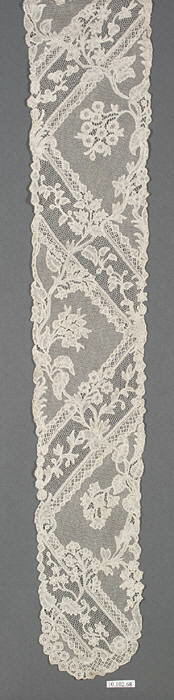
The Barbe: A Cartography of Absence in the SS26 Avant-Garde Lexicon
In the relentless pursuit of the new, the avant-garde often mistakes novelty for rupture. Yet, true innovation lies not in the invention of unfamiliar forms, but in the radical reinterpretation of ancestral codes. At Zoey Fashion Laboratory, our SS26 investigation seizes upon the Barbe—not as a nostalgic relic, but as a conceptual blueprint for a futuristic silhouette. Stripped of its historical piety, the Barbe emerges as a masterclass in structural tension, a study in the architecture of the void. This is not a garment; it is a proposition.
Originating from the nebulous terrain of the Global Frontier—a conceptual space where geography dissolves into pure aesthetic will—the Barbe is dissected, deconstructed, and reanimated. We are not concerned with its liturgical past. Instead, we interrogate its fundamental geometry: the horizontal plane of the collar, the vertical cascade of the lappets, and the profound silence of the fabric that frames the face. In our laboratory, the Barbe becomes a device for redefining the human topography, a means to project power through restraint and to articulate presence through absence.
Deconstructive Geometry: The Barbe as Structural Armature
The genius of the Barbe lies in its deceptive simplicity. It is a flat form that creates a three-dimensional volume around the head and shoulders, functioning less like clothing and more like a wearable scaffold. For SS26, we reject the passive drape of tradition. Instead, we engineer the Barbe as an active structural armature, a rigid yet ethereal exoskeleton that renegotiates the wearer’s spatial authority.
The materiality is paramount. We employ Bobbin lace and point d'Angleterre, not for their sentimental connotations of femininity or craft, but for their extraordinary tensile properties. Point d'Angleterre, with its intricate network of continuous threads and raised cordonnet, is not merely decorative; it is a system of tensile integrity. Each loop and twist functions as a micro-architectural joint, providing unexpected rigidity. By re-engineering these historical textiles with high-performance, thermo-fusible backing, we transform the lace from a supple skin into a lightweight structural composite.
The result is a silhouette that defies gravity. The barbe no longer lies flat against the chest; it projects forward, creating a dramatic, cantilevered shelf of lace. It frames the face not with softness, but with a sharp, geometric precision. The wearer is not adorned; they are housed within a portable architecture. This is a deliberate move toward a futuristic aesthetic that prioritizes the space around the body as much as the body itself. The garment becomes a negative-space sculpture, defining its environment through the voids it creates.
From Vestige to Vanguard: Recontextualizing the Global Frontier
The term 'Global Frontier' is not a geographical marker but a philosophical stance. It signifies a mode of creation that synthesizes disparate cultural and historical inputs into a singular, unprecedented output. The Barbe, in its journey across centuries and continents, is a perfect vehicle for this synthesis. We extract its essence—the principle of framing and enclosure—and discard its literal context. This is not cultural appropriation; it is cultural abstraction.
In our SS26 manifestation, the Barbe is severed from its role as a signifier of widowhood or religious devotion. Instead, it becomes a signifier of autonomous futurism. The high, closed collar—historically a gesture of modesty—is re-read as a shield, a piece of personal armor against the sensory overload of the contemporary world. The lappets, once functional strips of fabric, are elongated and stiffened to sweep back over the shoulders like the wings of a futuristic aircraft, creating a powerful, aerodynamic line that visually elongates the torso and commands the surrounding space.
This recontextualization demands a new kind of movement. The wearer of the Zoey Fashion Laboratory Barbe does not gesture; they position. The head is held with a deliberate stillness, the neck a proud, unbroken column. The garment’s architecture dictates a choreography of poise, a performance of controlled power. It is a silhouette for the leaders of the next century—individuals who understand that true authority is often expressed through what is withheld, through the silent power of a perfectly constructed frame.
Material Provocations: The Alchemy of Bobbin Lace
To treat bobbin lace as a mere 'trim' is a profound misreading of its potential. In our laboratory, it is a primary material, a medium for sculptural experimentation. The very process of its creation—the meticulous, almost algorithmic crossing of threads over a pillow—parallels the precision of digital fabrication. For SS26, we have pushed this logic to its extreme.
Our technicians have developed a novel technique where point d'Angleterre is manipulated under high-pressure steam and set with a bio-derived resin. This process allows us to mold the lace into dynamic, undulating forms that are simultaneously hard and soft. The fabric can be pleated into razor-sharp, origami-like folds that catch the light with a metallic sheen, or coaxed into smooth, cellular curves that resemble a futuristic exoskeleton. The intricate patterns of the lace are no longer just patterns; they are perforations in a structural shell, a network of light and shadow that plays across the skin.
This alchemy transforms the perception of the material. What was once delicate is now formidable. What was once flat is now volumetric. The Barbe, constructed from this new textile, possesses a dual nature: from a distance, it appears as a solid, monolithic form; up close, it reveals its intricate, woven complexity. This duality is the essence of the avant-garde—the ability to hold contradictory states in perfect tension. The garment is both archaic and hyper-modern, both heavy in concept and light in physicality.
Conclusion: A New Iconography of the Face
The Zoey Fashion Laboratory Barbe is not a trend; it is a thesis. It argues for a fashion that is intellectually rigorous, structurally inventive, and unafraid to mine the past for the raw materials of the future. By deconstructing the historical form and rebuilding it through the lens of futuristic material science and geometric abstraction, we have created a garment that functions as a new iconography of the face. It is a halo for the post-digital age, a frame for the visage of a new humanity that navigates the world with deliberate, architectural grace.
In a landscape saturated with the ephemeral, the Barbe stands as a monument to permanence. It is a testament to the power of focused study, proving that the most radical ideas often emerge from the most disciplined analysis of the forms that came before. This is the definitive statement of SS26: not an escape from history, but a confident, masterful re-engineering of its most potent symbols. The future of fashion is not found; it is constructed, thread by thread, in the laboratory of the imagination.