Deconstructing the Frontier: A Study in Radical Reduction
The mandate for the SS26 avant-garde study, codenamed Strip, is an exercise in profound contradiction. It demands the construction of form through a material synonymous with delicacy—needle lace—while its conceptual origin, the Global Frontier, implies a landscape of harsh, unbounded possibility. This is not a romantic interpretation of frontierism, but a critical examination of its contemporary condition: a digitized, surveilled, and psychologically fragmented terrain where the only true wilderness is interior. The collection serves as a standalone architectural proposition, a manifesto asserting that the future of couture lies not in additive ornament, but in the surgical precision of subtraction, revealing the armature of both garment and self.
Material Alchemy: The Structural Paradox of Needle Lace
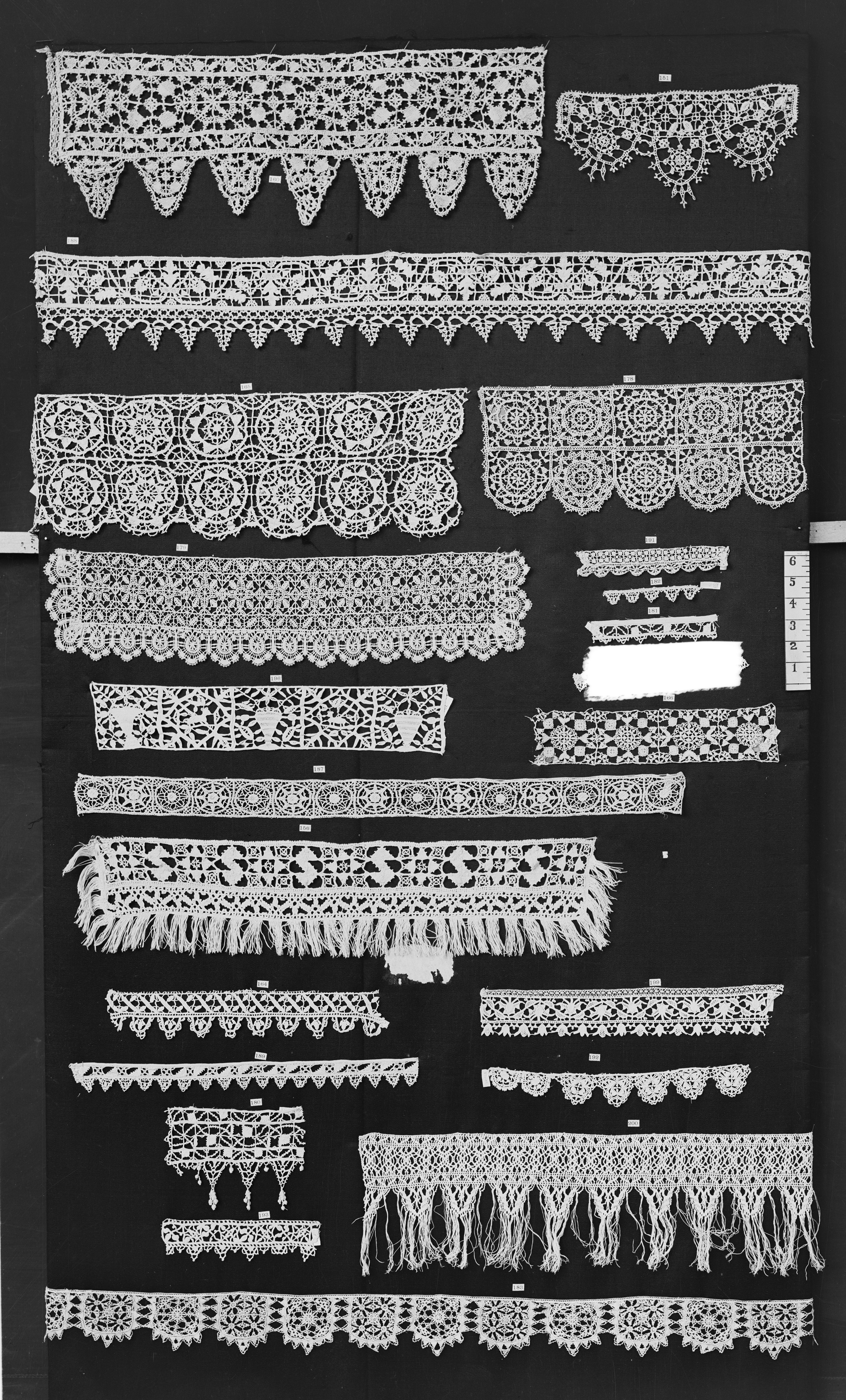
To approach needle lace as merely a fabric is to misunderstand the core tenet of this study. Traditionally a symbol of labor-intensive luxury and opaque femininity, here it is subjected to a process of material re-engineering. We treat each hand-stitched motif not as decoration, but as a structural node within a tensile mesh. By selectively reinforcing threads with transparent fluorocarbon monofilament and employing algorithmic density mapping, we transform the lace from a surface application into a self-supporting exoskeleton. The "strip" of the title operates on a dual register: it is the action of paring back to reveal this engineered substrate, and it is the resulting narrow, vertical form factor of the garments themselves. A gown does not drape from the shoulders; it ascends from the floor as a freestanding column of lace, its integrity maintained by tension zones that map to the body's biomechanical pressure points, creating a wearable tension-field structure.
Silhouette as Architecture: The Vertical Habitat
The futuristic silhouette of SS26 rejects the cyclical nature of trend for the permanence of architectural theory. Informed by the verticality and competitive isolation of frontier megacities, the silhouette is one of imposing, attenuated linearity. Looks are conceived as habitable spaces—minimalist towers for the individual. A signature coat, for instance, is not cut from cloth but built from interlocking panels of stiffened, resin-infused lace, forming a rigid, A-line carapace that stands away from the body by precisely 7.62 centimeters, creating a personal atmospheric zone. Movement is not facilitated by pleats or gathers, but by engineered hinge-points at the joints, suggesting robotic articulation. The stark verticality is intermittently "interrupted" by strategic horizontal bands where the lace has been entirely removed, leaving only the monofilament framework—a window into the negative space that is as crucial to the design as the positive form.
Structural Innovation: The Exoskeletal Framework
This collection pioneers what we term Endoskeletal Couture, where support is externalized and celebrated. The innovation lies in a patented internal armature system constructed from lightweight, flexible titanium alloy. This armature is not concealed; it is integrated into the lace matrix as a functional design element. In a pivotal jumpsuit look, the armature traces the spinal column and iliac crest, serving as both a structural spine and a conduit for embedded bioluminescent fibers that pulse with low-level light, a data-stream metaphor for the nervous system. The lace itself is often treated with phase-change materials, allowing localized areas to become rigid or pliant in response to body temperature, creating a dynamic garment that morphs from protective shell to responsive second skin. Fastenings are obsolete, replaced by magnetic closure systems and tension-locks that audibly click into place, emphasizing the act of assembling one's architectural persona.
Conceptual Context: The Standalone Study in a Networked World
As a standalone study, Strip deliberately resists narrative commerciality. It is a pure, polemical exploration of fashion's capacity to manifest complex psychosocial states. The Global Frontier is not a place but a condition of perpetual exposure and self-reliance. The garments, in their stark, stripped-back grandeur, become fortresses of individuality. The extensive use of negative space in the lace patterns—sometimes forming deliberate pixelated voids or glitch sequences—speaks to data loss and digital erosion. To wear these pieces is to perform a new kind of austerity, one that is not about lack but about hyper-curated existence. The lace, for all its historical connotations of concealment, becomes a veil that reveals more than it obscures, charting the topography of a body navigating limitless virtual frontiers while seeking tangible, structural integrity.
Conclusion: The SS26 Proposition
Zoey Fashion Laboratory's Strip collection for SS26 is a definitive argument for avant-garde couture's relevance as a discipline of philosophical and structural engineering. By deconstructing the romanticism of the frontier and the tradition of lace, it arrives at a potent new formalism. It proposes a silhouette that is a habitat, a material that is a framework, and a garment that is an interface. This study does not forecast trends; it constructs a possible, and profoundly arresting, reality for the body of the future—one where strength is born from delicacy, structure emerges from void, and identity is architected from the stark, beautiful imperative to strip down to one's essential armature. It is less a collection and more a blueprint for a resilient, post-digital self.