Technical Deconstruction: The Lampas Weave as Genomic Architecture
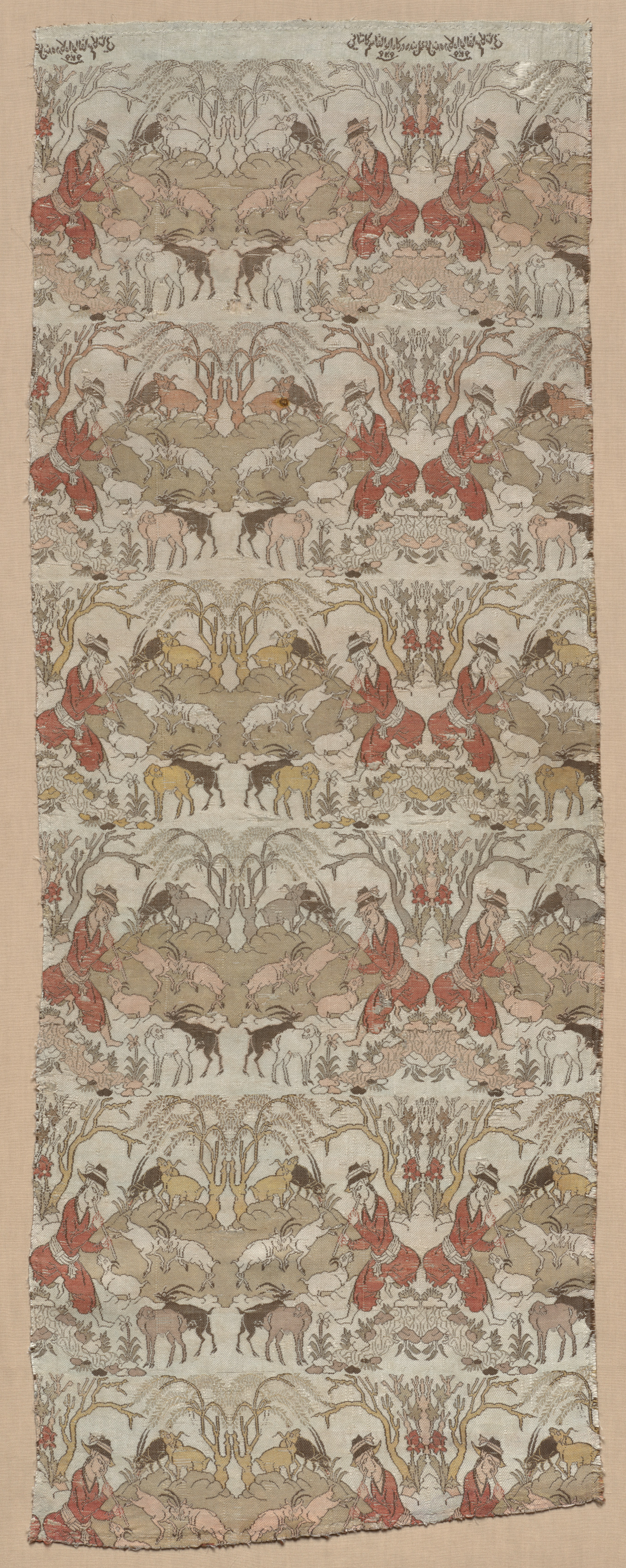
The provided textile is not merely a fabric; it is a sophisticated data structure encoded in silk. The lampas weave, a pinnacle of Persian textile engineering, is our primary object of study. This technique employs two sets of warps (foundation and binding) and two sets of wefts (pattern and binding), creating a complex, compound structure where a ground weave supports a completely independent pattern weave. For Zoey Fashion Lab's avant-garde lens, this is not historical craft but biological architecture. The foundation warps and wefts form the double-helix backbone—the stable "DNA" of the cloth. The floating pattern wefts, which create the elaborate pictorial scene of goatherds and flora, represent the expressed genetic code, the phenotypic manifestation visible on the surface.
The reference to a "New DNA Strand" is critically instructive. We must view the entire textile as a living genome. The serene, classical landscape scene (the goatherds, the trees, the peaceful animals) is the traditional, inherited genetic sequence. Our avant-garde mandate is to induce a mutation. This involves isolating the "genes"—the individual technical components: the lustrous silk filament, the specific palette derived from natural dyes, the precise curvature of a leaf in the pattern, the structural density of the lampas. We will sequence these elements to splice, edit, and recombine them with alien materials and disruptive forms.
Narrative Extraction: Deconstructing the Pastoral Code
The pictorial theme, "Goatherds in a Landscape," is a deliberate construct, a narrative of harmony, pastoral life, and idealized nature woven under patronage in Isfahan, a cosmopolitan Safavid capital. For an avant-garde practice, this narrative is a system to be hacked. We do not see a peaceful scene; we see a data set of relationships: human/animal, organic/geometric, ground/sky, static/motion.
Our deconstruction will involve literal and conceptual fragmentation. The goatherd's figure can be extracted, pixelated using the inherent grid of the weave, and rendered as a distorted silhouette in thermo-chromic film on neoprene. The flock of goats becomes a pattern of erratic, algorithmically-generated footprints embossed on recycled rubber or laser-cut into laminated silk organza. The lush trees are not reproduced but their structural principle—branching, fractal growth—is translated into the cut of a garment, using seams that diverge like limbs, or through shibori dye techniques that mimic organic diffusion, but using UV-reactive pigments.
Avant-Garde Synthesis: Recombinant Materiality and Form
The synthesis phase is where the deconstructed "genes" from Isfahan's silk are spliced into a new, avant-garde organism. The core principle is recombinant materiality, creating jarring yet intelligent hybrids that speak to contemporary consciousness while echoing their origin at a molecular level.
Material Mutations:
Silk Fusion: The luxury of silk is retained but violated. We propose fusing the original lampas weave technique with biodegradable polymer filaments and conductive yarns. Imagine a jacket where one sleeve reproduces a fragment of the original landscape in pristine silk lampas, while the other sleeve, in the same structural technique, weaves a circuit diagram or a digital glitch pattern using copper-infused thread, capable of interfacing with wearable tech. The "lampas" is no longer a historical technique but a platform for multi-sensory data display.
Structural Interventions: The two-layer integrity of the lampas (ground and pattern) is physically de-laminated. The dense, patterned face could be used as rigid, couture-like appliqués bonded to a foundation of industrial mesh or liquid silicone. Conversely, the "ground" weave could be isolated, enlarged, and 3D-knitted using silk protein-infused bio-yarn, creating a sheer, second-skin base layer. The pattern, now separate, is projected onto it via micro-LEDs embedded in the garment's infrastructure, making the "goatherds" a dynamic, ephemeral display.
Form-Language from Function:
The garment forms arise directly from the deconstruction. The draped, flowing robes suggested by the Safavid context are fractured.
- The "Genome" Coat: A tailored coat where the lining is a full-scale, faithful reproduction of the original textile, while the exterior shell is constructed from panels of recycled technical nylon, scuba knit, and fused silk scraps, mapped like a chromosomal karyotype. Seams are left raw and exaggerated, revealing the "genetic" lining within.
- The "Data Herd" Ensemble: A modular outfit consisting of a minimalist, structured bustier (echoing the rigid geometry of the weave's grid) attached to a series of detachable, flowing tails or pods made from upcycled silk satin. These pods, printed with distorted infrared images of animal herds, represent the fragmented, migratory "data" of the pastoral scene, constantly reconfigured by the wearer.
- The "Lampas Layer" Gown: A gown that physically manifests the two systems of the lampas. An inner sheath dress in sheer, foundational weave (monochromatic) acts as the ground. Over it, a harness-like exoskeleton in laser-cut acrylic or polished aluminum "holds" floating panels of the original pattern, disconnected from the body, creating a dynamic, architectural silhouette that changes with movement.
Conclusion: The New Strand
The final collection, born from this analysis, will not reference Iranian silk in a pastiche or ethnographic manner. It will be its logical, disruptive evolution. By treating the "Silk Textile with Goatherds in a Landscape" as a genomic blueprint, we have moved beyond aesthetic appropriation to methodological inheritance. We honor the unparalleled technical intelligence of the Isfahan weavers by applying their structural logic to the questions of our time: the fusion of biology and technology, the instability of narrative, and the recombinant nature of identity. The resulting avant-garde pieces will stand as mutant progeny of the original—sharing its DNA but expressing a radically new, compelling, and utterly contemporary phenotype. The new DNA strand is woven, ready for its next replication.