Deconstructing the Frontier: A Study in Edging
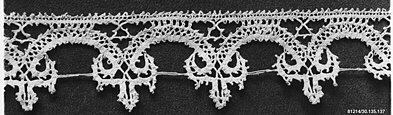
The concept of Edging, as a philosophical and sartorial directive for Zoey Fashion Laboratory's SS26, transcends mere periphery. It is an investigation into liminality—the potent, transformative space where structure dissolves, where the body ends and environment begins, and where tradition is perpetually re-contextualized into the future. Sourced from the conceptual Global Frontier, this is not a geographic locale but a psychic terrain: a boundless, post-digital expanse where cultural memory and speculative form collide. Our medium for this expedition is one of history's most intricate and paradoxically fragile architectures: bobbin lace. This standalone study posits that within its delicate, labor-intensive grids lies the blueprint for a radical, neo-couture language.
Material Alchemy: The Bobbin Lace Protocol
To employ bobbin lace is to engage in a dialogue with centuries of human precision. Traditionally symbolic of purity, status, and meticulous craft, its very nature is one of calculated absence—a structure defined by voids. Zoey Fashion Laboratory's intervention begins with a process of material alchemy. We submit lace to bio-mineral coatings, creating a hybrid textile with a memory of its own. Impregnated with shape-memory polymers and micro-filaments of recycled titanium, the lace gains the ability to hold, and even actively reform, dramatic silhouettes. The familiar floral and geometric patterns are not merely printed upon but become the structural armature of the garment itself. A rose motif is not an embellishment; it is a load-bearing node from which a sleeve cantilevers. This subversion transforms the material from decorative filigree into a futuristic exoskeleton, blurring the line between textile and architectural blueprint.
Silhouette as Psychogeography: The Edging Principle
The SS26 silhouette lexicon, governed by the "Edging" principle, explores the body as a landscape of frontiers. We move beyond deconstruction into the realm of suspended reconstruction.
The Cantilevered Form: Garments are engineered to extend beyond the body's natural outline, creating negative space as a core design element. A bodice may appear to hover centimeters from the sternum, connected only by ultra-fine tensioned lace threads, making the space between skin and cloth as significant as the cloth itself. This embodies the frontier's vastness and the body's negotiation within it.
The Liquid Perimeter: Hemlines and armholes are not finite borders but active, indeterminate zones. Using the reinforced lace as a malleable frame, hems cascade into fluid, asymmetric tendrils that respond to movement, creating a dynamic, ever-changing silhouette. This represents the constant re-mapping of the Global Frontier—a boundary that is perpetually in flux.
Modular Layering: Garments are conceived as modular systems. A single lace under-structure can accept multiple outer "shells" or kinetic appendages, allowing for a single core to manifest multiple identities. This speaks to the multi-faceted, adaptive self required to navigate contemporary existence.
Structural Innovation: The Exoskeletal Framework
The true avant-garde leap lies in the internal architecture. Bobbin lace, once reinforced, becomes a breathing exoskeleton. We have developed an internal framework—dubbed the "Lace Tracery"—composed of the lace itself, heat-fused into lightweight, rigid channels. This framework is not hidden but celebrated, often appearing on the exterior as a topographic map of support. It allows for impossible volumes: a skirt that expands in a perfect, geometric sphere from the hips; a collar that rises in a translucent, fan-like spire behind the head. This innovation rejects the traditional relationship between lining and exterior, between support and display. The structure is the aesthetic, rendering the garment a standalone habitat for the body.
Contextual Synthesis: The Standalone Artifact
As a standalone study, this collection exists outside seasonal trends. It is a deliberate, focused manifesto on material futurism. The context is the laboratory itself—the petri dish where the past (bobbin lace) is subjected to the conditions of the future (biotech, structural engineering, speculative design). Each piece is an autonomous artifact from the Global Frontier, a relic of a future culture that venerates both exquisite handicraft and radical technology. The color palette, derived from oxidized metals, data-stream blue, and the natural ecru of linen thread, reinforces this archeological-futurist dialectic.
In conclusion, Zoey Fashion Laboratory's "Edging" study for SS26 presents a definitive argument: the future of avant-garde couture is not found in the wholesale abandonment of tradition, but in its radical, intelligent re-engineering. By placing the historic, delicate complexity of bobbin lace at the epicenter of structural and conceptual innovation, we have charted a new trajectory. We have demonstrated that the most profound explorations of the frontier begin at the edge—the edge of material capability, the edge of silhouette, and the edge of what we perceive couture to be. The resulting forms are not merely garments; they are architectural propositions for the body in the space of tomorrow.