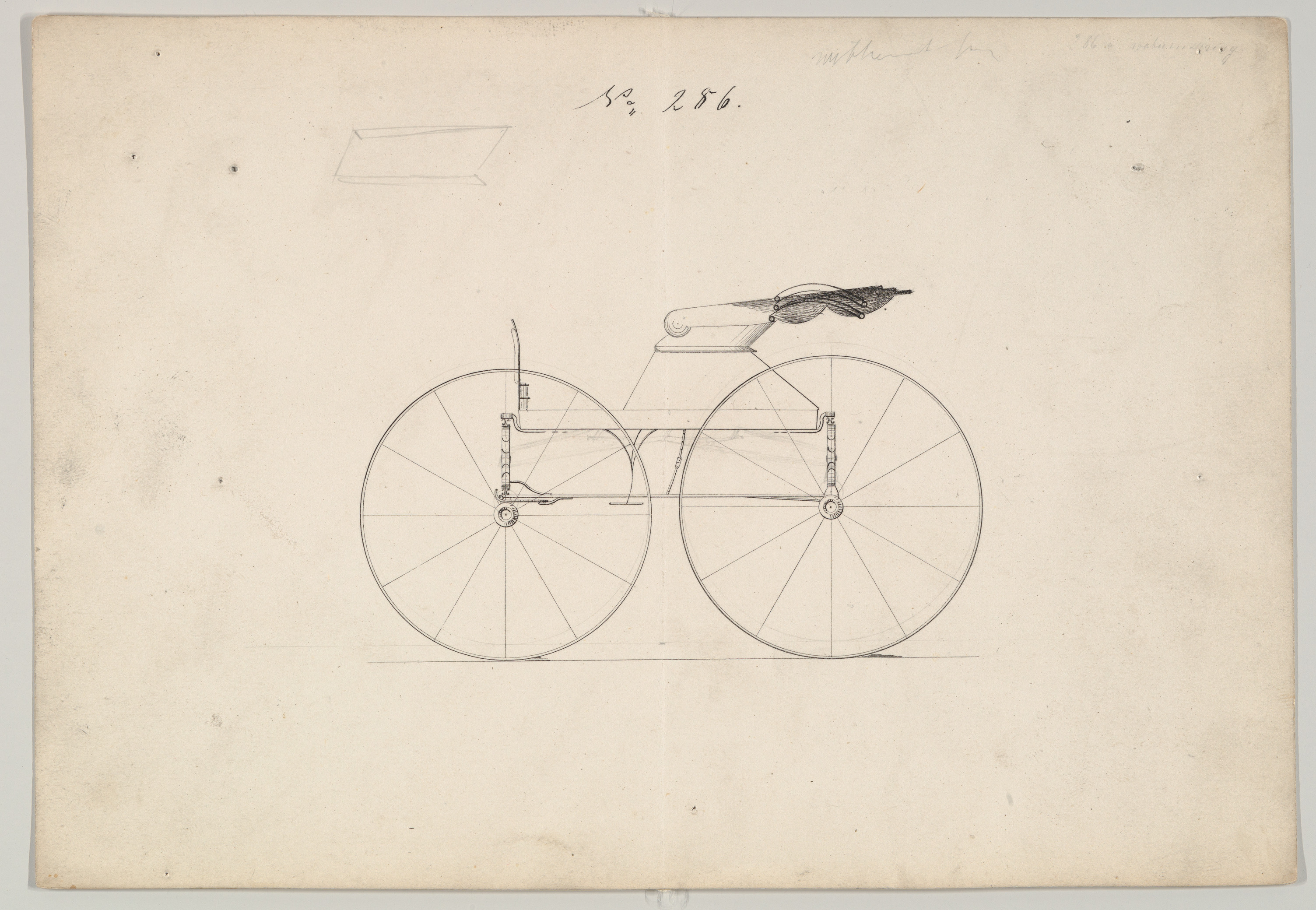
Wagon #286: A Cartographic Deconstruction of the Silhouette
In the lexicon of Zoey Fashion Laboratory, a "Wagon" is not a vehicle of transport but a vessel of conceptual cargo—a contained yet explosive study in form, line, and intention. Wagon #286, originating from the conceptual Global Frontier, stands as a definitive manifesto for SS26, articulating a future where the garment is not worn but inhabited, and the body is not adorned but mapped. Its specified media—graphite, pen, and black ink—are not mere material suggestions but philosophical directives. They speak to a process of drafting, of precise architectural intent, of permanence carved from the void. This analysis posits Wagon #286 as a standalone study in structural innovation, where the futuristic silhouette emerges from a rigorous dialogue between constraint and liberation, the geometric and the organic.
The Architecture of the Graphite Grid: Substrates and Structures
The foundational element, graphite, establishes the core architectural principle. It is the underdrawing, the skeletal framework, the carbon-infused spine of the collection. In SS26, this translates to a foundational garment architecture built upon engineered substrates. Imagine bodices and sleeves not as sewn fabric but as thermo-formed bio-polymers, molded directly onto a mannequin or body scan, creating a second, exoskeletal epidermis. This "graphite layer" provides rigid, sculptural forms—sharp, planar shoulder extensions that recall drafting triangles, or ribcage cages that echo the precise lines of a technical sketch. The silhouette is born from this armature, rejecting soft draping in favor of defined, geometric volumes. The "Global Frontier" origin implies a terrain of pure form, where these graphite-inspired structures act as both protection and proclamation, a uniform for a landscape of pure idea.
The Pen's Trajectory: Linear Narratives and Kinetic Joints
If graphite is the bone, the pen line is the tendon and the nerve. The unwavering, continuous line of a technical pen dictates the kinetic logic of Wagon #286. This is not about surface pattern; it is about deep structural articulation. Seams become exaggerated, top-stitched with luminescent cable or rigid piping, tracing deliberate, non-anatomical pathways across the body—a parabolic curve from collarbone to hip, a stark radial line exploding from the scapula. These lines dictate movement, creating hinge-points and gussets that allow the rigid graphite forms to articulate. Imagine a jacket that, in stillness, presents a monolithic, ink-black plane. With motion, precise seams—those pen strokes—activate, revealing hidden pleats or rotational panels in a contrasting matte texture, a literal drawing of movement in space. The silhouette thus becomes dynamic and variable, a living blueprint.
Black Ink as Negative Space and Volumetric Void
Here lies the most radical innovation. Black ink is not employed as a color, but as a spatial concept: the rendered void. In Wagon #286, black is used to carve absence into presence, to create volume through subtraction. This manifests in SS26 as garments featuring strategic die-cut voids, laser-etched to reveal layers beneath, or as trompe l'oeil shadow panels applied to create the illusion of depth where there is none. A gown may feature a spiraling vortex of black, achieved through graduated laser-cutting over a silver substrate, creating a mesmerizing effect of a silhouette being consumed by—or emerging from—its own shadow. This treatment challenges the very perception of the body's boundaries. Is the silhouette defined by the edge of the material or by the negative space contained within it? The ink's absolute blackness becomes a tool for optical deconstruction, making solid forms appear weightless and contiguous planes appear fragmented.
SS26 Synthesis: The Draughtsman's Domicile
The synthesis for the season is what we term "The Draughtsman's Domicile." The collection will present the body as a living, breathing architectural site. Ensembles will integrate the three media inseparably: a graphite-rigid, A-line tunic dress, traversed by a single, uninterrupted pen-seam that spirals from hem to neckline, its path interrupted by a geometric void of black, revealing a glimpse of a luminous underlayer. Outerwear will feature ink-black, subtracted sections that frame the rigid graphite structures beneath, creating a layered, topographical effect. Silhouettes will oscillate between the stark, minimalist volumes of a single ink stroke and the complex, multi-layered assemblages of a detailed technical drawing.
Ultimately, Wagon #286 proposes a future for couture that is profoundly intellectual and radically material. It moves beyond clothing as metaphor to clothing as direct spatial practice. The futuristic silhouette it commands is one of deliberate construction, where every line has structural consequence, every blackness is a carved volume, and every rigidity contains a blueprint for movement. For SS26, Zoey Fashion Laboratory does not forecast a trend; it drafts a new anatomical reality, where the body is both the canvas and the architect, forever defined by the precise, potent trinity of graphite, pen, and ink.