Technical & Historical Deconstruction: The Maximilian Armor Core
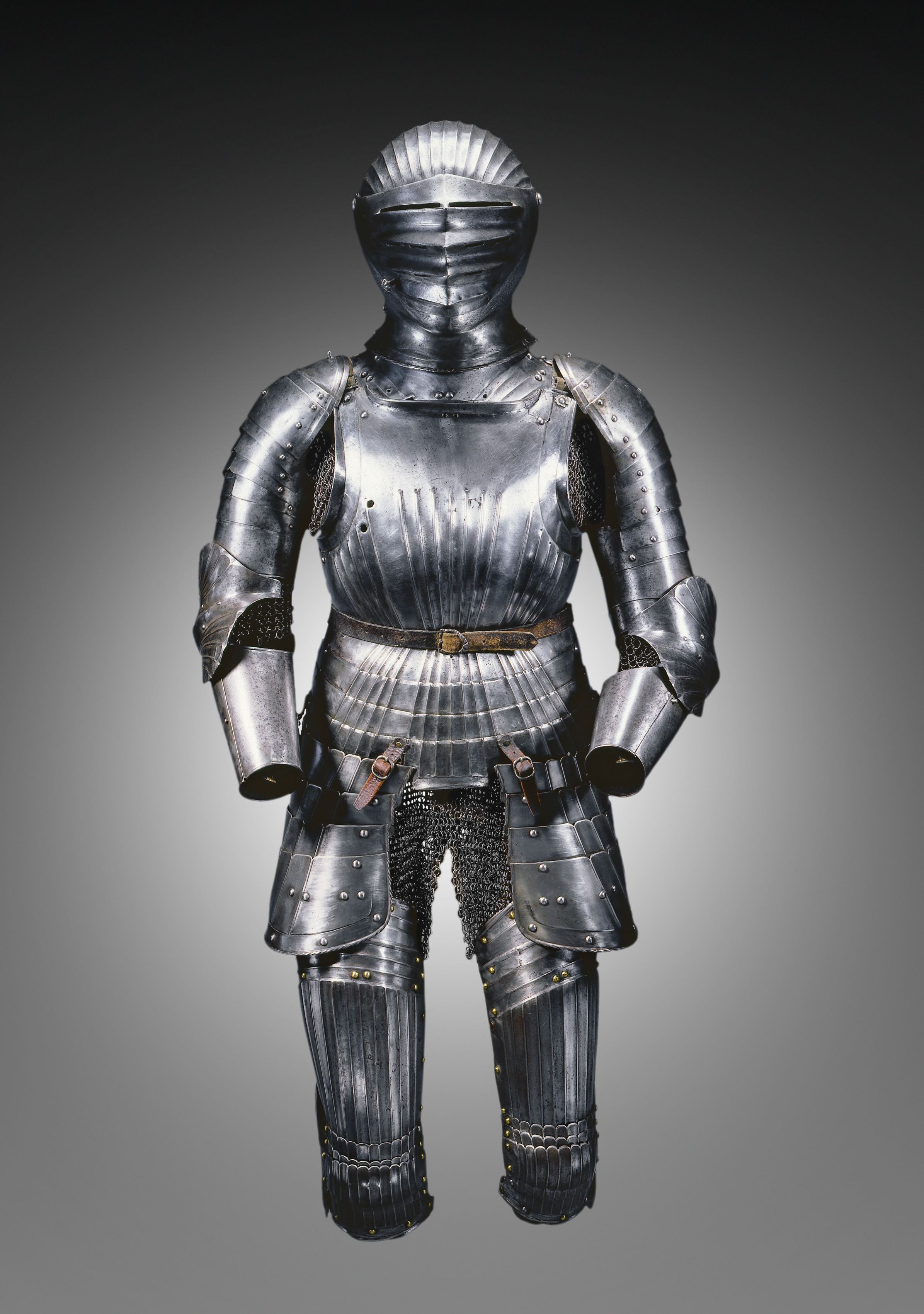
The provided artifact—a partial suit of armor from Nuremberg, c. 1510-1520, in the Maximilian style—presents a formidable starting point. Our technical analysis must begin with its material truth: steel. This is not merely a metal; it is a statement of technological peak and defensive intent. The fluting, the defining characteristic of the Maximilian style, is our primary text. These parallel, vertical grooves are not decorative whimsy. They are functional genius, serving as a structural exoskeleton that increases strength and rigidity while minimizing weight, much like corrugated steel or the biological principle of ridges in a shell. The metal itself, painstakingly hammered and shaped by the armorer's art, represents a human-forged carapace, an externalized skeleton.
The New DNA Strand: From Rigid Exoskeleton to Fluid Endoskeleton
The directive to reference a New DNA Strand provides our transformative key. We will not replicate the armor; we will invert its logic. The historical artifact is an exoskeleton: protection applied from the outside in. Zoey Fashion Lab will conceptualize an endoskeleton: support and structure emerging from the inside out. Imagine the fluting not as grooves hammered into plate steel, but as raised, organic ridges emerging from within the fabric's very weave, or constructed from internal boning and innovative substrates. The armor's purpose was deflection and resistance; our garment's purpose will be articulation and expression.
The "partial" nature of the suit is critical. It suggests fragmentation, incompleteness, and selective protection. This directly informs our avant-garde approach: we will not create a full "suit." We will design architectural interventions for the body—a pauldron (shoulder defense) reinterpreted as an asymmetric, structured collar; a couture cuirass (torso armor) morphing into a sculpted bustier with fluted seams; a gauntlet (glove) becoming an articulated hand-piece with jointed, metallic mesh. These elements will exist as discrete, modern pieces, capable of integration with soft, fluid textiles.
Avant-Garde Synthesis: The Zoey Fashion Lab Manifestation
The avant-garde mandate requires a leap beyond historical homage into conceptual fashion. Our collection, tentatively titled "Endoskeleton: The Nuremberg Codex," will operate on three core principles:
1. Material Dialectics
We will pit the memory of steel against contemporary substance. Polished thermoplastic polyurethane (TPU) and laser-sintered nylon will replicate the luster and form of polished steel but with radical lightness and malleability. Molded felt, a material with its own historical weight, will be hardened and shaped into organic, armor-like forms. Fluting will be achieved through heat-welding seams on technical fabrics, creating permanent, hollow channels that trap light and shadow. We will incorporate liquid metal coatings on silk, creating a fragile, shimmering surface that echoes plate armor but confesses its vulnerability.
2. Anatomical Re-mapping
Maximilian armor celebrated the idealized male form of the Holy Roman Empire. We will deconstruct this. Our structural elements will follow a new map of the body—one that emphasizes not martial power but dynamic movement and personal identity. Fluted lines may radiate from the scapula like a kinetic fan, or trace the path of the lymphatic system rather than the pectoral muscles. The rigid gorget (neck armor) becomes a flexible, high-neck collar of interlocking, 3D-printed scales that respond to breath and motion.
3. The Poetics of Protection & Exposure
This is the heart of the concept. What does the modern individual choose to armor, and what do they choose to expose? Our garments will explore this tension. A dress may feature a perfectly engineered, fluted "breastplate" bodice in iridescent polymer, while the back is entirely absent, secured by nothing but a delicate chainmail mesh of fine cable. A tailored jacket may have one sleeve fully articulated with segmented, armored plates, while the other is simple, unfinished wool. This selective shielding speaks to contemporary vulnerabilities—digital, emotional, social—and the conscious construction of one's public persona.
Collection Outline: Key Pieces
Look 01: The Pauldron Blazer. A severe, wool-cashmere blazer, deconstructed. The left shoulder extends into an exaggerated, fluted pauldron form in gunmetal TPU, internally structured with memory wire. The right shoulder is sharply tailored, bare.
Look 05: The Fluted Gown. A column gown in matte ceramic-coated jersey. From a simple neckline, a single, spiraling line of internal fluting—created with subcutaneous boning channels—winds around the torso and down the leg, creating a dramatic, anatomical line that mimics both armor grooves and a double helix (the DNA strand, realized).
Look 08: The Articulated Gauntlet Top. A sleeveless top where the "sleeves" are actually articulated arm sheaths of connected, laser-cut leather hexagons, mimicking the lames (overlapping plates) of a gauntlet, worn over bare arms. The bodice is soft, draped silk.
Conclusion: The Nuremberg armor is our ancestor, a testament to the human desire for form, protection, and status. Zoey Fashion Lab's avant-garde interpretation extracts its genetic code—the fluting, the articulation, the philosophy of the partial shell—and splices it with a modern genome of fluidity, internal structure, and psychological exposure. We move from the battlefield to the urban landscape, from forged steel to forged identity, creating not armor for the body, but architecture for the self.