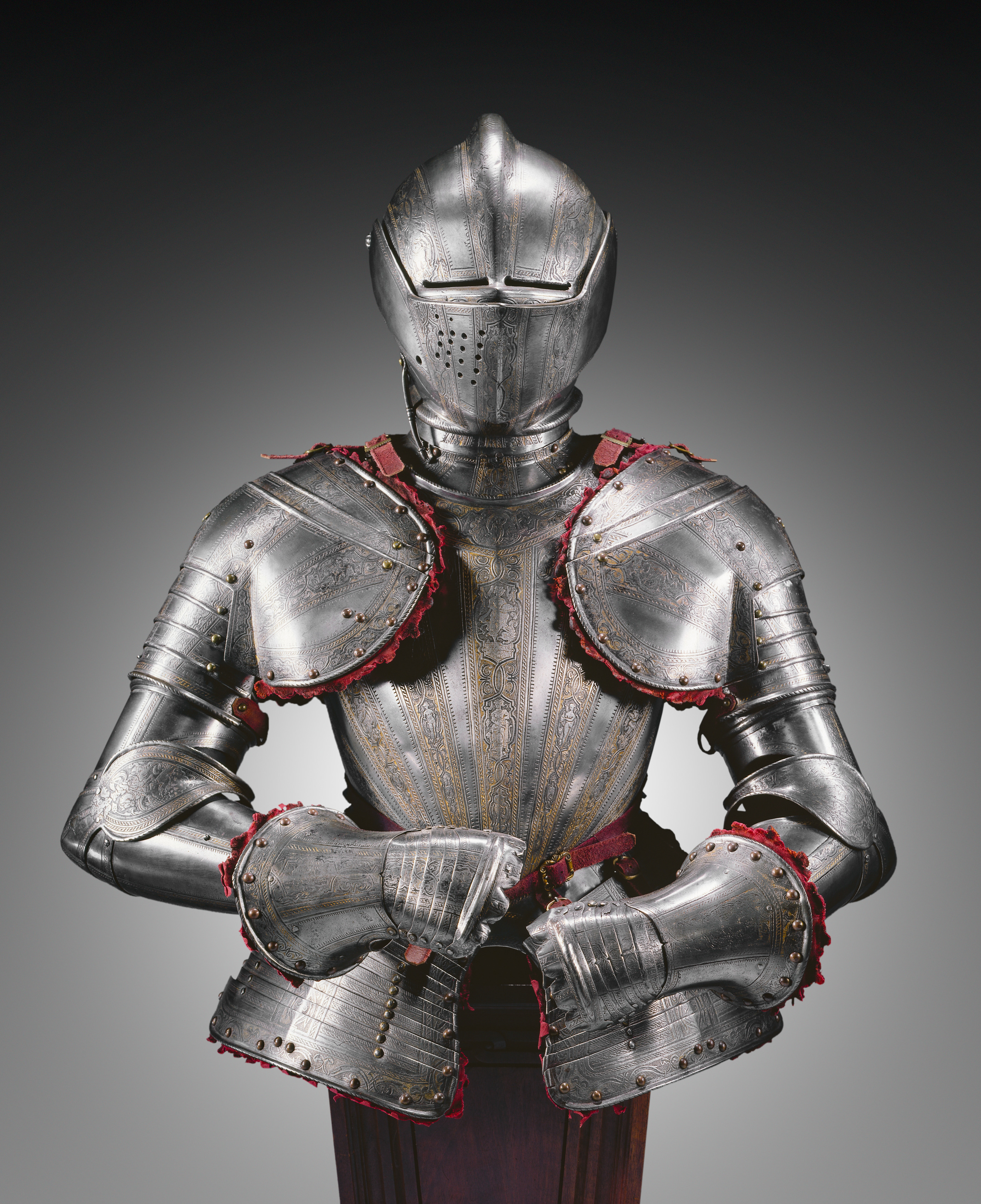
Strategic Analysis: Half Armor for the Foot Tournament
Project Code: ZFL-IT-MIL-001 | Designation: "New DNA Strand" | Classification: Avant-Garde Exoskeletal Architecture
1. Origin & Conceptual Deconstruction: Milanese Codex
The directive to analyze a piece originating from Milan is profoundly resonant. Milan is not merely a geographic location; it is a perpetual dialectic between immutable heritage and radical, forward-looking innovation. This "Half Armor" exists at the precise intersection of these forces. It does not reference the tournament field literally but metabolizes its core principles: structured competition, performative spectacle, and the protection of vital assets. In a contemporary context, the "Foot Tournament" translates to the urban landscape—a non-lethal but intensely competitive arena of social and professional navigation. The piece, therefore, is not a relic but a proposition: what are the zones of our modern anatomy that require both articulation and defense in the daily contest of identity?
2. Technical Fabric Deconstruction: The Exoskeletal Framework
The material palette—etched and gilded steel, brass rivets, leather, and velvet—is a masterclass in tactical juxtaposition. Each element is a functional and symbolic node in the piece's DNA.
Etched and Gilded Steel: This is the core genome. Steel provides the exoskeletal integrity, the "hardware" of protection. The etching is critical—it transforms a defensive plate into a communicative surface. These are not random patterns; they are a coded language, perhaps mapping pressure points, neural pathways, or digital networks onto the physical form. The gilding is the radical intervention. It subverts the steel's martial austerity, introducing a layer of opulence, visibility, and value. It speaks to making one's defenses not just functional but conspicuously, beautifully deliberate. In the urban tournament, armor is not hidden; it is displayed as a badge of crafted resilience.
Brass Rivets: These are the syntactic links. Functionally, they bind disparate materials; aesthetically, they provide a punctuated rhythm, a visible record of construction. They reject seamless, invisible assembly in favor of acknowledging the artifice of the build. Each rivet is a decision point, a connection node in the strand.
Leather and Velvet Fittings: Here lies the biocompatible interface. Leather—durable, moldable, historically associated with both utility and luxury—acts as the functional hinge and backing. Velvet introduces a startling sensory and social contrast. It is the interior experience: soft, tactile, private, and sumptuous against the hard, public, gleaming exterior. This dichotomy is essential. It states that the point of contact between the armor and the self is one of deliberate comfort and concealed opulence.
3. Reference Analysis: The "New DNA Strand" Helix
The provided reference, "New DNA Strand," is the central hermeneutic key. This piece is not merely adornment; it is proposed as a genetic alteration to the body of fashion itself.
Consider the double-helix structure: two intertwined, complementary strands supporting each other. In this piece, we can interpret one strand as Heritage (the armor form, the metallurgy, the craftsmanship) and the other as Mutation (the gilding, the context shift, the avant-garde styling). They twist around a central axis of the human form, creating a new code for what protective wear can be. The "half" nature of the armor is crucial—it does not seek to fully encase. It is selective, highlighting specific zones (likely the shin, instep, and ankle, key points of stability and movement). This selectivity mirrors gene editing: precise, intentional modifications rather than wholesale replacement. The new DNA strand suggests an evolved species of accessory, one that carries the historical memory of its purpose but expresses it through a radically new phenotype.
4. Stylistic Integration: Avant-Garde Tournament
The Avant-Garde classification mandates a posture of challenge. This piece challenges the boundaries between: accessory and architecture; historical artifact and future prototype; masculine-coded armor and a gender-fluid expression of power.
For integration into the Zoey Fashion Lab portfolio, we must consider its stylistic ecosystem. It would not be paired with passive, flowing silhouettes. Instead, it demands a counterpart that acknowledges its structural statement. Imagine it with:
- Deconstructed Tailoring: A wool blazer with one sleeve, revealing a leather harness, playing on themes of revealed and concealed structure.
- Biomimetic Knits: A top with knitted patterns mirroring the etching on the steel, creating a textile-to-metal dialogue across the body.
- Monochromatic Rigor: An all-black or all-white base, allowing the gilded, metallic elements to function as the sole, powerful focal point—a streak of genetic brilliance.
Its context is the runway as tournament ground. The walk is the joust. The gaze of the audience is the challenge. This armor prepares the wearer not for physical combat, but for the psychological and aesthetic contest of presence.
5. Conclusion & Strategic Recommendations
The "Half Armor for the Foot Tournament" is a seminal artifact. It successfully performs a recombinant act on fashion's genetic material, splicing historical armor DNA with the nucleotides of modern luxury, identity performance, and avant-garde design philosophy.
Recommendations for Zoey Fashion Lab:
- Embrace the Hybrid Interface: Further explore the leather/velvet interior as a core Lab principle—the point where tech or structure meets the skin must be sensually considered.
- Code the Surface: Develop a proprietary "etching language" for ZFL—a set of patterns, derived from organic and digital sources, that can be applied across materials to create a recognizable genomic signature.
- Selective Exoskeletons: Explore this "half armor" concept for other body zones—the collar bone (social armor), the palm (interface armor), the knee (resilience armor). Each becomes a chapter in a new anatomical defense manifesto.
This piece is not a conclusion but a prototype. It provides the blueprint for a new strand in our design DNA, one where protection is articulate, history is mutable, and beauty is a strategic function. The tournament has begun.