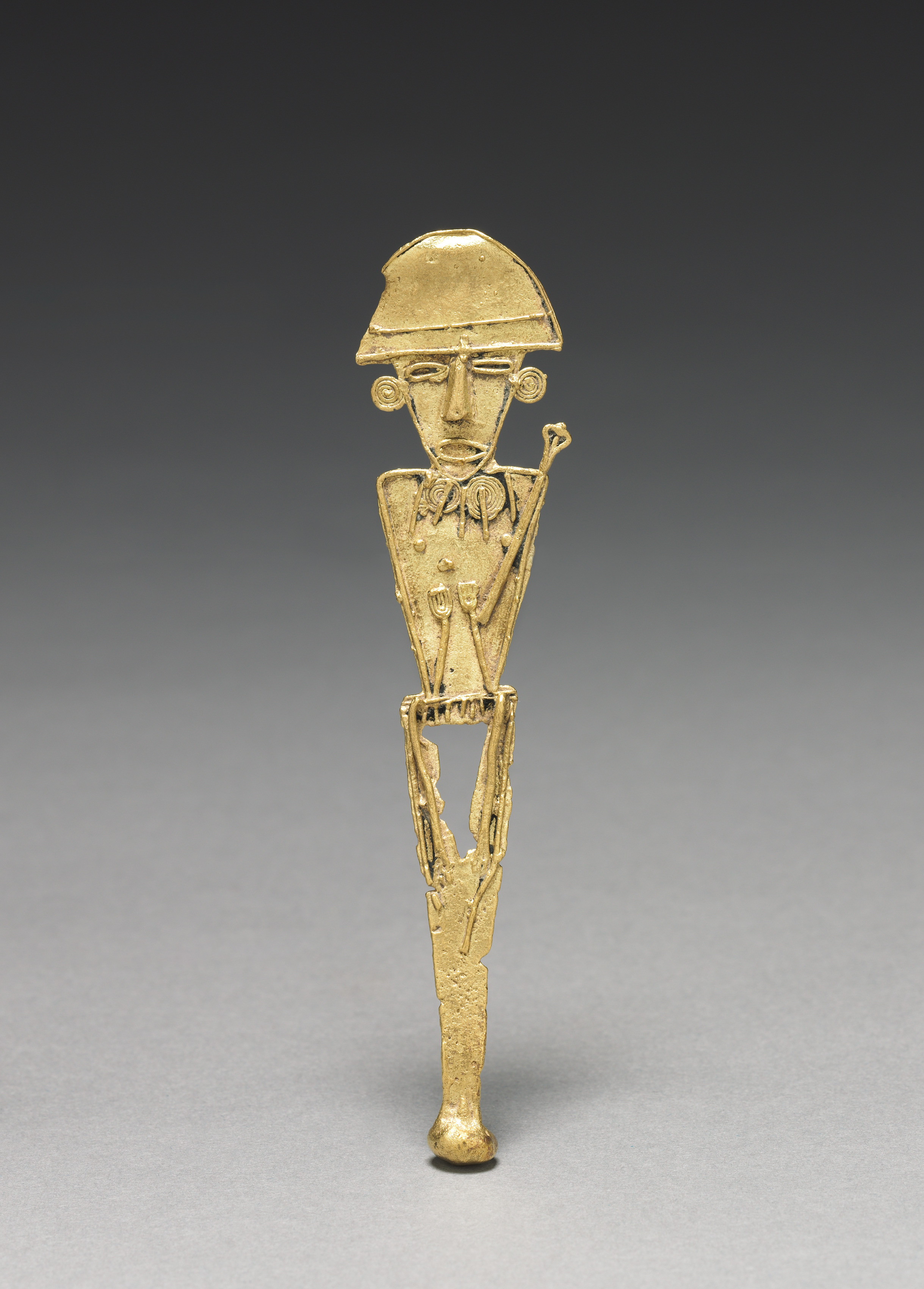
Technical Deconstruction: The Muisca Tunjos as Foundational Code
The Zoey Fashion Lab mandate is to deconstruct not merely garments, but cultural artifacts, extracting their core semantic and structural codes for avant-garde translation. The Muisca Tunjo, a hand-cast votive offering figurine, presents a profound case study. Its technical essence is a paradox of material permanence and narrative transience. Cast via the lost-wax method in tumbaga (a gold-copper alloy), its form is solidified, eternal. Yet its purpose was inherently temporary and transactional—a conduit of prayer, left in sacred lakes or temples as a physical embodiment of a request or gratitude. This creates a foundational tension: an object of immense, immutable value (in material and spiritual terms) designed for ritualized abandonment. The form is simplified, schematic, yet charged with intention; it is a minimalist vessel for maximalist meaning. For Zoey Lab, this translates to a design principle: garments as deliberate, precious vessels for personal narrative, meant to be "offered" into the world through wear, carrying the weight of intention in their very seams.
Archive Resonance: Mirror, Sarcophagus, and the Duality of Surface
The provided reference—"一面是光洁银镜上以黄金镶嵌的纷繁棕叶纹,另一面是冰冷石棺板上以浮雕诉说的生命叙事" (On one side, intricate palm frond patterns inlaid in gold on a smooth silver mirror; on the other, life narratives told in relief on cold stone sarcophagus panels)—offers a master key for interpreting the Tunjo through an avant-garde lens. This describes a singular artifact of split identity: the Mirror of External Reflection versus the Sarcophagus of Internal Narrative.
The Tunjo embodies this duality. Its frontal, polished surface is its "mirror" aspect: the gleaming gold, the public face of offering, the visible symbol of devotion and status. It reflects the societal and spiritual ideals of the Muisca. This is the aesthetic plane, concerned with pattern (like the geometric simplicity of the figurine), material brilliance, and immediate visual impact. Conversely, the reverse or the substantive core of the Tunjo is its "sarcophagus" aspect. It contains, in its very form and purpose, a compressed life narrative—a prayer for fertility, success in battle, health. It is an archival object, holding a private, sacred story within a cold, metallic form. The "relief" is not carved but cast; the narrative is not depicted figuratively but is metaphysically embedded.
Avant-Garde Translation: The Zoey Fashion Lab "Tunjo" Collection Protocol
Moving from deconstruction to creation, the Lab would initiate the "Votive Silhouette" project, governed by the principle of Ritualized Duality.
1. Silhouette & Structure: The Schematic Vessel
Garments will reject fluid, organic draping in favor of deliberately simplified, geometric silhouettes that echo the schematic human form of the Tunjo. Think structured tunics, columnar dresses, or tailored separates with an almost archaic, votive stiffness. This creates the "vessel." Seams may be exaggerated and left partially raw on the interior, highlighting the construction as a form of modern casting—the "cold stone" texture of technical fabrics (gabardine, dense cottons, fused technical knits) against the skin. The silhouette itself is the sarcophagus panel, holding the body's narrative.
2. Surface Treatment: The Mirror and the Inlay
Here, the reference's "gold-inlaid palm fronds on silver" is directly activated. Exterior surfaces will feature zones of extreme, mirror-like finish—laminated silks, patent leathers, or polished metallic coatings—acting as the reflective plane. Upon this "mirror," we inlay our "palm fronds": not literal foliage, but appliquéd or heat-bonded patterns derived from Muisca textile motifs and the geometric lines of goldworking. These appliqués, however, will be executed in contrasting, matte, or textured materials (felted wool, suede, recycled rubber). The effect is a tactile, visual split: the sleek, reflecting surface interrupted by the embedded, narrative-rich pattern. The inside of the garment (the "reverse" of the Tunjo) may feature these same patterns, but embroidered or printed in a ghostly, subdued manner—the private narrative against the "cold" inner lining.
3. Material Alchemy: Tumbaga Logic
We reject literal gold, instead embracing the tumbaga principle of hybridized, significant materiality. This means fabric compositions that are inherently dual: fusions of recycled technical polyester (for permanence, structure) with natural, biodegradable linen or hemp (for transience, organic narrative). A coat may have a shell of fused, metallic-look recycled nylon (the eternal mirror) and a lining of unbleached, plant-dyed hemp (the archival, narrative core). Hardware—zippers, fasteners, grommets—will be treated to have a darkened, coppery patina, echoing tumbaga's alloyed nature.
4. The Ritual of Wear: Abandonment and Offering
The most radical translation lies in the garment's intended interaction. Each piece will be conceived as a modern votive. This could manifest through:
Detachable Element Systems: Small, Tunjo-inspired abstract shapes (cast in bio-resin or sustainable composite) attached at seams or hems. The wearer is encouraged to remove one and "offer" it—leave it in a significant location, gift it anonymously—thus performing the ritual of abandonment and narrative release.
Interactive Sealing: Certain closures (a belt, a neckline tie) are completed with a unique, ceramic or wooden "seal." Once worn for a significant event, the seal is intentionally broken, marking the garment as having absorbed that experience—its narrative sarcophagus now "sealed."
Conclusion: From Archaeological Artifact to Living Archive
For Zoey Fashion Lab, the Muisca Tunjo is far more than an artifact; it is a prototype for a philosophy of dressed existence. It teaches us that clothing can be a deliberate, crafted vessel (the sarcophagus panel) that both reflects external ideals (the mirror) and safeguards intimate stories. Our avant-garde translation seeks to manifest this duality not as a mere aesthetic, but as a functional, ritualized interaction between wearer, garment, and world. The resulting collection will not simply reference Colombian heritage but will reactivate the Tunjo's core principles of intentionality, material significance, and sacred transaction for the contemporary body, transforming the wearer into both offerant and offering, a walking archive of resonant narratives.