Technical Deconstruction & Material Resonance
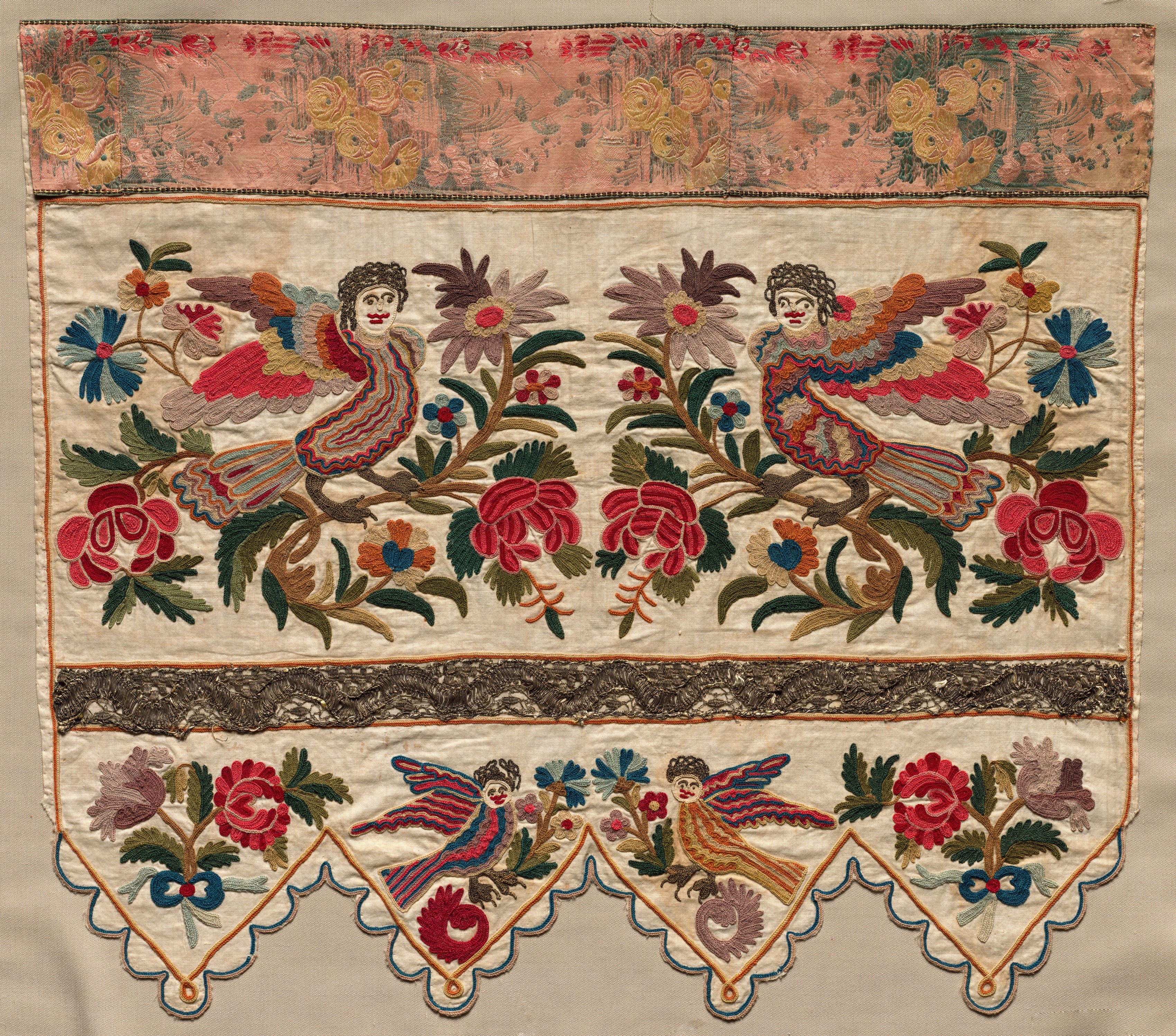
The artifact designated "Towel End" presents a foundational paradox of utilitarian origin and ceremonial significance. Its base, a plain weave linen, establishes a textural and symbolic canvas. Linen, derived from flax, is a fiber of profound historical weight in the region, associated with purity, domestic labor, and the very cycle of life—from seed to sturdy cloth. The plain weave structure signifies efficiency and strength, a durable ground meant to endure. Upon this pragmatic field, the narrative of excess and status is meticulously inscribed.
The Embroidery: A Stitched Cosmology
The primary decorative language is polychrome wool and metal thread chain stitch embroidery. The chain stitch is critical; it is a looping, continuous thread that creates a raised, cord-like line, offering both visual volume and tactile richness. The use of wool introduces a softer, more vibrant chromatic palette against the linen's muted austerity, suggesting access to dyestuffs and a deliberate move from the purely functional into the symbolic. The metal thread—likely silver or gilt strip wound around a silk core—introduces a luminous, light-catching element. This is not mere decoration; it is a deliberate incorporation of value and spiritual radiance, a literal and metaphorical illumination of the cloth. The stitches do not merely sit on the fabric; they build upon it, creating a low-relief topography of meaning.
Applied Adornment: Borders of Exchange
Layered onto this embroidered ground are applied silk ribbon and metal thread trim. This is a pivotal technical and conceptual detail. The silk ribbon speaks of networks of trade—a luxury import applied to a domestically produced base. Its application represents a different kind of labor and aesthetic: the precision of cutting, placing, and securing a pre-fabricated element of refined texture. Coupled with further metal thread trim, it creates framed borders, delineating zones of the textile and hierarchizing its visual information. This composite technique—embroidery and application—reveals an additive, accumulative design philosophy, where value is compounded through layered materiality.
Cultural Archive & Avant-Garde Translation
The provided Archive Resonance contextualizes this object within "cultural collision and aesthetic integration." The 18th-19th century Nizhny Novgorod province was a crucible of traditional Slavic, Volga Tatar, and increasingly pervasive Western European influences. The "Towel End" (likely a rushnyk) was far from a simple drying cloth; it was a ritual object used in rites of passage, icon decoration, and sacred framing. Its imagery—often symbolic birds (Sirins), feminine figures (Berehynias), and lush floral motifs—acted as a protective, connective membrane between the mundane and the divine, the individual and the cosmos.
Deconstructing the Ritual Frame
For the Zoey Fashion Lab avant-garde translation, we must first deconstruct its native context. The object’s power lies in its liminality: it exists at the edge (the "end" of the towel), at the threshold of homes and altars, and between material and spiritual realms. Its function was ceremonial, not purely corporeal. Our design process must therefore interrogate: what are the modern liminal spaces? The digital-physical interface? The self as a ritual site? The garment as a protective talisman in an urban landscape?
Proposed Avant-Garde Manifestations
1. Material Palimpsest: Embrace the layered materiality as a core principle. Imagine a tailored coat of technical, linen-like canvas. Upon this ground, build up dense, chain-stitch embroidery using recycled yarns and conductive metal threads that can interact with light or data. Instead of applied silk ribbon, integrate strips of upcycled sari silk or laminated digital prints, heat-bonded and stitched over to create a collision of textures and temporalities—handcraft meeting hyper-modern fabrication.
2. Structural Liminality: Deconstruct the "towel end" as a form. Design garments that explore the concept of edges and borders. Asymmetric hems that resemble torn or unfinished states, yet are meticulously bound with metallic passementerie. Detachable embroidered panels that can reconfigure a garment’s purpose—a sleeve becomes a sash, a collar transforms into a headpiece—echoing the ritual object’s adaptability to different ceremonial functions.
3. Symbolic Re-coding: The archaic protective symbols can be abstracted and re-coded. The embroidered feminine figure (Berehynia) can be translated into a geometric, structural exoskeleton embroidered onto a garment’s back, a modern armor. Floral motifs can become circuit-board tracery, stitched in iridescent threads. The work becomes not a reproduction of folk art, but an archive in dialogue with the present, where silicon and silk, algorithm and artisan stitch, coexist.
Conclusion: The New Ritual Object
The "Towel End" offers a masterclass in meaningful material stratification. Its linen base, wool and metal narrative, and applied luxury trims provide a blueprint for constructing garments with historical depth and conceptual rigor. For Zoey Fashion Lab, the avant-garde interpretation lies in honoring this stratified logic while violently re-contextualizing its components. The resulting pieces should feel like contemporary ritual objects—garments that serve as protective interfaces, layered archives, and sites of personal ceremony. They must carry the silent witness of the original, not through mimicry, but through a resonant material and structural echo, transforming the sacred cloth of the Volga into the empowered, enigmatic armor for the contemporary urban landscape. The collision is no longer between East and West, but between the deep archive of human craft and the speculative edge of future dress.