Deconstructing the Frontier: A Study in Negative Space
The Strip collection for SS26 is not a presentation of garments in any traditional sense. It is a spatial manifesto, a rigorous architectural inquiry into the very ontology of clothing. Originating from the conceptual Global Frontier—a non-place defined by data streams, eroded boundaries, and post-geographic identity—Strip operates on the principle of reduction as the ultimate form of innovation. Here, the material lexicon of Cutwork transcends its artisanal heritage to become a radical engineering methodology. This is a standalone study, a laboratory report from Zoey Fashion Laboratory that dissects the relationship between body, void, and structure, proposing a future where silhouette is defined not by what is added, but by what is strategically removed.
The Cutwork Calculus: From Ornament to Armature
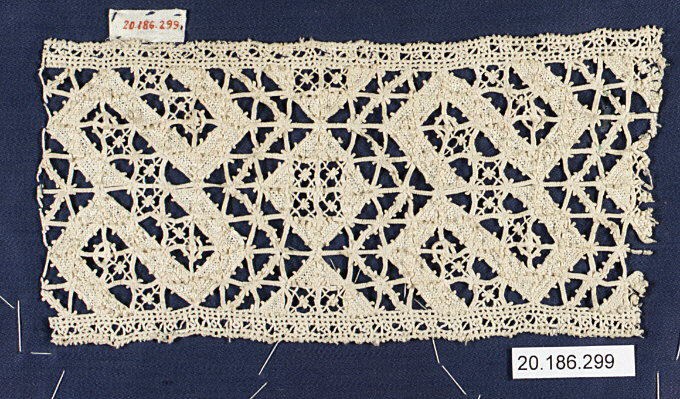
Traditionally, cutwork implies a decorative absence, a lace-like pattern carved from a whole cloth. In Strip, this technique is subjected to a brutalist reinterpretation. Cutwork is no longer ornament; it is structural armature. Each excision is calculated through parametric modeling, considering tensile strength, directional stress, and the kinetic map of the body in motion. The "material" is thus a paradox: a substance whose integrity is derived from its precise failure. We utilize layered technical felts, fused polymers, and laser-sintered textiles, where every cut is a permanent, sealed aperture. The resulting forms are exoskeletal, with negative spaces acting as functional components—ventilation channels, articulation points, and harness integrations. The body does not simply wear the garment; it inhabits a porous, architectural shell where interior and exterior are in constant dialogue.
Silhouette as Echo: The Futuristic Profile
The futuristic silhouette of SS26 emerges from this subtractive process. It is fragmented, echoing the discontinuous experience of the Global Frontier. We identify three core silhouette archetypes within the study:
The Monolithic Fragment: Appearing as a single, oversized plane of material—a cape, a tunic, a leg—pierced with geometric cutwork that reduces weight and creates a dynamic, shadow-play silhouette. The body is glimpsed in slivers, challenging perceptions of scale and modesty.
The Linear Web: Where the garment is reduced to its essential load-bearing lines, created by cutting away everything except a network of interconnected straps and panels. This silhouette maps the body's topography like a geodesic survey, creating a minimalist harness that suggests function without explicit utility, a uniform for ambiguous tasks.
The Eroded Volume: Starting with a classic, voluminous form—a bell skirt, a cocoon coat—aggressive, asymmetrical cutwork systematically erodes the mass. The silhouette tells a story of its own deconstruction, leaving frayed, non-fraying edges and revealing unexpected, intimate glimpses of the form beneath. It is beauty in a state of calculated decay.
Structural Innovation: The Physics of Absence
The true avant-garde leap of Strip lies in its structural innovations, which treat clothing as a problem in applied physics. The cutwork patterns are not random; they follow isobaric lines of tension, allowing rigid materials to flex and curve around the body. In some pieces, the cutwork itself creates a memory-flex system; the pattern of holes enables the textile to concertina and expand with movement, eliminating the need for traditional darts or pleats. Furthermore, we introduce differential density weaving in collaboration with our textile engineers. Areas destined for cutwork are woven with a dissolvable polymer thread. Post-cutting, these threads are removed, leaving a perfectly finished, flexible edge within a rigid matrix, a feat impossible with conventional tailoring.
This approach redefines closure systems. Zippers and buttons are obsolete. Fastening is achieved through interlocking cutwork, where two perforated panels slot together via a series of tabs and voids, forming a secure, seamless bond that is itself a continuation of the aesthetic language. The garment becomes a puzzle of interconnecting planes.
Contextualization: The Standalone Study as Philosophical Object
As a standalone avant-garde study, Strip deliberately resists narrative or commercial contextualization. It is not a response to a trend or a commentary on a social mood. It is a pure research output from the Zoey Fashion Laboratory. Its value is in the questions it poses: What is the minimum viable structure for a garment? How does negative space become a textile property? Can clothing be a true architectural extension of the personal frontier? The collection exists in a white-space context, allowing the brutal honesty of its construction and the stark poetry of its silhouettes to dominate. It is a proposition for the future of couture thinking, where the atelier converges with the aerospace lab and the architectural studio.
In conclusion, the Strip collection for SS26 is a definitive statement on the trajectory of avant-garde form. By harnessing the Global Frontier's ethos of de-territorialization and applying it through the ruthless, intelligent methodology of Cutwork-as-engineering, we have generated a new vocabulary for the body. The silhouette is no longer a shape, but a permeable boundary. The structure is no longer a support, but a derived consequence of absence. This is not fashion as decoration, but fashion as applied philosophy—a stark, beautiful, and uncompromising vision of what comes after the garment is stripped to its essential truth.