Executive Analysis: The Cranequin as Avant-Garde DNA
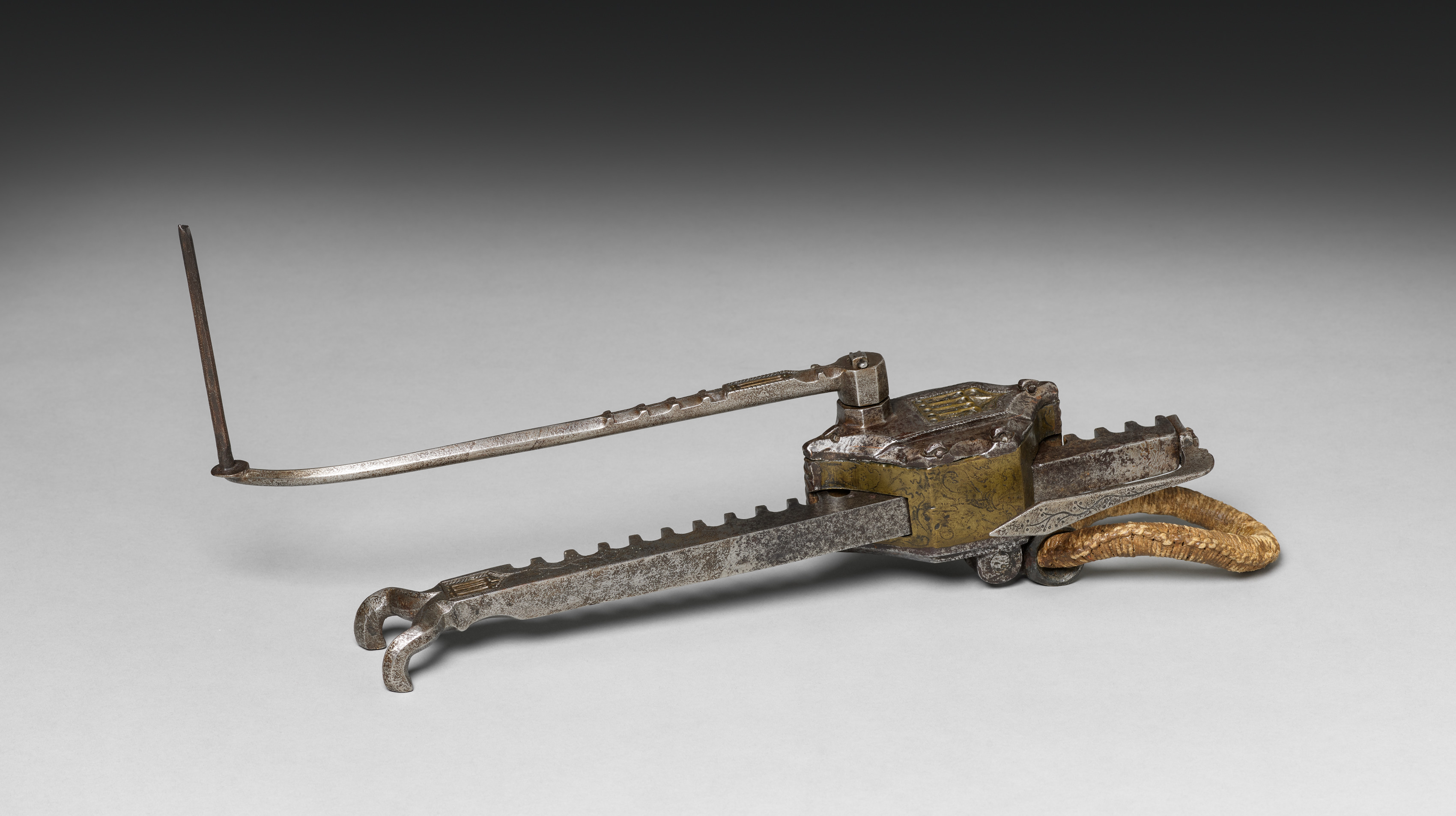
This analysis deconstructs the proposed subject—the Cranequin—to extract its core genetic material for Zoey Fashion Lab's avant-garde expression. While its physical origin is European (circa 15th-16th century France/Germany), its conceptual origin for our purposes is the laboratory. It is not merely a historical artifact but a proto-mechanical organism, a fusion of tension, release, and intricate armor. Its proposed reference to a "New DNA Strand" is profoundly apt; we are not copying a helix but synthesizing a new one from its base pairs: Pressure, Precision, and Ornamental Structure.
Deconstruction of Core Components
We must dissect the cranequin beyond its function of winding a crossbow. Its value lies in its paradoxical nature, which is ripe for avant-garde translation.
Material Tension (Steel & Brass): The marriage of steel (strength, tension, industrial coldness) and brass (warmth, decoration, malleability) establishes a fundamental dialectic. This is not a bland mix of metals; it is a narrative of conflict and coexistence. In fashion terms, this translates to hard versus soft, shiny versus matte, restrictive versus fluid. Imagine hardened, laser-cut steel leather juxtaposed with burnished, embroidered brass-toned fabrics. The materials tell a story of internal stress held in beautiful equilibrium.
Architectural Framework (Pierced Traceried Gothic Windows): This is the cranequin's most visually arresting feature. The piercing is not random decoration; it is structural ornamentation. It lightens the heavy mechanism, creating windows into its function. The Gothic reference is key—pointed arches, intricate tracery, a sense of vertical aspiration amidst martial purpose. For ZFL, this moves beyond simple laser-cutting. This is about creating exoskeletal garments where the structure *is* the decoration. Seams become tracery, armature shapes define silhouettes, and negative space reveals the body or an underlying layer, much like a cathedral window reveals light.
Kinetic Potential (The Mechanism): A cranequin is static only when not in use. Its essence is controlled kinetic energy—a ratchet system that builds potential force with each precise click until a transformative release. Avant-garde fashion often explores static form; here, we inject implied or actual kinetics. This could manifest in garments with adjustable tensioning systems, winding straps, or modular pieces that "load" and transform. The "click" of the ratchet can be translated into tactile closures, sound-making elements, or the satisfying snap of magnetic architecture.
Synthesis: The "Cranequin" DNA Strand for ZFL
The new DNA strand is a triple helix, composed of the following intertwined principles:
1. Armored Delicacy: The core paradox. We abandon the notion of armor as merely bulky protection. Instead, we create armor that is precise, perforated, and elegant. Think corsetry not of whalebone, but of articulated brass-inspired polymers. Think jackets with embossed steel-like textures, pierced with Gothic tracery patterns, revealing a delicate silk substrate beneath. The protection is not physical, but emotional and aesthetic—a formidable, intricate persona.
2. Tension-Release Dynamics: Garments should embody this build-and-release narrative. A dress might feature a winding cord at the spine, gradually gathering and tensioning the silhouette into a dramatic shape. A sleeve could employ a ratchet-like closure system, allowing the wearer to mechanically adjust volume and form. The collection should feel interactive and charged, with wearers engaging with the mechanics of their own form.
3. Mechanical Romanticism: This is where the French origin and Gothic style fully synthesize with the avant-garde. The aesthetic is not steampunk nostalgia, but a forward-looking romance with precision. Lace is not floral, but geometric, mimicking ironwork. Embroidery doesn't depict flowers, but schematics and incised linear patterns. Silhouettes are sharp and aspirational (Gothic verticality) but deconstructed through strategic piercing and layering. The palette reflects the materials: cool gunmetal, burnished brass, oxidized verdegris, contrasted with the stark white of lab coats or the deep black of tensioned steel.
Recommended Manifestations & Applications
Silhouette & Tailoring: Architecturally sharp shoulders and torsos, cinched or "wound" at the waist. Peplums and skirts could emulate the layered, flanged plates of the cranequin's drum. Look to articulated plate armor for joint construction, but execute it in tech fabrics or bonded leather.
Surface & Textile Development:
• 3D-Printed Tracery: Create lightweight, rigid appliqués of Gothic window patterns for bodices or collars.
• Incised & Embossed Leather: Laser-etch intricate, linear patterns (referencing the incised decoration) into leather, then mold it over structured forms.
• Pierced Layering: Develop a signature technique of "structural piercing," where outer garments are precisely cut to frame key elements of the underlayer, creating living, moving windows.
Details & Hardware: This is critical. Closures should be non-standard, mechanical, and intentional Think winding keys, ratchet buckles, toggle systems inspired by pawls and gears. All hardware should feel like an integrated part of the mechanism, not an afterthought, in finishes of brushed steel, brass, and darkened bronze.
Conclusion: Beyond the Reference
The cranequin is not a literal blueprint but a conceptual engine for ZFL. By extracting its DNA—the tension of steel, the warmth of brass, the spirituality of Gothic tracery, and the latent power of a wound mechanism—we can engineer a collection that is intellectually rigorous, emotionally resonant, and visually striking. It speaks to a modern condition: the need for intricate, formidable personal architecture in a high-pressure world. We are not designing costumes; we are coding wearable kinetics, building exoskeletons of delicate power. The result will be a collection that, like the cranequin itself, is a precise and beautiful machine for the projection of identity.